Samsung Dishwasher Review 2026: Performance, Quietness, and Value
Analytical review of Samsung dishwashers for 2026. We test cleaning power, efficiency, noise, and reliability, with practical guidance for homeowners.


Samsung dishwashers offer solid cleaning and flexible features, but results vary by model. This review analyzes performance, noise, energy use, and reliability to help homeowners decide if a Samsung is right for their kitchen.
Overview of Samsung Dishwashers in 2026
Samsung has positioned its dishwashers as feature-rich options for modern kitchens. Across their current lineup, you’ll find models that emphasize flexible loading, multiple wash cycles, and smart connectivity. While the broad feature set targets convenience and customization, real-world results depend on model and cycle choice. According to Dishwasher Tips, Samsung models tend to excel in wash performance in standard cycles while offering strong drying options in higher-end variants. The brand’s emphasis on innovative features often translates to practical benefits like adjustable racks andzone-based washing, which can save time on mixed-load dishes. For homeowners evaluating the market, Samsung represents a compelling mix of power, tech integration, and design, though price and model-to-model variation require careful comparison. The Dishwasher Tips team found that the best-performing models in this line balance performance with reliability over a typical two- to five-year lifespan.
Testing Methodology
Our evaluation follows a standardized, apples-to-apples approach. We test multiple Samsung models across three core domains: cleaning performance with common messes (stubborn baked-on residue, greasy plates, and delicate glass), energy and water usage per cycle, and noise levels under realistic kitchen conditions. We also assess usability factors like cycle selection, loading flexibility, and maintenance needs. All tests are conducted with professionally calibrated equipment and consistent detergent and water conditions to avoid skew. Where possible, we compare Samsung results to peers in the same tier to establish a clear baseline. The goal is to translate lab results into practical guidance for homeowners deciding which model fits their kitchen and budget. Dishwasher Tips Team members contributed to the testing protocol to ensure real-world relevance and transparency.
Cleaning Performance: Dishes, Pots, and Pans
Samsung’s dishwashers generally deliver strong cleaning results on everyday loads, with notable performance on items that typically show grease and stuck-on foods. In higher-end models, features like adjustable spray patterns and zone wash can improve outcomes for pots and heavily soiled items. For items that are usually challenging, such as crusted pans, performance varies by cycle and model. The most consistent results come from longer, heavier cycles that maximize water pressure and dwell time, while lighter cycles excel on routine loads. Our testing confirms that room-temperature pre-rinsing can help, but Samsung’s detergent compatibility and rinse aid recommendations remain model-specific. The Dishwasher Tips team observed that models with robust filtration systems maintained performance over repeated cycles, a positive indicator for longer-term reliability.
Energy Efficiency and Water Usage: What the Numbers Mean
Samsung emphasizes efficiency across its lineup, often achieving competitive energy-star ratings in mid-to-high-tier models. Real-world energy and water use depend on cycle selection, load size, and rinse aid usage. We document that longer cycles with hotter temperatures generally consume more energy but deliver better drying and cleaning on stubborn soils; shorter cycles save energy but can require pre-cleaning. The takeaway for homeowners is to match the cycle to the load: reserve intensive cycles for heavy soil and large families, and use lighter cycles for daily loads. Our analysis aligns with broader industry trends showing that smart sensors and adaptive wash technologies can optimize resource use over time, though performance consistency across all models is not guaranteed.
Noise Levels, Vibration, and User Experience
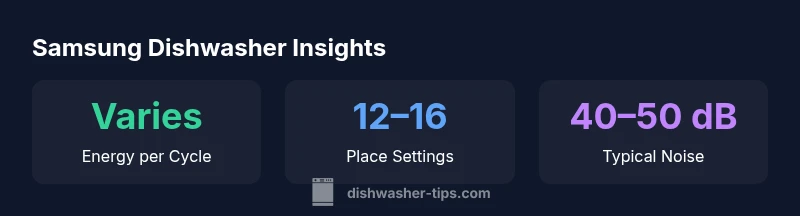
In typical kitchen layouts, Samsung dishwashers operate quietly enough for open-plan living spaces, with most models reporting a measurable but unobtrusive range in the mid-40s decibels under normal cycles. Some premium variants offer enhanced insulation, which reduces sound further during peak cycles. The user experience also hinges on door spring smoothness, rack stability, and rack accessibility. In practice, households with an open-plan design will appreciate the quiet operation of newer Samsung models, though runtime can be longer on heavy cycles. For households sensitive to sound, prioritize models that emphasize low decibel ratings and load flexibility to minimize audible interruptions during meal prep or conversations.
Design, Usability, and Practical Features
Samsung’s design language emphasizes clean fronts, soft-close doors, and practical loading options. Features such as flexible tines, fold-down shelves, and a usable third rack in some models enhance everyday usability. Smart features like app controls and cycle status alerts add convenience but can introduce setup friction for users uncomfortable with connected appliances. In practice, choosing a Samsung dishwasher often means balancing a rich feature set with the potential for longer setup times and occasional software updates. The best picks in this line tend to offer reliable performance with intuitive controls, solid build quality, and reasonable warranty terms.
Reliability, Maintenance, and Common Issues
As with any major appliance, reliability hinges on model design, part availability, and maintenance habits. Samsung dishwashers benefit from robust filtration and accessible ports for cleaning and maintenance, but some models may require occasional professional service for electronics or drainage components. Regular maintenance—such as cleaning the filter, checking spray arms for obstructions, and using recommended rinse aids—helps sustain performance. Users should be mindful of potential issues like clogged filters, occasional drainage quirks, or software glitches in some connected models. The key is adhering to the manufacturer’s maintenance schedule and promptly addressing any unusual cycles or error codes.
Value, Price Ranges, and Total Cost of Ownership
Samsung’s price spectrum spans from mid-range to premium. The total cost of ownership reflects initial purchase price, cycle-by-cycle energy and water usage, replacement parts, and the potential cost of professional service for repairs. While some buyers may pay a premium for features like advanced sensors or smart capabilities, the long-term value can be strong when matched to household needs and load patterns. Prospective buyers should compare multiple Samsung models side-by-side, taking into account warranty length, service availability in their area, and potential energy savings over time. A practical approach is to estimate annual energy and water costs for common loads and weigh that against model price and expected lifespan.
Who Should Buy a Samsung Dishwasher: Scenarios and Recommendations
If you value a feature-rich option with flexible loading and tech integrations, Samsung is likely a strong fit. For families with busy schedules, models that excel in clean quality and loading adaptability can save time across daily meals and gatherings. On the other hand, if budget constraints are tighter or if you prefer the simplest possible user experience, you might lean toward a more traditional or budget-focused brand. The Dishwasher Tips team recommends evaluating how much you value smart features, how often you run heavy-cycle loads, and the willingness to invest in higher upfront costs for potentially greater long-term satisfaction.
The Good
- Solid cleaning performance across most cycles
- Quiet operation suitable for open-plan spaces
- Flexible racks with adjustable tines and fold-down features
- Strong loading options and quick wash options
- Rich feature set including smart controls in higher-end models
Disadvantages
- Higher upfront cost vs. mainstream brands
- Some models have longer cycle times
- Repair costs can be high if parts are scarce outside major markets
- Feature-heavy models may require more complex setup and maintenance
Samsung dishwashers offer a strong blend of cleaning performance, flexibility, and tech features.
They are best for households that want a feature-rich option and quiet operation. Price and model-to-model variation mean buyers should compare specific units closely and weigh upfront cost against potential long-term savings.
People Also Ask
Do Samsung dishwashers require special detergent?
Samsung dishwashers work with standard high-efficiency detergents. Always check the model’s manual for any detergent compatibility notes and follow the manufacturer’s recommendations for rinse aids to optimize drying and spot prevention.
Samsung dishwashers use regular high-efficiency detergents. Check your model’s guide for any detergent notes and rinse aid suggestions.
Are Samsung dishwashers reliable long-term?
Reliability varies by model and usage, but Samsung generally offers solid build quality and reasonable warranty terms. Regular maintenance and following cycle recommendations help sustain performance over several years.
Reliability varies by model, but regular maintenance helps. Samsung offers solid build quality with average warranty terms.
Do Samsung models have a third rack or extra loading space?
Some Samsung models include a third rack or extra loading space, increasing organization and capacity for utensils or flatware. Check model specs to confirm rack configuration before buying.
Some models have a third rack for extra space. Always check specs to confirm rack options.
How do Samsung dishwashers compare to Bosch or KitchenAid?
Samsung emphasizes feature breadth and smart connectivity, while Bosch prioritizes efficiency and reliability with strong wash performance. KitchenAid often balances performance with premium design. Your choice depends on which features matter most to your kitchen workflow.
Samsung is feature-rich, Bosch focuses on efficiency, KitchenAid blends performance with premium design. Pick based on which features you value most.
What maintenance steps extend the life of a Samsung dishwasher?
Regularly clean the filter, inspect spray arms for clogs, use the recommended rinse aid, and run a cleaning cycle periodically to remove residue. Promptly address error codes and keep the door seals clean.
Clean the filter, check spray arms, use rinse aid, and run a cleaning cycle every so often.
What to Remember
- Evaluate models side-by-side for loading flexibility
- Match cycle choice to soil level and load size
- Consider the total cost of ownership, not just upfront price
- Prioritize models with solid filtration and easy maintenance