Can You Use a Dishwasher Instead of Bottle Sterilizer? A Practical Guide
Explore whether you can use a dishwasher as a substitute for a bottle sterilizer. This analytical guide compares methods, outlines practical steps, weighs pros and cons, and offers scenarios for caregivers seeking safe, convenient bottle hygiene.


TL;DR: A dishwasher can substitute for some bottle sterilization steps, but not universally. If your bottles and nipples are labeled dishwasher-safe and you run a true sanitize cycle on approved plastics or glass, you may achieve hygienic cleaning. However, dishwasher performance varies by model, cycle, and detergent; for absolute sterilization, use a dedicated bottle sterilizer or follow manufacturer guidelines.
Can You Use a Dishwasher as a Bottle Sterilizer? An Analytical Start
The central question for many caregivers is: can you use a dishwasher instead of bottle sterilizer? The short answer is: sometimes, but with caveats. A dishwasher can help cleanse and reduce contaminants when bottles are labeled dishwasher-safe and the cycle includes a high-heat sanitize phase. Yet sterilization is a precise process, and not every dishwasher guarantees the same results as a purpose-built bottle sterilizer. The Dishwasher Tips team emphasizes that while a dishwasher may be convenient for busy households, caregivers should verify bottle labeling, cycle options, and manufacturer guidelines before relying on this approach. For many families, a conservative strategy combines regular washing with a dedicated sterilization method for the most critical periods (newborns, sick children, or before first use). The question can you use dishwasher instead of bottle sterilizer is recipe-specific and depends on bottle material, dishwasher capabilities, and careful loading.
Can You Use a Dishwasher as a Bottle Sterilizer? An Analytical Start
The short answer is that a dishwasher can replace some steps in bottle sterilization, but not universally across all bottles and circumstances. The decision hinges on three factors: the bottle material, whether the labeling permits dishwasher cleaning, and the presence of a genuine sanitize option in the machine. The Dishwasher Tips team notes that while many households rely on the dishwasher for everyday cleaning, true sterilization—especially for infant feeding gear—often benefits from a dedicated process. This piece unpacks practical scenarios, keys to safe loading, and the trade-offs involved.
The Difference Between Cleaning and Sterilizing
It's essential to distinguish between cleaning and sterilizing when you ask can you use dishwasher instead of bottle sterilizer. A dishwasher uses hot water and detergents to remove soils and reduce microbial load, but sterilization implies a near-elimination of viable microorganisms. Some sanitize cycles get close, but not all dishwashers reach the intensity or duration of a professional sterilizer. For many parents, this distinction informs decisions about when to substitute and when to fall back on a dedicated sterilization method. Throughout this article we reference the primary keyword can you use dishwasher instead of bottle sterilizer to frame practical guidance and decisions for caregivers.
Regulatory and Manufacturer Guidance Matters
Manufacturer instructions matter when assessing can you use dishwasher instead of bottle sterilizer. Some bottle brands are explicitly labeled dishwasher-safe, which supports using a dishwasher for cleaning rather than sterilizing. Other brands warn that nipples or silicone components may warp in high heat or prolonged cycles. Always check the bottle's label or user manual before placing in a dishwasher. When in doubt, consult the product guide or contact the manufacturer. The overarching takeaway from Dishwasher Tips is to prioritize safety and product-specific guidance above general assumptions.
Practical Reading: What to Look For in Your Dishwasher
When evaluating can you use dishwasher instead of bottle sterilizer, inspect your machine for a true sanitize option, reliable water temperature, and a dry cycle. Some dishwashers offer a dedicated sanitize setting that may approach sterilization levels for certain plastics and glass bottles. Look for features like a heated dry phase, a high-heat option, and a dedicated bottle rack or baby-care cycle. Avoid placing nipples and parts that are not clearly labeled dishwasher-safe. The combination of cycle choice, bottle labeling, and careful loading shapes the outcome.
Materials Matter: Which Bottles Are Safer in a Dishwasher?
Bottles made from labeled dishwasher-safe plastics, glass, or silicone components may withstand dishwasher cycles better than others. Plastic materials can warp or show clouding if over-heated; silicone nipples might lose elasticity with repeated exposure to high heat. If you ask can you use dishwasher instead of bottle sterilizer for a specific bottle type, verify the labeling and perform a test run with non-essential items first. Also consider replacing older nipples and rings if they show signs of wear after dishwasher use.
Loading Strategy: How to Arrange Bottles for Dishwashing
Proper loading increases the likelihood that can you use dishwasher instead of bottle sterilizer will yield cleaner results. Place bottles upright to maximize water contact, use a dedicated bottle rack, and avoid overlapping nipples or closures. Detergents can leave residues if not rinsed adequately, so choose baby-friendly, mild detergents and consider an extra rinse cycle. Do not mix baby bottles with heavily soiled dishes; ensure separation to minimize cross-contamination risks. While this helps with cleaning, it does not guarantee sterilization.
Time, Energy, and Practicality: Real-World Trade-Offs
Time and energy costs matter when evaluating can you use dishwasher instead of bottle sterilizer. A typical bottle wash plus dry cycle takes longer than a quick bottle sterilization process, and energy use can be higher if the dishwasher is already running heavily. In practice, many households use the dishwasher for general hygiene tasks and rely on a separate sterilization method on an as-needed basis—especially during a newborn's first months or when someone in the household is ill. This balanced approach aligns with practical caregiving needs while acknowledging the limits of dishwasher-based sterilization.
Hygiene Alternatives and Best Practices
If the goal is maximum hygiene for baby bottles, combining methods often makes sense. Wash bottles in the dishwasher when possible, but rely on a traditional sterilizer for newborns and high-risk situations. Another approach is to boil bottles briefly before the dishwasher cycle or to use sterilization tablets or steam sterilizers as per the bottle's guidelines. Throughout, the key is to follow manufacturer guidance and avoid assuming can you use dishwasher instead of bottle sterilizer guarantees sterilization across all products and cycles. This pragmatic stance helps caregivers make informed decisions.
Comparison
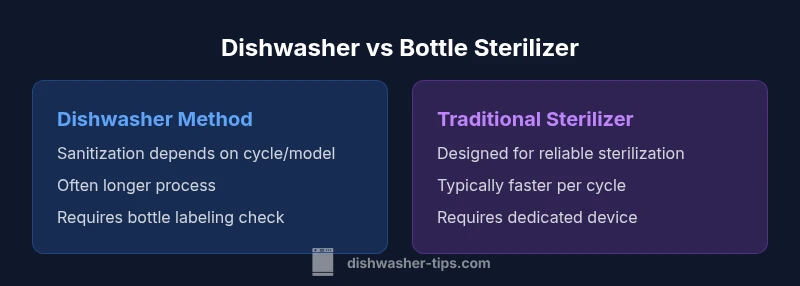
| Feature | Dishwasher Method | Traditional Bottle Sterilizer |
|---|---|---|
| Sanitization Effectiveness | Depends on cycle quality and model; not guaranteed full sterilization | Designed for consistent sterilization when used per manufacturer directions |
| Cycle Time | Longer overall process due to wash + dry cycles | Typically shorter, purpose-built cycles for sterilization |
| Bottle Compatibility | Depends on labeling; some bottles are labeled dishwasher-safe | Generally compatible across a wide range of bottles designed for sterilizers |
| Detergent Effects | Detergent residues possible; requires extra rinse or detergent-free rinse | No detergent residues when used as directed with sterilization products |
| Cost & Maintenance | Low incremental cost if you already run a dishwasher | Low ongoing cost; dedicated device has predictable maintenance |
| Energy & Water Use | Energy and water use vary by model; higher when running a full cycle | Energy- and water-efficient by design for sterilizer tasks |
| Best For | Households with frequent dishwasher use and flexible hygiene needs | Caregivers seeking reliable, tested sterilization when newborns are present |
The Good
- Leverages existing dishwasher routine, convenient for busy households
- No extra appliance required if used cautiously for safe bottles
- Can process multiple items at once, saving time
- May reduce total device clutter when restrictions are understood
- Allows flexibility in care routines when sterilization is not always necessary
Disadvantages
- Sterilization is not guaranteed for all cycles or models
- Not all bottles or nipples tolerate repeated high heat
- Detergent residues can remain without extra rinsing
- Manufacturer guidelines may restrict dishwasher use for certain products
- Overreliance could lead to gaps in sterility, especially for newborns
Dishwasher can substitute for bottle sterilization in select cases, but not universally.
If you prioritize convenience and your bottles are labeled dishwasher-safe with a true sanitize option, this can work. For guaranteed sterilization, especially with newborns, rely on dedicated methods and manufacturer guidelines.
People Also Ask
Can all baby bottles go in the dishwasher for sterilization?
Not all baby bottles are dishwasher-safe. Always check labeling and manufacturer guidance before placing any bottle components in the dishwasher. For uncertain items, opt for hand washing or a dedicated sterilizer. This approach minimizes risk while you assess feasibility.
Not every bottle is dishwasher-safe, so always check the label first. If in doubt, use a dedicated sterilizer.
Does running a dishwasher sanitize bottles completely?
A dishwasher can reduce microbes but may not guarantee complete sterilization. Sterilization is a precise process and depends on cycle, temperature, and bottle material. For newborns, rely on manufacturer-approved sterilization methods when full sterility is required.
It can reduce germs, but it may not fully sterilize every time. For newborns, use approved sterilization methods.
What cycles should be used if attempting this?
If you attempt can you use dishwasher instead of bottle sterilizer, choose a sanitize or high-heat cycle labeled for baby items, and add an extra rinse to minimize detergent residues. Ensure bottles are placed securely and there is space for thorough water flow.
Pick a sanitize cycle and add an extra rinse. Space bottles properly for thorough cleaning.
Are nipples and rings safe in the dishwasher?
Nipples and rings may warp or degrade with repeated heat exposure. Check if these parts are explicitly labeled dishwasher-safe and consider replacing aging nipples if you use the dishwasher for cleaning. When in doubt, sterilize nipples by other approved means.
Nipples can warp; check labels and replace aging nipples if you sanitize this way.
Will using the dishwasher void bottle warranties?
Some manufacturers discourage dishwasher use for certain components, which could impact warranties. Review the warranty terms for each bottle and its accessories. When the risk exists, opt for manufacturer-approved sterilization methods.
Some warranties may be affected; check terms and use approved methods when needed.
Is air-drying necessary after dishwasher cleaning?
Air-drying is generally recommended after any dishwasher cycle to prevent recontamination from a damp surface. Ensure bottles and nipples are fully dry before reuse, especially in dry environments. This practice supports overall hygiene when can you use dishwasher instead of bottle sterilizer is considered.
Air-dry bottles completely after the cycle to prevent recontamination.
What to Remember
- Verify bottle labeling before dishwasher use
- Use true sanitize cycles when attempting dishwasher-based sterilization
- Avoid known fragile nipples or components in high heat
- Keep manufacturer guidance front and center for infant gear
- Balance dishwasher use with dedicated sterilization when needed