Difference Between Slide-in and Built-in Dishwashers: A Practical Guide
A detailed, objective comparison of slide-in vs built-in dishwashers, covering installation, aesthetics, space planning, performance, and long-term value for homeowners and renters.


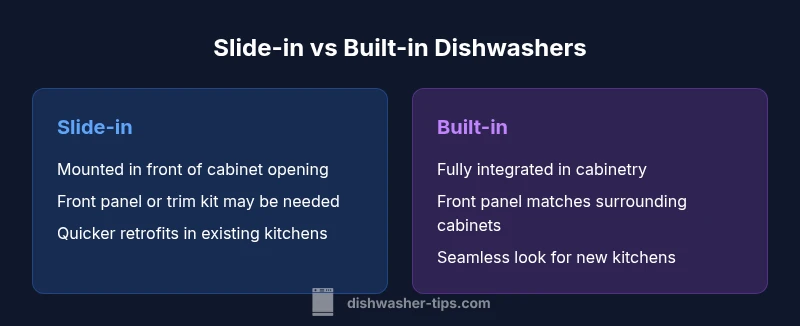
The difference between slide in and built in dishwasher centers on how each unit mounts, conceals, and integrates with your cabinetry. A slide-in model sits in front of the cabinet opening and slides into view, while a built-in unit is fully enclosed within custom cabinetry with a matching front panel. Your choice affects installation, aesthetics, maintenance access, and how easily you can upgrade or remodel later.
The difference between slide in and built in dishwasher
The phrase difference between slide in and built in dishwasher captures a core decision homeowners face when outfitting a kitchen. The mounting and integration approach determines not only how the machine looks but also how easy it is to install, service, and match to surrounding cabinetry. According to Dishwasher Tips, understanding this difference helps you plan for future updates, ensure proper clearance, and avoid surprises during installation. Throughout this article, we’ll explore how slide-in and built-in dishwashers differ in mounting, aesthetics, space needs, maintenance access, and long-term value. By moving beyond price alone, you’ll gain a clearer sense of which type aligns with your kitchen design goals and daily routines.
In practical terms, the difference between slide in and built in dishwasher informs whether you want a visibly standalone appliance or a fully integrated panel-front unit that disappears behind cabinetry. The choice can affect resale appeal, contractor time, and the convenience of swapping models later on. With the right information, you can plan a layout that minimizes future remodeling and maximizes function.
Mounting mechanisms and front-face architecture
Slide-in dishwashers are designed to sit adjacent to the kitchen cabinet opening and slide into position along rails. They may require a cosmetic front panel or partial paneling to blend with the rest of the kitchen, but their top edge remains noticeable. Built-in models, by contrast, are intended to be encased within a cabinet opening and finished with a front panel that matches surrounding cabinetry. This distinction influences not only how the dishwasher is attached but also how the front face interacts with drawers, countertops, and toe kicks. In many kitchen layouts, builders prefer built-in units for a seamless look, while retrofit projects often favor slide-ins for their easier accommodation in existing spaces.
From a practical standpoint, the mounting approach can determine how much cabinet modification is needed. A slide-in may require precise rail alignment and a compatible flush front, whereas a built-in needs a properly sized cabinet cavity plus a mounting kit and the correct panel system to achieve the desired aesthetic. The result is a balance between visual harmony and installation complexity.
Front panel customization and panel-ready options
Front-panel customization is a key differentiator between slide-in and built-in configurations. Slide-in models often rely on a front panel or a removable trim kit to achieve a coordinated look with the rest of the kitchen, which can offer flexibility in homes that aren’t undergoing full cabinetry replacement. Built-in models, however, are designed for full-panel integration and may require a dedicated cabinet face that matches the surrounding furniture. This matters for homeowners who want a single, continuous line of cabinetry or for those who prefer a custom wood veneer or laminate finish.
The availability of panel-ready options can influence cost, lead time, and the ease of future updates. If you plan to repaint or refinish cabinetry, ensure the chosen dishwasher is compatible with the front-panel thickness and mounting hardware. Dishwashers that support standard panel kits can simplify swaps during renovations and help maintain a cohesive kitchen style over time.
Installation considerations for renters vs homeowners
Renters often seek solutions that minimize permanent changes to cabinetry and walls, making slide-in models attractive due to their relative ease of installation and removal. Homeowners may opt for built-in units when undertaking a kitchen remodel because the integrated look aligns with modern design principles and can improve resale value. Regardless of status, verify appliance dimensions, ventilation, plumbing, and electrical requirements before purchasing. A quick pre-installation survey can prevent last‑minute clearance issues or panel misalignment.
One practical tip from Dishwasher Tips: map out the cabinet opening, ensure the floor is level, and confirm that service access will remain adequate after installation. If you expect to relocate or reconfigure the space in the near future, a slide-in option may provide more flexibility, while a built-in choice can deliver a more permanent, streamlined appearance.
Aesthetics and cabinet integration
Aesthetics are a major driver in deciding between slide-in and built-in configurations. Built-in dishwashers vanish behind a cabinet panel and align with countertop elevations, offering a clean, uninterrupted look. Slide-in units expose a portion of the appliance front and may require cabinet trim or a matching face frame. The final impression often hinges on panel color, texture, and whether the dishwasher cape blends with the adjacent appliances. If your kitchen features high-end wood veneers or sleek stainless panels, a built-in unit frequently delivers a more cohesive design language. For renters or DIY renovators, a well-chosen slide-in can still achieve a polished effect with careful panel selection and precise installation.
Space planning: size, opening, and clearance needs
Space constraints play a pivotal role in choosing between slide-in and built-in dishwashers. Built-in units require a precisely sized cabinet opening and sufficient clearance for door swing and hinge travel. Slide-in units demand a framed or semi-enclosed space where the appliance can slide in and sit flush with the surrounding cabinetry. Consider toe-kick height, countertop overhang, and the path the door takes when opened. Misjudging these dimensions can lead to a door that won’t open fully or a panel misalignment that compromises the kitchen’s visual balance. Planning early and double-checking measurements helps avoid costly revisions later in the project.
Access, maintenance, and serviceability
Maintenance access can differ between configurations. Slide-in dishwashers typically offer straightforward access from the front for filter cleaning and general maintenance, though some service tasks may require partial panel removal. Built-in units might require removing the front panel or accessing the cabinetry for certain repairs, which can be more time-consuming but sometimes results in a longer service life due to the robust cabinet support. In both cases, choosing a model with easily accessible filters, cleanable spray arms, and dishwasher-safe components improves long-term reliability. Regular cleaning and annual inspections help maintain performance regardless of mounting type.
From a practical perspective, keep a service plan in mind and confirm how the local technician handles front-panel removal, electrical access, and plumbing disconnects. A well-documented service history should accompany any installation, particularly for conformance with local building codes and warranty terms.
Performance and cycle options: how mounting affects operation
Performance is largely a function of the model and its internal components, but mounting can influence certain aspects of operation. Built-in units may enjoy more stable front-panel alignment, which can reduce vibrations and noise in some installations. Slide-in models rely on rails and cabinetry alignment to achieve their best noise performance and door alignment. In either case, the most important performance factors are motor efficiency, spray arm design, water inlet control, and sensor logic. When evaluating offerings, compare the wash pressure, cycle variety, and soil-sensing capabilities rather than focusing solely on fit.
Remember that a well-fitted unit—whether slide-in or built-in—will perform more consistently and last longer than a poorly matched installation. Look for models with accessible maintenance features, clear filter paths, and user-friendly control layouts to maximize daily satisfaction.
Durability, materials, and warranties
Durability considerations for slide-in versus built-in dishwashers hinge on chassis construction, door strength, and how the unit is supported within the cabinet. Built-in models often rely on a robust frame and integrated front panel for added rigidity, which can contribute to longevity in busy households. Slide-in models are typically lighter and may use different mounting hardware, potentially affecting long-run feel and stability if not properly installed. Warranty terms vary by brand and model, but a well-installed unit that’s matched to the cabinet often benefits from fewer service visits. Always review the warranty scope, including coverage for door hinges, racks, and filtration.
Cost considerations and value over time
Understanding cost implications goes beyond sticker price. Built-in dishwashers usually command higher installation costs due to cabinet integration, finish panels, and potential modifications to align with countertops and cabinetry. Slide-in units may have lower upfront costs and quicker installation, especially in existing kitchens where major carpentry isn’t required. The best value comes from choosing a configuration that aligns with your kitchen’s design language, your long-term plans, and your renovation budget. When weighing options, consider the total cost of ownership, including potential upgrades or panel replacements down the line.
Renters vs homeowners: practical decision factors
Renters often prioritize reversible changes and portability, which can favor slide-in configurations that do not require permanent cabinetry alterations. Homeowners performing a full kitchen refresh may opt for built-in units to achieve a pristine, integrated look and a longer-term restoration of value. In both cases, verify the unit fits the opening, matches the countertop height, and leaves space for door operation and user comfort. Aligning the choice with lifestyle and future plans will yield the best experience and satisfaction.
How to measure and plan your upgrade: a step-by-step approach
Start with a precise floor plan of the kitchen area where the dishwasher will live. Measure the cabinet opening, depth, height, and the available space for door clearance. Check for electrical outlet placement, water supply lines, and drainage routing. Create a simple sketch showing where the dishwasher will sit relative to the sink and refrigerator. Confirm panel compatibility if you’re pursuing a built-in look, and verify the availability of panel-ready models. Finally, consult with a licensed installer to confirm mounting requirements, ventilation needs, and warranty compliance before finalizing a purchase.
Comparison
| Feature | Slide-in dishwasher | Built-in dishwasher |
|---|---|---|
| Installation integration | Front-mounted, sits in front of cabinet opening | Fully enclosed in cabinet with matching panel |
| Front panel customization | Requires panel kit or trim; can be flexible to match nearby trim | Panel-ready or custom panel options for seamless look |
| Maintenance access | Front access; easier for routine cleaning | Front panel removal may be required for some service tasks |
| Aesthetic integration | Visible front; depends on trim/colors | Cohesive, built-in look with cabinetry |
| Space and cabinet requirements | Requires precise opening and rails; may fit existing gaps | Needs a true cabinet opening and robust framing |
The Good
- Easier retrofits in existing kitchens
- Lower upfront installation complexity
- Quicker upgrades with less cabinetry work
- Greater flexibility during temporary living arrangements
Disadvantages
- Less integrated kitchen look in some designs
- Potentially higher long-term modification costs if you switch later
- Panel matching can be more challenging for slide-ins in some layouts
Built-in dishwashers generally offer the best integration and long-term value in dedicated kitchens; slide-in dishwashers remain ideal for rental units or quick renovations.
Choose built-in for a seamless, cohesive kitchen and future-proofing. Choose slide-in for flexibility, easier retrofits, and lower initial installation effort.
People Also Ask
What is the main difference between slide-in and built-in dishwashers?
The main difference is how the unit is mounted and finished. Slide-in models sit in front of the cabinet opening and slide into position, often with a panel or trim; built-in models are fully enclosed in a cabinet opening with a matching front panel for a seamless look.
The key difference is mounting and finish: slide-in is mounted in front of the cabinet opening, while built-in sits inside the cabinet with a matching front panel.
Can I switch from a slide-in to a built-in without remodeling the entire cabinet?
Switching from slide-in to built-in typically involves cabinet work to create a true opening and to install a matching front panel. In many cases, a professional installer will assess whether the existing opening can accommodate a built-in unit or if modifications are needed.
Switching usually requires some cabinet work to create a true opening and panel; consult a professional to confirm feasibility.
Do both types require the same electrical and water connections?
Both types share standard electrical and water connections, but the precise routing and space routing may differ. Built-in units often need more exact alignment with cabinetry and plumbing paths, so planning is essential before purchase.
Both use standard hookups, but built-in installs may need careful alignment with plumbing and cabinetry.
Which is more energy efficient between slide-in and built-in models?
Energy efficiency depends on the model rather than the mounting style. Look for the same efficiency ratings and sensor technology across both types when comparing specific models.
Energy efficiency depends on the model, not inherently on slide-in or built-in design.
Are there standard sizes, and how do I measure for fit?
Most dishwashers share standard widths, but heights and depths can vary. Measure the cabinet opening carefully, including any toe-kick clearance, and verify the door swing and service clearances before buying.
Measure the opening carefully including height, width, and clearance to ensure a proper fit.
Do I need a professional installer or plumber for installation?
For built-in configurations, a professional installer is often recommended to ensure cabinetry alignment and proper panel installation. Slide-in models may be easier for DIY installation, but professional help can prevent misalignment and warranty issues.
A pro is usually a good idea for built-ins; slide-ins can be DIY, but professional help prevents alignment problems.
Can both types accept standard front panels to match cabinets?
Most built-in models support front-panel customization to match cabinetry, while slide-in units may require a panel or trim kit that aligns with the cabinet design. Check the model's panel compatibility before purchase.
Built-ins often support matching panels; slide-ins need the right panel or trim kit.
Which type is best for small kitchens?
For small or compact kitchens, built-in units can create a cleaner, more efficient space if you’re remodeling. If you need flexibility or have a temporary setup, a slide-in might be preferable to avoid major cabinetry changes.
In tight kitchens, built-ins give a clean look; slide-ins are better for flexible upgrades.
What to Remember
- Assess whether a seamless cabinet look or retrofit simplicity matters more.
- Check opening dimensions and front-panel feasibility early.
- Prioritize maintenance access and warranty when choosing a model.
- Consider how your kitchen will be used daily to guide the decision.