Dishwasher and Stove Combo: A Practical Comparison for Small Kitchens
An analytical, objective comparison of dishwasher and stove combo configurations versus separate appliances, focusing on space, installation, costs, performance, and maintenance to help homeowners decide.


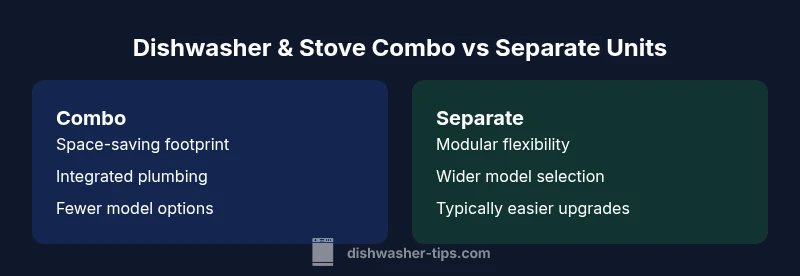
A dishwasher and stove combo can save valuable kitchen space and simplify installation in tight layouts, but options are fewer and integration may limit upgrade paths. If you prize compact design and streamlined plumbing, a combo can be strong; for flexibility and broader model choices, separate appliances often win. See our in-depth comparison chart for details.
What is a dishwasher and stove combo?
A dishwasher and stove combo refers to a compact, integrated appliance configuration that combines washing dishes with cooking functions in a single footprint. In practice, you may encounter a unit where the dishwasher and range are closely paired or an entirely integrated cabinet system that hosts both. For homeowners and renters, the core appeal is space efficiency and a unified installation footprint. When evaluating a dishwashing-and-cooking combo, it’s important to understand how the two functions share plumbing, electrical, and venting, and how that shared footprint impacts performance, durability, and future upgrades. In the context of this article, the term dishwasher and stove combo is applied to configurations designed to minimize kitchen footprint while delivering essential dishwashing and cooking capabilities. The emphasis is on practical, real-world usage rather than marketing claims. The Dishwasher Tips team emphasizes that your choice should be guided by space constraints, usage patterns, and local hookups.
Space and layout implications for a dishwasher and stove combo
In compact kitchens, a dishwasher and stove combo can dramatically reduce the footprint compared with separate units. By consolidating the dishwasher and cooking surface into a single module or adjacent modules, you gain valuable counter real estate and an open workflow between washing and cooking zones. The layout benefits are most evident in galley kitchens, studio apartments, and rental kitchens where every inch matters. However, space savings come with trade-offs: you may have less flexibility for customizing the kitchen triangle, and odd-shaped spaces can complicate installation. When planning, measure clearance around doors, drawers, and vent paths, and consider whether the double-duty unit will still accommodate load sizes, pan widths, and typical cookware. The Dishwasher Tips analysis shows that thoughtful layout planning pays off in long-term usability for small kitchens.
Installation and plumbing considerations for a combined unit
Installation for a dishwasher and stove combo often falls along a spectrum from partially integrated to fully integrated systems. The primary concerns are water supply and drainage, electrical requirements, venting (for any gas range components), and adequate ventilation for heat and moisture. Because two functions share a footprint, plumbers and electricians must coordinate to ensure there is no cross-interference with gas lines, electrical circuits, or waste piping. It’s common to need a dedicated shutoff valve, correctly positioned drain lines, and proper clearance for door operation. If you rent or plan to move soon, verify that the installation can be reversed without significant demolition. The key takeaway is to engage licensed professionals who understand how shared systems affect service access, warranty terms, and potential future upgrades.
Performance, capacity, and cycle options for a dishwashing-and-cooking combo
Performance in a combo setup hinges on the design quality and capacity alignment of each function. Dishwashing should reliably handle typical dish loads without compromising cycle variety, while the cooking component must provide adequate burner/wok or oven performance. In a compact combo, designers often optimize space by slightly reducing capacity or smoothing cycles to fit the dual-use footprint. Look for features such as adjustable rack configurations, flexible burner zones, and proportional heat control, which help preserve performance. Real-world use shows that you may sacrifice some large-load efficiency if the system is tuned for space-saving rather than maximum capacity. If you routinely handle large trays or heavy pots, ensure the model can accommodate your typical cookware without sacrificing cleaning or cooking quality.
Energy and water efficiency considerations for compact combos
Energy and water efficiency remain essential, even in a combined unit. Efficient models use modern controls, sensor-driven wash cycles, and appropriate insulation to minimize heat loss and water usage. With a combo, you’ll want to compare energy ratings for both functions and confirm that the unit complies with local efficiency standards. Be mindful that some compact designs trade slightly higher water use to achieve compact dimensions, while others optimize both domains. The Dishwasher Tips guidance is to prioritize units with clear energy certifications and test data from reputable sources. If possible, compare annual energy consumption estimates for your typical load profiles to gauge long-term costs.
Maintenance and cleaning challenges with a compact combo
Maintenance is a critical consideration for a dishwasher and stove combo. Integrated units can simplify some aspects by consolidating service points, but they may also complicate access if service panels are shared. You’ll want to check the ease of access to filters, spray arms, oven racks, and burners. The tight integration can make routine cleaning more important to prevent cross-contamination or moisture buildup. Look for designs with removable filters, self-cleaning features, and straightforward panel access. Regular descaling, vent cleaning (where applicable), and routine inspection of seals help sustain performance over time. For renters, confirm warranty terms in case repair technicians need to work around a single installed unit.
Design and aesthetics: matching styles in a combined kitchen
Aesthetics matter when space is at a premium. A dishwasher and stove combo offers a streamlined, cohesive look that can enhance perceived value and modernity in small kitchens. Consider finish options (stainless, black stainless, or color-matched panels), door alignment, and how the control panels appear from the vantage point of use. The design should minimize visual clutter while maintaining accessibility for both the washing and cooking areas. Homeowners value a clean, uniform appearance; renters should ensure the unit integrates with the current cabinet style and does not violate signage or rental guidelines. A well-chosen combo can improve perceived space without sacrificing style.
Budgeting and lifecycle costs for a compact dishwasher-and-stove solution
Total cost of ownership includes upfront price, installation, energy and water use, maintenance, and eventual replacement costs. Compact combos often come with a higher upfront price per square foot due to the complexity of integrating two functions. However, savings in installation time and reduced ducting or plumbing runs can offset some costs in the short term. Over the long term, energy and water efficiency play a larger role in lifecycle costs, especially in rental properties where turnover happens frequently. When evaluating, separate the initial sticker price from long-term operating expenses and warranty coverage. The Dishwasher Tips team suggests calculating a simple total-cost-of-ownership model, factoring in your usage patterns and local utility rates to determine which option yields the best value over 5–10 years.
Practical decision guide: when to choose a combo vs separate appliances
Choosing between a dishwasher and stove combo and separate appliances comes down to space, usage, and priorities. If you have a micro-kitchen, a combo can maximize usable area and simplify installation. If you value flexibility, easier upgrades, and a wider range of finishes, separate appliances are typically preferable. Renters especially benefit from modular options that can be replaced individually, preserving future adaptability. In new builds or remodeled kitchens, consider whether the budget and structural constraints support a highly integrated unit or if a modular approach better matches long-term plans. The Dishwasher Tips framework emphasizes evaluating space, demand patterns, and future-proofing when making this choice.
How to measure your space and choose models efficiently
Accurate measurements are the foundation of a successful selection. Start by mapping the width, height, and depth available for a combined unit, including any required clearances for ventilation and door swing. Don’t forget to measure adjacent cabinetry, drawers, and toe-kick space for comfortable access. When evaluating models, look for consistent dimensions across brands, verify the weight of the unit for transport and installation, and check clearances for both dishwashing and cooking components. Create a side-by-side list of essential features: wash cycles, rack configurations, burner options, oven capacity, and control accessibility. The Dishwasher Tips approach is to rank features by importance for your specific kitchen layout and usage scenarios so you can avoid overpaying for features you won’t use.
Real-world install tips and common mistakes to avoid
Engage licensed professionals for electrical, plumbing, and venting work. A common mistake is underestimating the required venting capacity or misaligning water lines, which can cause leaks or performance dips. Ensure accessible service panels and provide clear labeling for any combined piping assemblies. Budget for contingency days if the installation requires cabinet modification or wall adjustments. After installation, test all cycles separately and confirm that cooling and heat considerations do not interfere with adjacent cabinets. Finally, maintain documentation for warranty coverage to facilitate future service across the combined unit.
Myths vs. reality: common misconceptions about compact kitchen configurations
There are several myths about dishwasher and stove combos, including the belief that they always save space or that they never offer good performance. In reality, space savings depend on the unit design and cabinet footprint. Performance is highly design-dependent: some compact combos deliver robust dishwashing and competent cooking, while others compromise due to compact constraints. The truth is that a high-quality combo can be a viable solution in suitable spaces, but it’s essential to align expectations with actual model capabilities, installation feasibility, and daily usage habits.
Comparison
| Feature | Dishwasher-and-stove combo | Separate dishwasher & stove |
|---|---|---|
| Space efficiency | Highly compact; consolidates footprint for tight kitchens | Requires dedicated footprint; more cabinet space |
| Installation complexity | Often simplified plumbing and venting with an integrated unit | Separate hookups; more complex routing and clearance planning |
| Flexibility and upgrades | Limited future upgrade paths due to integrated design | Independent upgrades for dishwasher and range as needed |
| Maintenance and repair | Single service point can simplify service but may be larger in scope | Repairs can target individual components; easier to source parts |
| Cost and availability | Fewer models; potentially higher upfront cost | Broad model choices and typically lower per-unit cost |
| Energy and water efficiency | Can be efficient when designed for compact use | Models vary; you can optimize by choosing efficient components |
| Resale appeal | Space-saving appeal for compact buyers | Broad appeal due to modularity and upgrade paths |
The Good
- Maximizes kitchen footprint efficiency in small spaces
- Simplifies plumbing and venting with a single appliance pair
- Potentially lower installation time in tight kitchens
- Unified warranty coverage for the pair
Disadvantages
- Fewer model choices and finish options
- Harder to upgrade individual components later
- Repairs may require servicing the integrated unit
- Potential resale limitations for modular-focused buyers
A dishwasher and stove combo is best for space-constrained kitchens and rentals; separate units win on flexibility and upgradeability.
Choose a combo when space is your top constraint and you want a streamlined setup. If you value modularity, wide model choice, and easy future upgrades, separate appliances are usually the smarter long-term bet.
People Also Ask
What is a dishwasher and stove combo, and who should consider it?
A dishwasher and stove combo combines dishwashing and cooking functions in one footprint to save space. It’s best for ultra-small kitchens, rental units, and anyone prioritizing a compact, integrated layout over modular flexibility.
A dishwasher and stove combo is a space-saving integrated unit that combines washing and cooking in one footprint. It’s ideal for very small kitchens or rentals where you want fewer separate appliances.
When should I choose a combo over separate appliances?
Choose a combo if your kitchen is very small and layout constraints limit separate installations. If you value flexibility, service options, and abundant model choices, separate dishwasher and stove are usually the better path.
Pick a combo if space is your main constraint. For flexibility and easier upgrades, go with separate appliances.
Do combos save energy or water compared with separate units?
Energy and water efficiency depend on the specific models. Some compact combos optimize both functions, while others may lean toward space at the expense of efficiency. Compare energy ratings and water usage data for the exact models you’re considering.
Energy and water efficiency depends on the model. Check the ratings for the exact units you’re eyeing.
What maintenance considerations should I plan for with a combo?
Maintenance may involve shared access panels and dual-function components. Look for easy-filter access, clear service manuals, and warranty terms that cover both functions. Regular cleaning helps prevent buildup in compact spaces.
Maintenance can be trickier if panels are shared. Choose models with easy access and good warranties.
Is installation easier for a combo in rentals or new builds?
In rentals or new builds with tight layouts, a combo can simplify installation by reducing plumbing runs. However, ensure the space supports the integrated design and that reversible options exist if you plan to move.
In tight rentals, a combo can ease installation, but verify space and warranty terms.
What should I verify before purchasing a dishwasher-and-stove combo?
Check overall dimensions, cycle options, certification standards for efficiency, warranty scope, and service access. Ensure the layout fits your workflow and that there’s adequate clearance for door operation and ventilation.
Verify dimensions, cycles, efficiency ratings, warranty, and service access before buying.
What to Remember
- Prioritize space savings in micro-kitchens with a combo
- Evaluate installation ease and warranty coverage first
- Consider long-term flexibility over short-term convenience
- Assess energy/water efficiency across both functions
- Test fit by simulating your daily workflow before buying