What is the price of a dishwasher? A 2026 price guide
Explore how much dishwashers cost in 2026, with price ranges by type, key features affecting price, and practical tips to estimate total ownership for homeowners and renters.


Dishwasher prices vary by type and features. Compact countertop models can start around $150–$350, while standard full-size units commonly fall between $400–$1,000. High-end or integrated models often cost $1,200–$2,500 or more. In 2026, most buyers will find midrange appliances in the $500–$1,200 range, depending on capacity, finish, and smart features.
Market overview
According to Dishwasher Tips, the price of a dishwasher in 2026 reflects a broad spectrum that mirrors consumer demand for efficiency, capacity, and quiet operation. The entry-level segment includes portable and countertop models, which are attractive for renters or small kitchens and typically offer the lowest upfront cost. By contrast, built-in and integrated models target homeowners seeking a seamless look and longer warranties, often commanding higher sticker prices. Regional differences, retailer promotions, and bundled installation services further shape the final out-the-door price. When planning a purchase, it’s useful to separate sticker price from total ownership cost, which includes water use, energy efficiency, and potential service plans. The Dishwasher Tips team emphasizes that price is only one dimension; durability, service coverage, and after-sales support influence long-term value. In short, the 2026 market rewards versatility and energy-smart design, while consumers weigh upfront cash outlays against ongoing operating costs.
Price ranges by type
Dishwashers come in four broad formats, with price anchors that help guide budgeting:
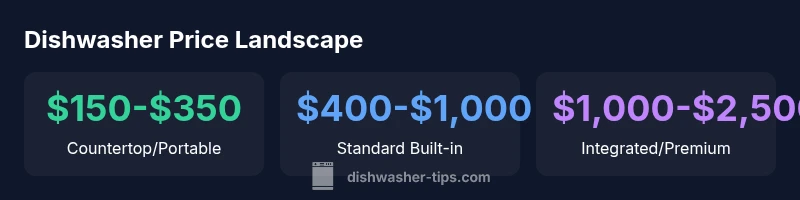
- Countertop/portable: $150-$350
- Standard built-in: $400-$1,000
- Integrated/panel-ready: $1,000-$2,500
The absolute minimum is for very small spaces; the premium extremes reflect panel-matching and advanced electronics. The exact price depends on the brand, capacity, finish, and whether you want smart features.
Factors driving price
Several core factors determine where a dishwasher lands on the price spectrum:
- Size and capacity: Larger tub and higher rack capacity typically cost more.
- Type: Portable/compact units are cheaper than built-ins and integrated models.
- Materials and finish: Stainless steel tubs and panels that match cabinetry add cost.
- Energy efficiency and water use: ENERGY STAR ratings and advanced sensors can raise upfront price but reduce operating costs.
- Noise and motor quality: Quieter operation and stronger motors generally command higher prices.
- Features: Smart connectivity, touch controls, dedicated soil sensors, and adjustable racks push price upward.
- Brand and warranty: Well-known brands with longer warranties can carry a premium but may offer better long-term value. By keeping these levers in mind, buyers can calibrate expectations and avoid paying for features they won’t use. As Dishwasher Tips notes, you don’t always get proportionate value from flashy tech if you don’t need it.
Estimating total cost of ownership
Upfront price is only part of the story. Total cost of ownership includes delivery, installation, possible removal of the old unit, water hookup adjustments, and extended service plans. Installation costs vary by region and existing hookups; typical ranges can add another several hundred dollars to the initial price. If you rent, you may face limited selection and higher delivery fees; for homeowners, long-term energy savings from a more efficient model can offset a larger upfront payment over time. When planning, tally upfront price, delivery/install charges, and projected monthly energy and water costs to compare options fairly. The Dishwasher Tips approach encourages a clear view of both purchase price and ongoing costs to avoid sticker shock later on.
How to shop smart
Smart purchasing hinges on planning and patience:
- Define space and capacity needs before shopping to avoid oversized or undersized models.
- Prioritize energy efficiency and warranty coverage to maximize long-term savings.
- Compare price-per-feature rather than just the sticker price.
- Watch for sales around holidays and retailer promotions; combine with rebates when available.
- Include installation and removal costs in your budget, so you don’t underestimate total investment.
- Read user reviews focusing on reliability and service responsiveness. Budget-conscious buyers should consider refurbished options only with strong warranties and proven service history.
In practice, keeping a simple checklist and a price/feature matrix helps you separate essential needs from nice-to-haves, reducing decision fatigue and increasing satisfaction with the final choice.
Buying tips for homeowners and renters
Renters often require flexible installation options and portable units, which can minimize upfront costs and improve compatibility with rental kitchens. Homeowners typically have more space to accommodate built-in or integrated models, where longer warranties and better long-term energy efficiency may justify higher upfront investment. Regardless of status, a careful comparison of models based on price tiers, energy ratings, and maintenance requirements yields the best value. Remember to factor in delivery, haul-away, and potential permit requirements for major renovations; some retailers offer bundled services that simplify these steps. The goal is to match budget with fit-for-purpose features, ensuring reliable performance over years of use.
Verdict
The Dishwasher Tips verdict is to favor models that balance essential capabilities with energy efficiency and reliable service coverage. For most households, a midrange standard built-in or panel-ready model with a solid warranty provides the best blend of upfront affordability and long-term value. Avoid overpaying for features you won’t use; instead, align your choice with your kitchen layout, daily load, and energy goals. Consistently compare alternatives, account for installation costs, and monitor seasonal deals to maximize savings. The Dishwasher Tips team recommends a thoughtful approach to price, which translates into better durability and satisfaction over the appliance’s lifetime.
Price ranges by dishwasher type
| Model Type | Typical Price Range | Notes |
|---|---|---|
| Countertop/Portable | $150-$350 | Small spaces, portable setup |
| Standard Built-in | $400-$1,000 | Most households, versatile fits |
| Integrated/Panel-ready | $1,000-$2,500 | Premium styling and features |
People Also Ask
What affects the price of a dishwasher the most?
Brand, size, finish, energy rating, and extra features drive price differences. Labor and installation options can also add to the upfront cost.
The main price drivers are size, finish, energy efficiency, and extra features, plus installation.
Are energy-efficient models worth the extra upfront cost?
Yes. They typically save water and electricity over time, reducing operating costs. The payback depends on usage and local utility rates.
Energy-efficient models save money over time; up-front cost is often recouped through lower bills.
Is it cheaper to buy a dishwasher during sales?
Seasonal promotions can reduce the upfront price; combine with rebates or coupons when available.
Sales can cut the price. Look for promotions around holidays.
Do installation costs impact total price?
Yes. Costs vary with existing hookups, space, and whether the old unit must be removed. Some models include installation in the price.
Installation costs can add noticeably to the total.
How long will a dishwasher last relative to its price?
Most dishwashers last about 9–12 years with proper care; higher-quality parts and warranties can extend value for pricier models.
A higher-priced model may last longer and offer better parts, boosting value.
“Price is only part of the value equation; reliability, energy efficiency, and service plans matter just as much as the upfront cost.”
What to Remember
- Define space and capacity before shopping.
- Prices vary by type; plan for features you need.
- Prioritize energy efficiency to reduce long-term costs.
- Shop during sales and include installation in budgeting.
- Expect total cost to include delivery, removal, and hookups.