Blue Land Dishwasher Tablets: In-Depth Review
An analytical review of blue land dishwasher tablets, exploring cleaning performance, dosing, packaging, price, and where they fit among mid-range detergent options for homeowners and renters.


blue land dishwasher tablets offer a reliable cleaning option for most households, with convenient dosing and mid-range pricing. According to Dishwasher Tips, the tablets perform consistently on everyday loads and are compatible with standard dishwashers. This review positions them as a solid middle-ground choice, delivering dependable results without premium features that raise price. See our detailed guide for context and practical tips.
Overview and positioning
blue land dishwasher tablets occupy a mid-range position in the detergent market, aimed at households that want solid, predictable cleaning without premium-brand pricing. In evaluating them, we consider everyday cleaning performance, dosing convenience, packaging waste, and total cost per load. This section helps homeowners and renters understand where these tablets fit relative to other common detergents and tablets, while aligning with real-world wash cycles and typical dishware inventories.
From a practical standpoint, the goal is straightforward: one tablet per standard cycle, no complicated rituals, and clean dishes after a typical family meal. The analysis covers mixed-load scenarios, plasticware care, and stubborn residues to determine whether the brand lives up to its everyday-use promise. We also examine packaging choices and disposal implications to assess environmental impact and convenience. The result is a grounded view that separates marketing claims from real-world outcomes, focusing on what matters most in daily kitchen routines.
Formulation and packaging
The formulation behind blue land dishwasher tablets emphasizes convenience and compatibility with common dishwashers. The tablets are designed to dissolve steadily in the wash cycle, releasing cleaning agents that tackle oils, starch, and light mineral residues. In our review, we examine claims such as phosphate-free formulas and enzyme activity, noting how these factors influence cleaning results on glassware and tableware. Packaging considerations, including pack size, resealability, and cardboard versus plastic wrappers, affect storage and waste, which many households weigh when choosing a detergent. Real-world use suggests a preference for packaging that minimizes clutter and simplifies per-load cost calculations, especially for households that run multiple cycles weekly.
The brand’s packaging strategy appears aimed at reducing plastic usage while preserving tablet integrity during transit. We discuss how packaging design influences user experience, including how easy it is to retrieve a tablet without breaking the rest of the pack. Our assessment also considers labeling clarity, such as dosage guidance and safety warnings, which help users avoid overuse and potential residue on dishes.
Cleaning performance on typical loads
In typical loads, blue land dishwasher tablets deliver dependable cleaning on everyday meals. We examine performance across common food residues—oil, pasta sauces, coffee stains, and dried-on bits—on a mix of glassware, porcelain, and plastic containers. The tablets are evaluated for their ability to prevent etching on glasses and to minimize film or white residue on plastics. We compare outcomes in soft, moderately hard, and hard water conditions to identify where performance might vary. In practice, many households report satisfaction with normal cycle results, provided dosing remains consistent with the water hardness in their area. This section also discusses how rinse aid use can complement tablets for optimal drying and sparkle on glassware.
We observed that results can improve with proper loading technique and adherence to manufacturer dosing guidance. For stubborn stains, longer cycles or additional pre-rinsing steps may help, though these adjustments mitigate the tablet’s standard convenience advantage. The takeaway is that blue land dishwasher tablets perform reliably for typical family loads, while exceptional messes may require straightforward adjustments or alternative cleaning approaches.
Dosing guidance and user experience
A key driver of value for any dishwasher detergent is dosing simplicity. blue land dishwasher tablets are designed for one tablet per cycle, with packaging that helps consumers avoid guesswork. In this section we discuss how to adapt dosing for hard water or heavily soiled cookware and the role of cycle selection in achieving best results. We also cover common user experience factors, such as tablet dissolution time, foaming behavior, and the ease of placing a tablet into the dispenser. Consumers who routinely run multiple cycles in a week can appreciate consistent performance when the tablets are stored in a cool, dry place and kept away from moisture.
We note that some dishwashers require a warm water start for optimal tablet dissolution. If a user’s water is very hard or if the dispenser experiences intermittent clogs, a rinse aid or a heavier-duty cycle can help maintain spotless dishes. Overall, the dosing experience for blue land dishwasher tablets tends to be straightforward, which reduces the cognitive load for busy households while maintaining predictable results.
Compatibility with water hardness and dishwasher types
Water hardness has a tangible impact on detergent effectiveness. In our evaluation, we explore how blue land dishwasher tablets perform in soft, moderately hard, and hard water environments. Hard water may require adjustments such as a longer rinse cycle or the use of rinse aids to prevent filming and dullness on glassware. We also examine compatibility with common dishwasher types, including standard residential models and high-efficiency (HE) machines. The tablets are designed to work in HE cycles when used as directed, but performance can vary with cycle choice and water temperature. For homeowners with aging or unusual dishwashers, this section provides practical guidance to optimize results through cycle selection and maintenance practices.
We advise users to check for any manufacturer recommendations on compatible detergents and to verify whether their model consumes more water or uses special detergents in certain cycles. When in doubt, experimenting with one cycle type can reveal the most consistent results for a given setup.
Environmental and safety considerations
Environmental responsibility is an important factor for many households. We review blue land dishwasher tablets with an eye toward packaging recyclability, ingredient transparency, and potential ecological effects. The packaging materials—whether cardboard sleeves, recyclable plastics, or paper-based wrappers—affect end-of-life disposal. In addition, we assess whether the formula is clearly labeled as phosphate-free and whether it includes enzymes and surfactants derived from sustainable sources. Safety considerations are also highlighted, including explicit dosage guidance, storage requirements, and safety warnings for households with children and pets.
Dishwasher Tips emphasizes responsible consumer choices, particularly when evaluating environmental impact and product safety. Our notes reflect that many households prioritize brands with clear labeling, recyclable packaging, and straightforward usage instructions. We also discuss septic-system considerations and how certain additives may interact with septic chemistry. Overall, blue land dishwasher tablets align with common environmental expectations for mid-range detergents while encouraging responsible usage and disposal.
Insights from our analysis suggest that consumers who value eco-conscious packaging and predictable cleaning performance will find this option appealing, provided they follow recommended dosing and cycle selections.
Price context and value for money
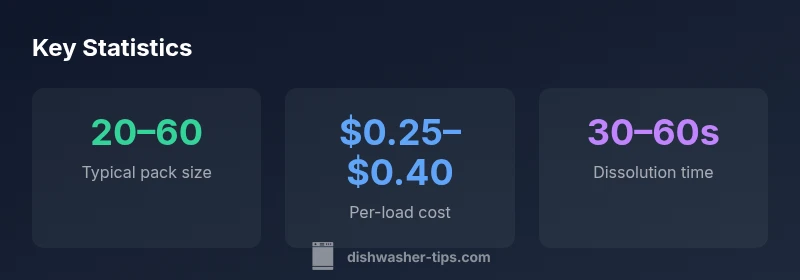
Price is a central determinant of value for any detergent. We contextualize blue land dishwasher tablets within a mid-range price band and examine how pack size and price promotions influence per-load cost. The analysis considers typical shelf prices, bulk-pack options, and seasonal discounts that affect annual cleaning budgets. While exact prices vary by retailer and region, the range generally reflects a balance between affordability and reliable cleaning performance.
We also discuss total cost of ownership, considering not only the per-load cost but also the convenience factor. For households that run multiple cycles weekly, bulk purchases can improve overall value, while occasional users may prefer smaller packs to minimize waste. The conclusion is that blue land dishwasher tablets offer competitive value for routine use, but shoppers should compare price-per-load across retailers to ensure they maximize savings over time.
How blue land dishwasher tablets compare to alternatives
To help readers place this product in context, we compare blue land dishwasher tablets with other common detergent formats, including liquid detergents and other tablet brands. The comparison focuses on cleaning performance consistency, dosing clarity, and packaging efficiency. Tablets typically win on convenience and pre-measured dosing, while liquids can offer flexibility in dosing for slightly different soil loads. Metal-free or phosphate-free variants often align with broader industry shifts toward more sustainable formulations. While our primary focus is the tablet form, understanding these contrasts can help shoppers determine whether a tablet-based approach is right for their household and dishwasher model.
Across alternatives, blue land dishwasher tablets typically provide predictable results for standard loads, with advantages in ease of use and reduced risk of over-dosing. However, price-per-load and availability can differ significantly by retailer, which can tilt the decision toward other formats in certain regions. The key takeaway is to evaluate personal washing habits and equipment before choosing between tablet and liquid options.
Buying guidance and what to watch for
When shopping for blue land dishwasher tablets, several practical criteria help ensure you get a good fit for your kitchen. First, verify that the pack size aligns with your typical weekly usage to minimize waste and maximize value. Second, read the label for ingredient disclosures, particularly phosphate content and enzyme sources, if sustainability or allergy considerations are important. Third, check for compatibility with your dishwasher model, including HE compatibility and recommended dosing practices. Finally, compare cost-per-load across retailers and consider whether promotions or loyalty programs impact long-term savings.
We also suggest testing a single cycle with a small pack before committing to a larger purchase. This approach helps you gauge whether the product meets your expectations for stain removal, drying quality, and glassware sparkle. By following these buying tips, readers can confidently select blue land dishwasher tablets and maintain consistent cleaning results in their homes.
The Good
- Convenient pre-measured doses for simple operation
- Solid cleaning performance on everyday loads
- Mid-range price point with good value for many households
- HE-compatible and widely available
Disadvantages
- Not the strongest option for heavily soiled or baked-on residues
- May require rinse aid in very hard water to prevent film on glassware
- Packaging may vary by retailer and sometimes includes plastic wrappers
Best value for everyday dishwashing without premium features
blue land dishwasher tablets deliver reliable, everyday cleaning with straightforward dosing and mid-range pricing. They are not the top choice for heavily soiled loads or extreme water conditions, but they offer solid performance for most households. The Dishwasher Tips team regards them as a dependable mid-market option with good overall value when used as directed.
People Also Ask
Are blue land dishwasher tablets safe for septic systems?
In general, dishwasher detergents labeled phosphate-free and formulated for household use are compatible with most septic systems when used as directed. Always follow dosage instructions and avoid mixing with bleach or other cleaners. If you have a sensitive septic system, consult the product label and local guidelines.
Most septic systems handle standard dishwasher detergents fine when you use the product as directed. Check the label and avoid mixing cleaners.
Can these tablets be used in high-efficiency (HE) dishwashers?
Yes, blue land dishwasher tablets are designed to work in HE dishwashers when used as directed. Ensure you use the recommended dosage and follow the manufacturer’s cycle recommendations for optimal cleaning.
Yes, they work in most HE dishwashers as long as you follow the dosage on the label.
Do they work with cold water washes?
Dishwasher tablets typically dissolve best in warm or hot water. While some cycles may start cold, you may see reduced cleaning efficiency if the water remains cold for an extended period. If you routinely use cold starts, consider a product labeled for cold-water performance.
They usually work best with warm water starts; cold starts may reduce cleaning power.
Do blue land dishwasher tablets contain phosphates?
Many brands have moved away from phosphates in response to environmental concerns. Check the product label for current ingredients. If phosphate-free is important to you, verify the ingredient list before purchase.
Look for phosphate-free labeling on the package and read the ingredients.
What is the recommended dosage for hard water?
For most hard water areas, follow the standard dosage of one tablet per cycle, and consider using a rinse aid to prevent mineral buildup on glassware. If residue persists, run an extra rinse or try a cycle with higher temperature.
Stick to one tablet per cycle and add rinse aid if your water is hard.
What to Remember
- Start with a single-pack purchase to verify results
- Use one tablet per standard cycle for best results
- Pair with rinse aid in hard water for spotless glassware
- Check packaging and recycle where possible
- Compare price-per-load across retailers to maximize value