Does Dishwasher Detergent Expire? A Practical Shelf-Life Guide
Does dishwasher detergent expire? Learn shelf life ranges for powders, liquids, and pods, plus practical storage tips to keep dishes clean and residues at bay.


Does dishwasher detergent expire? Yes, most detergents have a shelf life, typically 12-24 months unopened and 6-12 months after opening, depending on format. Store in a cool, dry place and keep containers tightly closed to preserve cleaning power; if you see clumping or separation, replace. For powder, liquid, or pod varieties, always check the label for the manufacturer’s guidance on shelf life and usage window.
Does Dishwasher Detergent Expire? Practical reality
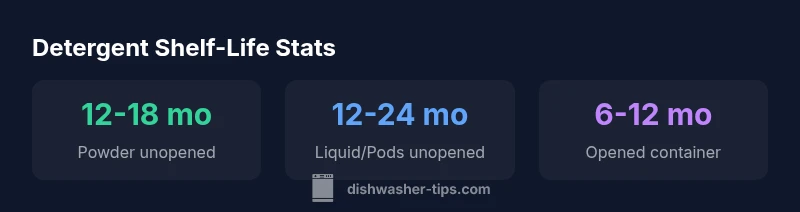
Does dishwasher detergent expire? It’s a common question for homeowners and renters trying to keep dishes clean without waste. The quick answer is yes for many products, but the exact timeline depends on detergent type and storage. Powder detergents are typically more moisture-sensitive, while liquids and pods are somewhat more forgiving if unopened. According to Dishwasher Tips, shelf life for unopened powders is often 12-18 months, and unopened liquids or pods can last 12-24 months when kept in a cool, dry place. Once the container is opened, potency usually declines more quickly; use within 6-12 months if possible. In all cases, always check the label for the manufacturer’s recommended window and follow basic storage rules to prevent clumping or separation. The bottom line: do not assume a hard expiry date—base decisions on storage, appearance, and scent.
How shelf life varies by detergent type
Shelf life is not one-size-fits-all. Powder detergents tend to be the most moisture-sensitive because free or absorbed moisture can trigger clumping and reduce active enzymes. Unopened powder bottles typically advertise an extended window, often in the 12-18 month range, while once opened, their window narrows to 6-12 months depending on storage conditions. Liquid detergents and detergent pods are less prone to caking but can experience phase separation or spotting if exposed to heat or direct sunlight; unopened bottles or pods commonly offer a 12-24 month window. Once opened, plan for 6-12 months of usable life. Understanding these differences helps you minimize waste without sacrificing performance.
How storage conditions affect longevity
Storage quality has a big impact on shelf life. A cool, dry, and sealed environment slows moisture ingress and chemical degradation. Keep detergents away from heat sources like ovens or stovetops and away from humidity-prone areas like laundry rooms near washing machines. Direct sunlight can alter chemical composition in some formulas over time. For best results, store containers upright with caps tightly closed, and avoid transferring detergent to other containers that may be less airtight. If you notice moisture around the lid or a softened or altered texture, it’s wise to assess whether the product remains effective.
Signs that detergent may have lost potency
Time isn’t the only culprit—moisture, heat, and age all play a role. Watch for powder detergents that clump or harden, liquids that separate or develop a sour odor, and pods that swell or lose their clean-dissolving behavior. If you see any of these signs, switch to a fresh bottle or pack. Residue on dishes, film buildup, or a noticeable drop in cleaning performance are also red flags that your detergent has degraded. Even if it isn’t obviously spoiled, if you’re unsure about its performance, test it with a small batch to compare results with a known-good product.
How to test potency at home
A simple at-home test can give you a quick read on potency without risking a whole load. Take a small test batch of dishes with a controlled amount of detergent and run a cycle. Compare results to a similar load cleaned with a fresh detergent. Look for spot-free glasses, clean silverware, and absence of film on plates. If you notice dulling, film, or poor suds, it’s a sign to replace. This method isn’t a perfect scientific measure, but it provides a practical, real-world gauge you can apply before a larger wash.
Recommendations for replacing or rotating stock
To minimize waste and maximize performance, practice stock rotation. Use the oldest detergent first and keep a visible calendar or shelf-label indicating purchase dates. Consider purchasing smaller packs if you rarely use detergent, or set reminders to check shelf life after major seasonal use. If you’re dealing with a mixed detergent lineup (powder, liquid, pods), group them by format and rotate within each group. When in doubt, trust the label’s shelf-life guidance and err on the side of replacement if you notice degradation signs.
Special considerations for pods, liquids, and powders
Pods are convenient but can be compromised by moisture in the wrong storage. Powders can clump in humid environments or when exposed to moisture during transfer. Liquids are less prone to clumping but may degrade if exposed to heat or sunlight. When choosing between formats, consider your dishwasher model, your typical load, and how you store products. Regardless of format, always reseal promptly after use and store away from direct heat and moisture to maintain peak performance as long as possible.
Impact on cleaning performance and dishwasher health
Expired or degraded detergent won’t typically hurt the dishwasher, but it can reduce cleaning power and leave residue on dishes, potentially affecting sanitation and drying. If the product forms a cloudy or gummy film in the dispenser, you may be dealing with degraded composition. Regularly inspecting and rotating stock helps prevent poor wash results and minimizes the risk of deposits building up in dispensers. For households with hard water, using fresh detergent aligned to water hardness tends to yield better results than relying on older stock.
Practical storage checklist for busy households
- Check label for official shelf life and usage window. Ensure you know unopened vs opened timeframes.
- Store in a cool, dry place away from sunlight and heat sources.
- Keep containers tightly closed and upright to prevent moisture ingress.
- Rotate stock: use oldest items first; mark purchase dates on the bottle.
- Do not mix different detergent formulas in the same container or region.
- Discard any product showing clumping, separation, or strong off-odors.
- For busy households, consider labeling a dedicated shelf with reminders for replacement dates.
Shelf life by detergent variant
| Variant | Unopened Shelf Life | Opened Shelf Life |
|---|---|---|
| Powder | 12-18 months | 6-12 months |
| Liquid | 12-24 months | 6-12 months |
| Pods | 12-24 months | 6-12 months |
People Also Ask
Does expiry apply to all formats (powder, liquid, pods) equally?
Not exactly. Powders are more moisture-sensitive and may expire sooner in humid environments, while liquids and pods often tolerate unopened storage a bit longer. Always reference the label for the exact shelf-life window by format.
Formats differ in shelf life; powder can be moisture-sensitive, while liquids and pods vary. Check the label for the exact window.
What should I do if my detergent has changed in texture or color?
Texture changes like clumping, separation, or color shifts usually indicate degradation. Do not rely on it for cleaning power; replace it to avoid residue and poor performance.
If it clumps or changes color, replace it to avoid residue and poor cleaning.
Can I still use detergent beyond its shelf life?
Clean dishes may still be possible, but effectiveness will likely be reduced. For best results, replace after reaching the recommended window rather than testing limits.
Using beyond shelf life risks poor cleaning; replace for best results.
How should I store detergent in small apartments?
Keep detergents in a dedicated, cool, dry cabinet away from the stove and sink. Use airtight containers if you transfer contents, and label with purchase dates to manage rotation.
Use a small, dry cabinet and label dates to keep rotation simple.
Is there a safe way to dispose of expired detergent?
Follow local disposal guidelines. Do not pour detergent down the drain in large amounts. If in doubt, contact your local waste management program for guidance on safe disposal.
Check local disposal rules and avoid dumping large amounts down the drain.
“Proper storage and timely rotation are as important as choosing the right formula.”
What to Remember
- Check labels for shelf life and usage windows.
- Store detergents in a cool, dry place away from heat.
- Opened detergents shorten shelf life; replace as needed.
- Powder detergents generally tolerate moisture better than liquids.
- Rotate stock to minimize waste and maintain performance.