Where Do Dishwasher Pods Go: A Practical Guide
Learn exactly where to place dishwasher pods for best cleaning, safety, and maintenance. This comprehensive guide from Dishwasher Tips covers detergent dispensers, myths, HE machines, troubleshooting, and more.


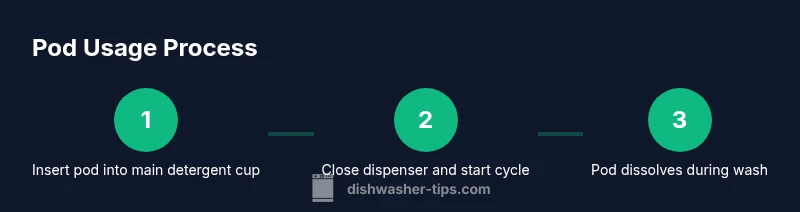
To answer where do dishwasher pods go: in most machines, the pod should be placed in the main detergent dispenser before starting the cycle. Do not put the pod in the bottom of the tub or directly in the drum. Close the dispenser, choose an appropriate wash cycle, and run the machine as usual. This placement maximizes dissolution and cleaning performance.
How dishwasher pods work
Dishwasher pods are pre-measured detergent packets that release cleaning agents when they come in contact with water. They are designed to dissolve during the wash cycle, allowing the surfactants, enzymes, and rinse aids to break down food residues and oils on dishes. The answer to the question where do dishwasher pods go is not esoteric: they belong where the machine expects detergent to originate—inside the detergent dispenser—so that the active ingredients are released at the correct phase of the cycle. When used correctly, pods help reduce residue and spotting, while offering a convenient, single-dose option. For most households, the pod dissolves best in a normal wash using hot water, with the dispenser lid fully closed after placement.
As you read, keep in mind that pods are formulated for automatic dosing; misplacing them can lead to incomplete cleaning or clogged dispensers. Always consult your model’s manual for any exceptions (some high-end models have unique dispensers).
Where to put dishwasher pods
The standard guidance is straightforward: place the pod in the main detergent dispenser, not directly in the drum. The main wash compartment is designed to receive the pod alongside water that enters the dispenser when the cycle begins. This ensures the pod dissolves evenly and releases cleaning agents at the right time. Do not attempt to puncture or open the pod wrapper, as the outer film is designed to dissolve with water and pressure. For most machines, you will see a cup-like compartment on the dishwasher door with a hinged lid. Drop the pod into that cup and snap the lid shut before starting the cycle. If your model has a pre-wash cup, ignore it for pod dosing unless the manufacturer specifies otherwise.
If you have skepticism about placement, test with a light load and observe the cycle indicators. Over time, you’ll notice that pods used in the correct dispenser produce fewer residual spots than pods placed elsewhere.
Common myths and misuses
A common myth is that pods work better when placed in the bottom of the dishwasher drum for quicker dissolution. In reality, pods can become stuck, fail to dissolve properly, or fail to distribute evenly across the load. Another misconception is that any pre-wash section is interchangeable with the main wash cup. Some machines do offer dual-dispensers, but you should follow the manufacturer’s guidance for the exact pod placement. Finally, some people assume pods are safe for septic systems without considering the chemical load. Not all pods are explicitly labeled septic-safe, so verify the product claims if you rely on a septic system.
Dishwasher Tips recommends sticking to the manufacturer’s recommendations and choosing pods that are clearly labeled as compatible with your machine type and water hardness. This reduces likelihood of residue and rinse issues.
Choosing the right pod for your machine
Detergent pods come in various formulations, including standard and high-efficiency (HE) options. HE machines are designed to use less water and typically heat water more efficiently, so pod formulations marketed for HE use can improve performance in those cycles. Consider the water hardness in your area—if you have hard water, you may benefit from a pod with built-in water-softening agents or a compatible rinse aid. If you have a septic system, look for pods labeled septic-safe and avoid extra harsh formulations that could affect the microbiota in your septic tank. Reading the packaging for disposal and environmental notes is a good habit.
To maximize results, avoid mixing pods with additional detergents or additives in the same cycle. Pods are designed to be a complete detergent package; adding extra cleaning agents can lead to oversudsing or residue on dishes.
Special cases: hard water and HE machines
Water hardness can affect how well a pod dissolves and cleans. In hard water areas, the minerals can interact with detergents, causing residues or film on glassware. Choosing a pod formulated to handle hard water or adding a compatible rinse aid can mitigate these effects. High-efficiency machines use less water and rely on the detergent to dissolve quickly; a pod designed for HE cycles tends to yield better distribution and foaming control. If you notice white film on dishes after using a pod, try a different formula or adjust the cycle to a longer, more thorough option. Your dishwasher’s manual may also suggest a specific HE detergent variant.
Dishwasher Tips emphasizes testing a few pods with your current settings before committing to a single brand for hard-water conditions.
How to maintain the detergent dispenser
Dispenser maintenance is a key part of keeping pods working as intended. Residue buildup can prevent a pod from dissolving completely, leading to cloudy dishes or white streaks. Regularly wipe the dispenser cup with a damp cloth to remove detergent crusts, paying attention to the seal and the hinge area of the lid. If your dispenser has a small drain channel, ensure it’s not blocked. Some models include a “rinse aid” cup; keep it filled if recommended by your manual. Cleaning the dispenser monthly or after several cycles with heavy soiling is a good practice.
A simple diagnostic: run a cycle with no dishes and inspect whether the pod dissolves within the cup. If it sits or ruptures, you may have a dispenser issue or need a different pod formulation.
Troubleshooting: pod not dissolving
If a pod fails to dissolve, start by verifying water temperature—many pods require hot water for optimal dissolution. If your cycle is set to a cold or eco setting, switch to a standard hot cycle for testing. Inspect the detergent dispenser for film or obstruction that could hinder release and dissolution. Ensure you’re using the correct pod for your dishwasher model; some pods are not compatible with certain cycle durations or water pressures. Finally, consider trying a different pod brand or formula, as some pods dissolve more reliably in your machine’s specific conditions.
If the issue persists, consult the manufacturer’s troubleshooting guide or contact customer support for model-specific guidance.
Safety and environmental considerations
Always keep pods out of reach of children and pets; the detergent’s concentrated chemistry can be harmful if ingested. Do not break pods by hand, as the wrapper and contents can irritate skin and eyes. Choose septic-safe or phosphate-free options when available to minimize environmental impact. Be mindful of the load size; overly large loads may trap pods in corners, reducing dissolution efficiency. Finally, dispose of empty wrappers according to local guidelines and recycle where possible. For eco-conscious users, look for pods that advertise reduced packaging and lower environmental impact.
After-use care and quick maintenance checklist
After finishing a cycle, inspect the door area and dispenser to ensure no pod fragments remain in the cup. If residue is present, wipe the cup dry and close the lid fully to prevent moisture intrusion. Keep a simple log of which pod brands work best with your machine and environment, updating the list as needed. Regularly verify that the filter and spray arms are clean, as clogged components can affect cleaning quality and cycle efficiency. This simple routine helps keep your dishwasher in peak condition and reduces repeat service calls.
Authoritative sources
- https://www.epa.gov/
- https://extension.illinois.edu/
- https://www.energystar.gov/products/appliances/dishwashers
Tools & Materials
- Dishwasher pods(Choose pod format appropriate for your machine; HE pods for HE machines recommended)
- Soft cloth or sponge(For wiping dispenser residue and the dispensing area)
- Dishwasher owner's manual(Model-specific guidance for dispenser features)
- Gloves(Optional protection when cleaning the dispenser)
Steps
Estimated time: 30-40 minutes
- 1
Open the detergent dispenser
Locate the detergent cup on the dishwasher door and lift the lid or release the latch to reveal the main wash compartment. This prepares a clean space for the pod and ensures proper closure after dosing.
Tip: Pro tip: Check for cracks or residue around the lid that could hinder sealing. - 2
Place the pod into the main wash compartment
Gently drop the pod into the main wash cup, ensuring it sits fully inside the cup and not on the rim. Avoid puncturing or crushing the pod, which could cause an uncontrolled release.
Tip: Pro tip: If your model has a pre-wash cup, only use it for products that specify it; otherwise, stick to the main cup. - 3
Close the dispenser securely
Lower or snap the lid back into place until it clicks. A proper seal ensures the pod dissolves at the correct stage of the cycle.
Tip: Pro tip: Before starting, wipe away any detergent dust from the rim to prevent mis-sealing. - 4
Load dishes and select the cycle
Arrange dishes so water can reach all surfaces; avoid blocking the spray arms. Choose a cycle appropriate for soil level and load size; hot water improves pod dissolution.
Tip: Pro tip: For heavily soiled loads, choose a longer cycle with a higher wash temperature if your dishwasher offers it. - 5
Run the cycle
Start the cycle as you normally would. Observe the cycle’s progression and ensure the door remains closed during the wash for safety and optimal performance.
Tip: Pro tip: Do not interrupt the cycle once started; a mid-cycle pause can affect dissolving and rinse results. - 6
Check pod dissolution after a test cycle
If you’re testing, run a cycle and watch to see that the pod fully dissolves within the cup. If fragments remain, inspect the dispenser for obstruction and consider a different pod formula.
Tip: Pro tip: Run a test cycle with a small, lightly soiled load to verify dissolution without risking a full wash. - 7
Maintain the dispenser regularly
Wipe the cup and seal monthly, remove crusty build-up, and check for any residue that could block release. Regular maintenance helps keep cleaning performance consistent.
Tip: Pro tip: Keep a small cleaning kit handy for quick dispenser upkeep between deep cleans.
People Also Ask
Where do dishwasher pods go in a standard dishwasher?
In the main detergent dispenser, not in the drum. This ensures the pod dissolves at the correct time during the wash.
Put the pod in the detergent cup, then start the cycle.
Can I put a pod directly in the dishwasher drum?
No. Pods are designed to dissolve in the detergent cup. Placing a pod in the drum may cause incomplete cleaning and damage the cycle.
Avoid putting pods in the drum; use the dispenser instead.
What if my pod doesn’t dissolve?
Check water temperature, cycle type, and dispenser cleanliness. If needed, try a different pod formulation or cycle setting.
If it doesn’t dissolve, verify hot water and clean the dispenser.
Are dishwasher pods safe for septic systems?
Look for pods labeled septic-safe and follow local guidelines. Avoid excessive detergent use on each cycle.
Choose septic-safe pods and use them as directed.
Do I need to change pods for heavily soiled loads?
Pods are pre-measured; for heavy soils, use a longer cycle or an extended wash option if available.
Use a longer cycle for very dirty dishes if your machine supports it.
Are pods compatible with high-efficiency dishwashers?
Most pods are designed for HE machines; always check the packaging for your model’s compatibility.
Yes, most pods work in HE machines; verify on the label.
Watch Video
What to Remember
- Place pods in the main detergent dispenser.
- Do not place pods directly in the drum.
- Keep the dispenser clean to prevent residue buildup.
- Choose pods compatible with your machine, especially HE models.