Which Dishwasher Detergent Is Safe? A Practical Guide
Learn how to identify safe dishwasher detergents, decode labels, and test compatibility with your unit. This guide covers ingredients to avoid, environmental impact, and practical tips for households.


For safe use, choose fragrance-free, dye-free detergents with clear allergen labeling and phosphate-free formulas. Compare ingredient lists, ensure septic compatibility if applicable, and match them to your water hardness. Read labels carefully and test a small load to confirm safety and performance before committing. Prioritize brands that publish transparent ingredient lists and independent certifications.
What makes safe dishwasher detergents?
Choosing a detergent that is safe for your household hinges on more than a pleasant scent or a low sticker price. A truly safe option minimizes exposure to allergens, harsh chemicals, and residues left on dishes. It also considers the environment and the appliance itself. According to Dishwasher Tips, safety starts with ingredient transparency, labeling, and the absence of certain irritants. If you’re asking which dishwasher detergent is safe, you should evaluate products for fragrance-free formulations, clear allergen information, and evidence of responsible manufacturing. Beyond personal safety, consider how the formula interacts with your water type and whether it is compatible with septic systems. A safe detergent should not produce excessive suds or leave gritty films on glassware, and it should function reliably across a range of dishwashing cycles.
- Look for explicit ingredient lists.
- Prefer products with fragrance-free or mild fragrance options.
- Check for certifications from trusted bodies and independent reviews.
These habits help you move toward a safer choice without sacrificing cleaning power.
Ingredient safety to look for
Ingredient safety is the backbone of a safe dishwasher detergent. Start by scanning the label for fragrance, dyes, and harsh solvents. Enzymes and chlorine bleaches have legitimate cleaning roles, but they can raise the risk of skin irritation or residue on sensitive loads. Safer options often emphasize phosphate-free formulas and simple, recognizable ingredients. Look for evidence of third-party testing or certifications, and favor products that disclose their full ingredient list rather than marketing buzzwords. If you have chemical sensitivities or respiratory concerns, seek fragrance-free variants and avoid labels that rely heavily on “natural” claims without specifics. The goal is transparency: you should be able to understand what’s in the product and how it might affect your family and environment.
- Fragrance-free or lightly scented options reduce exposure risks.
- Phosphate-free formulas tend to be gentler on skin and ecosystems.
- Transparent ingredient lists aid informed decisions.
Fragrance, dyes, and allergen labeling
Fragrance and dye content is a major safety consideration for households with allergies or sensitive skin. Detergents labeled as “fragrance-free” or “hypoallergenic” are not automatically safer for everyone, but they reduce the risk of irritants. Carefully reading allergen labeling can help you avoid known triggers. Some manufacturers publish full ingredient disclosures that reveal fragrance components or potential irritants, which is particularly valuable for households with children or pets.
- Prioritize products with explicit allergen warnings.
- Prefer fragrance-free formulations for sensitive users.
- Be cautious of vague terms like “unscented” without detail about masking agents.
In practical terms, the safer choice aligns with your family’s health needs and comfort level with fragrance.
Pod vs liquid vs powder: safety considerations
Detergent form factor influences safety in several ways. Pods deliver measured doses but can pose choking hazards for young children or pets if not stored securely. Liquids and powders offer more control over dosing but may mix with rinse aids and water hardness differently. When evaluating which dishwasher detergent is safe, assess the form factor in light of your household: pods for simplicity if you can store them safely; liquids for steady dosing; powders for lower-cost, long-term use. Regardless of form, read the label for recommended use, dosage, and any cautions about mixing with other cleaning products.
- Pods can reduce dosing errors but require safe storage.
- Liquids provide measurable control for variable loads.
- Powders are cost-conscious but may leave more residue in hard water.
Phosphates, enzymes, and environmental impact
Historically, phosphates aided cleaning performance but raised environmental concerns, particularly in wastewater systems and freshwater bodies. Today, many jurisdictions encourage phosphate-free formulations to minimize eutrophication risk. Enzymes can enhance stain removal at lower temperatures, which is energy-efficient, but some users worry about enzyme allergies. When assessing safety, consider not only personal safety but also environmental responsibility. Look for phosphate-free labels and third-party eco-certifications that verify environmental claims. While enzymes can be beneficial, ensure the product is compatible with your dishwasher’s seals and gaskets to prevent unexpected wear.
- Phosphate-free options often have lower environmental impact.
- Enzyme-containing detergents work well at lower temperatures but may affect sensitive households differently.
- Certifications from credible sources help validate environmental claims.
Water hardness, dosing, and dishwasher compatibility
Water hardness affects cleaning performance and residue formation. Hard water can cause mineral buildup on dishes and interior components, which may influence the perceived safety of a detergent. When choosing which dishwasher detergent is safe, consider how dosing aligns with your water type. Many modern detergents are designed to be effective across a range of hardness levels, but you may need to adjust dosage or pre-wilier rinse to prevent film formation. If you’re unsure, start with the detergent brand’s recommended schedule and run a few cycles on lightly soiled loads to gauge performance without sacrificing safety.
- Hard water may require extra rinse or a chelating agent.
- Follow manufacturer dosing instructions to minimize residue.
- Test detergent performance with a few trial cycles before committing to regular use.
Reading labels: a practical checklist
Label literacy is essential for safety. Create a quick checklist you can apply to every detergent you consider:
- Is the product fragrance-free or clearly labeled as mild/fragrance-free?
- Are dyes avoided or clearly disclosed?
- Is there a full ingredient list with known irritants flagged?
- Does the product carry independent certifications (e.g., Safer Choice or equivalent)?
- Is the packaging recyclable and clearly labeled for septic compatibility if relevant?
Using this checklist turns a vague claim into a data-driven decision. It also helps you compare two products side by side for safety and performance, which is central to answering which dishwasher detergent is safe for your home.
How to test safety in your dishwasher
Testing is the most reliable way to confirm safety for your loads. Start with a small, controlled load using a new detergent and observe for residue, film, or unusual suds. Run a standard cycle with unsoiled dishes to check for squeaky clean outcomes and any chemical odors. If you notice irritation on hands or skin after handling dirty dishes, or if pets or children are nearby, pause use and reassess ingredients. Document results across several cycles and compare them with your prior detergent to determine which one is safest for your household.
- Run a controlled, small test load.
- Monitor for residues and odors.
- Make a note of any discomfort or allergic reaction.
Household considerations: kids, pets, and allergies
Families with kids or pets must prioritize safety. Keep detergents out of reach and use child-resistant storage. Choosing fragrance-free options reduces inhalation risks for sensitive users. For households with known allergies, select products with transparent ingredient lists and avoid potential irritants. Regularly washing around the kitchen and dishwasher area helps prevent exposure to chemical residues.
- Store detergents securely away from children and animals.
- Favor fragrance-free formulas when allergies are present.
- Maintain a clean dishwasher environment to minimize incidental exposure.
Septic systems and gray-water compatibility
If your home relies on a septic system, you should consider septic-safe detergents designed to minimize bacterial disruption. Look for products explicitly labeled as septic-safe and compatible with gray-water use. While many mainstream detergents are safe for septic systems when used as directed, always follow dosage guidelines and avoid overuse. If you’re unsure about a product’s septic compatibility, consult your local environmental guidelines or the product’s published safety data.
- Choose septic-safe formulas when applicable.
- Do not over-doser; follow label directions.
- Reserve gray-water use for approved applications and consult guidelines.
Maintaining your dishwasher for safety
A safe detergent is only part of the equation. Regular maintenance supports safe cleaning and long-term appliance health. Clean seals and spray arms, remove mineral buildup, and run periodic cleaning cycles with a dishwasher cleaner or white vinegar as recommended by the manufacturer. A well-maintained dishwasher reduces the risk of residue and ensures consistent performance across loads. Finally, periodically review your detergent choices as new formulations and safety certifications emerge to stay current with best practices.
- Schedule regular self-cleaning cycles.
- Inspect seals for wear and replace as needed.
- Reassess detergent safety periodically as formulations change.
Comparison
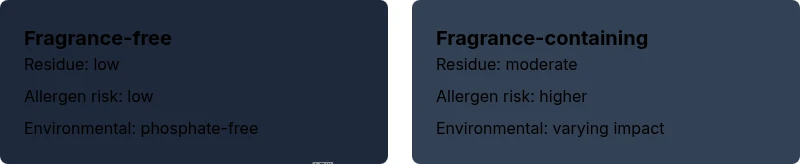
| Feature | Fragrance-free | Fragrance-containing |
|---|---|---|
| Residue risk | low | moderate |
| Allergen potential | low | high |
| Septic system compatibility | generally safe | depends on formulation |
| Environmental impact | lower impact (phosphate-free) | potentially higher impact (phosphates) |
| Cost per load | mid-range | varies by brand |
| Best for | sensitive households, allergy concerns | those who prefer scent |
The Good
- Helps minimize chemical exposure for households with sensitivities
- Clear labeling with allergen information
- Phosphate-free options reduce environmental impact
- Can find fragrance-free options
- Supports safer compatibility with septic systems
Disadvantages
- Fragrance-free options may be harder to find or pricier
- Some 'safe' claims are marketing-driven and not standardized
- Effectiveness may vary by water hardness
- Not all 'safe' detergents are automatically safe for all dishwasher models
Fragrance-free, clearly labeled detergents with phosphate-free formulas are the safest baseline option for most households.
Safety hinges on ingredients and labeling. Choose fragrance-free, phosphate-free detergents with transparent ingredient lists; verify compatibility with your water type and septic system. Consider independent certifications for added assurance.
People Also Ask
What makes a dishwasher detergent safe?
A safe dishwasher detergent minimizes skin and respiratory irritation, avoids harsh chemicals, and reduces environmental impact. Look for fragrance-free options, clear ingredient lists, and third-party certifications.
Safe detergents minimize irritation and environmental impact; check labels and certifications for confidence.
Are dishwasher pods safer than powders or liquids?
Pods reduce dosing errors but can pose poisoning risks for children and pets if not stored securely. Liquids and powders offer dosage control but may require careful handling to prevent spills. Safety depends on storage and labeling, not just form.
Pods can be convenient but need secure storage; all forms can be safe with proper handling.
How can I tell if a detergent is septic-safe?
Look for explicit septic-safe labeling or guidance from the manufacturer. If in doubt, choose products labeled as septic-safe and follow dosing instructions to avoid overloading the septic tank.
Check for septic-safe labeling and follow dosing guidelines.
Do enzyme-containing detergents pose allergy risks?
Enzymes can cause allergic reactions for some individuals, though this is relatively uncommon. If you have sensitivities, opt for enzyme-free or clearly labeled enzyme choices and monitor your skin and respiratory responses.
Enzymes may pose rare allergy risks; choose enzyme-free options if you have sensitivities.
How does water hardness affect safety?
Hard water can leave mineral residues that interact with detergents. Use the brand’s recommended dosage for your water type, or switch to a formula designed for hard water to maintain safety and performance.
Hard water can affect safety and cleaning; use the right dosage for your water.
What maintenance helps keep detergents safe?
Regular dishwasher maintenance reduces residue buildup and helps detergents work safely. Clean seals, run periodic cleaning cycles, and replace worn gaskets to maintain safe operation.
Keep the dishwasher clean to ensure detergents work safely.
What to Remember
- Choose fragrance-free options when possible
- Read full ingredient lists and allergen labels
- Prefer phosphate-free detergents for environmental safety
- Test a new detergent with a small load first
- Store detergents safely, away from kids and pets