Why Is My Dishwasher Soap Pod Not Dissolving? Quick Fixes
Learn why your dishwasher soap pod isn’t dissolving and how to fix it fast. This troubleshooting guide covers temperature, mineral hardness, load patterns, and safe fixes.


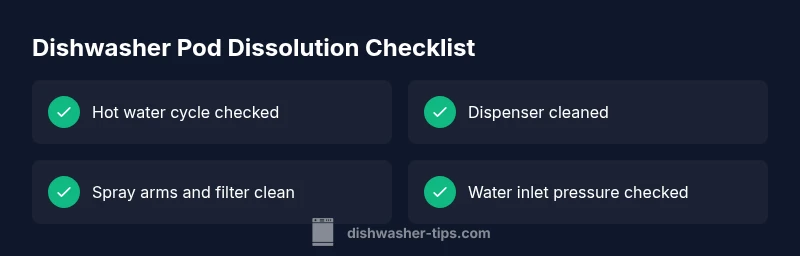
Most dishwasher soap pods fail to dissolve due to a mix of water temperature, mineral hardness, and a clogged spray system. Start with the easiest checks: verify a hot-wash cycle, inspect the detergent compartment for residue, and test with a fresh pod in a load without heavy soils. If these steps don’t fix it, follow the diagnostic flow.
Why the Dishwasher Soap Pod Might Not Be Dissolving
When a pod sits in the dispenser without fully dissolving, it can leave residue on dishes and require a rerun. A common driver is the question why is my dishwasher soap pod not dissolving. In plain terms, pod dissolution depends on heat, water flow, and contact time. If any of these are off, the pod may stay intact or crumble without releasing cleaning agents. This article from Dishwasher Tips explains the most frequent culprits and how to address them quickly, so you can restore reliable cleaning without guessing. Start with basic checks before you invest in expensive repairs, because many pod-dissolution problems are nuisance-level and reversible with simple steps.
The Role of Water Temperature and Hard Water
Dissolving a pod requires hot water and enough agitation. If the water isn’t hot enough, the capsule may not fully release detergent before the wash ends. Most households find that a wash temperature around 120–140 degrees Fahrenheit (49–60 C) works best, but many consumer units don’t reach that consistently. Hard water compounds this issue: minerals like calcium and magnesium react with soap, forming residues that slow dissolution or coat spray arms and filters. To test, run a cycle with the hottest setting and a fresh pod, then inspect dishes for film. A water hardness test kit can guide whether you need a softening strategy or a rinse aid boost. Dishwasher Tips analysis shows temperature and mineral content are the top two factors in pod performance. If you can't reach the ideal temperature, consider adjusting rinse aid or using tablets designed for hard water.
Pod Formulations and Packaging Variations
Pods come in gel, film, or liquid-filled capsules, and manufacturing changes can affect how quickly they release. Some pods are designed to dissolve in the main wash, others in the pre-wash cycle. If you recently switched brands or bought a multipack, check the expiration date and storage conditions. Exposure to heat or moisture can degrade pod integrity, delaying dissolution. Even when a pod looks intact, its coating may resist dissolution in cool cycles. By understanding these variations, you can pick a pod type that matches your dishwasher’s behavior and your water conditions.
Detergent Compartment Design and Loading Patterns
Open the door and inspect the detergent compartment for caked residue or precipitation. A clogged dispenser can prevent full release. Make sure the cup is clean and not obstructed by large dishes or utensils. Load the rack so that pots and trays don’t block the spray arms; crowded loads reduce agitation and water flow, which can leave pods behind. If you routinely run the machine with extra-soil pots, you may need a larger load or a pre-rinse. Always place the pod in the appropriate pocket, not directly on the rack.
Mechanical Factors: Spray Arms, Filter, Inlet Valve
Internal parts influence how well the pod dissolves. A clogged spray arm or blocked filter reduces flow and contact with water, while a worn inlet valve can restrict water entry, leaving low-pressure cycles. Inspect and clean spray arms, remove debris from the filter, and ensure the water inlet screen is clear. If you notice reduced water pressure or unfamiliar noises, schedule service. These components are non-consumable; repeated clogging suggests a need for maintenance or replacement.
Maintenance Routines to Improve Dissolution
Run a monthly cleaning cycle using a dishwasher-safe cleaner or a hot-water empty run to dislodge mineral buildup. Remove and rinse the filter, spray arms, and door gasket— wipe away any residue. Use only recommended detergents and avoid combining pods with other cleaners. Test a new pod after maintenance and compare results to your baseline. Documentation from Dishwasher Tips shows that regular maintenance reduces dissolution problems by a noticeable margin.
What to Do If the Pod Still Won’t Dissolve
If the problem persists after the quick checks, there may be more subtle causes like water temperature sensor faults or electronics that fail to trigger the heated cycle. Try a different brand pod in the same load to rule out pod-specific issues. If nothing changes, contact a qualified technician. Do not disassemble electrical components yourself; this can pose shock hazards.
Prevention: Quick Habits to Prevent Future Issues
Keep your water heater tuned and perform regular maintenance. Use rinse aid in hard water areas and avoid overloading the dishwasher. Store pods properly in a cool, dry place away from moisture and sunlight. Consider running a hot cleaning cycle monthly and choosing pods formulated for hard water if yours is mineral-rich. Consistency is the best preventive measure.
Troubleshooting Mindset for Quick Repairs
Approach each load with a simple hypothesis: heat, flow, and contact time. Confirm settings, inspect the dispenser, check for mineral scale, and verify water temperature with a kitchen thermometer if needed. Document what you change and the result, so you can retrace steps if the fix doesn’t hold. A calm, methodical approach reduces waste and speeds up resolution.
Steps
Estimated time: 45-60 minutes
- 1
Check the wash temperature
Measure the water temperature at the end of the pre-wash or by using a kitchen thermometer in the dishwasher? Run a diagnostic cycle if your unit supports it. If the temperature is below 120°F, adjust settings or run the hottest cycle available.
Tip: Use a thermometer to verify exact temperature and target 120–140°F. - 2
Inspect the detergent compartment
Remove the dispenser cup and look for dried detergent or mineral buildup. Clean with warm water and a soft brush until all residues are gone. Reinsert securely.
Tip: Make sure the cup is dry before loading a new pod. - 3
Test with a fresh pod in a simple load
Place one pod in the dispenser and run a short hot cycle with unsoiled dishes to see if the pod dissolves. If it fails again, note the cycle time and power settings.
Tip: Avoid overloaded cycles that hinder water flow. - 4
Inspect spray arms and filter
Remove and clean spray arms; rinse filters under running water. Check for cracks, clogs, or trapped debris that could block water distribution.
Tip: A clean system improves dissolution more than a higher soap dose. - 5
Check water inlet and pressure
Ensure the water supply line is fully open and there’s adequate pressure. If water comes out slowly, the cycle may not reach the needed heat and agitation.
Tip: A weak inlet valve often requires professional service. - 6
Run a maintenance cleaning cycle
Use dishwasher-safe cleaner or run hot empty cycles to remove mineral buildup. Re-test with a pod after maintenance to confirm improvement.
Tip: Follow product instructions to avoid chemical interactions.
Diagnosis: Pod fails to dissolve or leaves residue after a cycle
Possible Causes
- highWater temperature too low
- highHard water mineral buildup
- mediumClogged detergent dispenser or spray arms
- lowLoading pattern blocking water flow
Fixes
- easyIncrease water temperature to the recommended range and run a hot cycle with a fresh pod
- easyDescale the dishwasher and use a rinse aid if you have hard water
- easyClean the detergent cup, spray arms, and filter to restore water flow
- easyReorganize loads to avoid blocking spray arms and ensure pods are placed properly
People Also Ask
Why is my dishwasher soap pod not dissolving?
Pod dissolution failures usually come from cold water, hard water minerals, or a blocked spray system. Start with temperature checks, then clean the dispenser and run a maintenance cycle to see if the issue improves.
Pod not dissolving is usually due to cold water or mineral buildup. Start by checking temperature and cleaning the dispenser, then run a maintenance cycle.
Do dishwasher pods expire and lose effectiveness?
Yes, like many detergents, pods can lose potency if stored improperly or after a long period. Check the package for an expiration date and store them in a cool, dry place.
Pods do expire; check the label and store them correctly to maintain effectiveness.
Can using more than one pod help the problem?
Using more than one pod can cause oversudsing and incomplete dissolution. Always follow the product’s recommended dosage for your load size and water conditions.
Don’t double the pods; use the recommended amount per load.
Will rinse aid help with pod dissolution in hard water?
Rinse aid can improve rinse quality and reduce mineral deposits in hard water, which indirectly helps pod effectiveness. It’s not a fix for every case, but it’s a useful preventive step.
Rinse aid helps keep mineral buildup down, aiding pod performance over time.
Could a faulty heater or temperature sensor cause this?
A malfunctioning heater or temperature sensor can prevent reaching adequate heat, causing pods not to dissolve. If cycles run but dishes stay damp or soiled, consider professional inspection.
If the heater isn’t working, the pod won’t dissolve properly; a technician may be needed.
When should I call a professional?
If you’ve ruled out temperature, mineral buildup, and dispenser issues, persistent failure to dissolve may indicate a faulty component. A licensed technician can diagnose and repair heating elements, sensors, or valve problems.
If basic troubleshooting fails, it’s time to get a professional diagnosis.
Watch Video
What to Remember
- Test water temperature first.
- Clean the dispenser and filter regularly.
- Avoid overloading the dishwasher.
- Use fresh pods and check expiry dates.
- Schedule monthly maintenance to prevent issues.