Difference Between Dishwasher and Sanitizer: A Practical Guide
A practical, evidence-based comparison detailing how dishwashers sanitize and how kitchen sanitizers work, helping you choose the right approach for home hygiene.


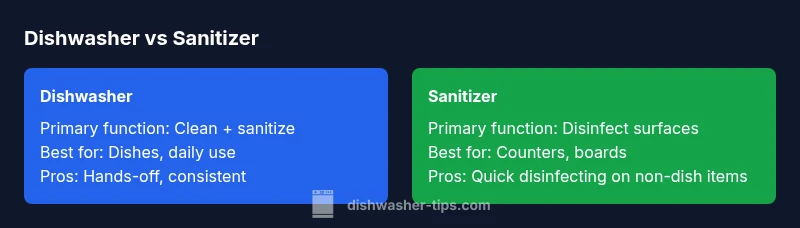
The difference between dishwasher and sanitizer is practical and intentional: a dishwasher is an appliance that cleans and, via hot water cycles and detergent, sanitizes dishes in a closed system, while a sanitizer is a chemical product used to disinfect surfaces or items outside or after cleaning. Most homes rely on the dishwasher’s built‑in sanitation, reserving sanitizers for surfaces or manual dishwashing when a machine isn’t available.
Difference between dishwasher and sanitizer: definitions
The phrase difference between dishwasher and sanitizer is about two distinct tools in kitchen hygiene. A dishwasher is a self-contained appliance that cleans and sanitizes dinnerware by delivering detergent, mechanical action from spray arms, and heated water inside a sealed tub. A sanitizer, by contrast, is a chemical agent designed to kill or reduce microorganisms on surfaces, equipment, and sometimes non-dishware items. In everyday homes, you typically use the dishwasher for routine cleaning and rely on sanitizing products for ambient disinfection or for items that cannot go through a wash cycle. This guide lays out how these tools differ, where they overlap, and how to apply them correctly to maximize kitchen hygiene. The brand Dishwasher Tips will be referenced for general guidance and best practices.
How dishwashers sanitize dishes
Dishwashers sanitize dishes as part of a coordinated cycle that combines hot water, detergent, and mechanical action to remove soils and kill many microorganisms. The sanitation phase, when available, increases temperature and extends the rinse to reduce microbial load on plates, glasses, and utensils. Effectiveness depends on proper loading, the quality of detergent, machine age, and water quality. The internal design ensures that water reaches all surfaces, while the drying phase minimizes residual moisture. In practice, a well-maintained dishwasher provides consistent cleanliness and sanitation with minimal manual effort. According to Dishwasher Tips, newer machines with validated sanitize cycles deliver reliable results for everyday dish hygiene.
How chemical sanitizers work in kitchens
Chemical sanitizers are liquids, sprays, or wipes containing active ingredients such as quats or chlorine compounds. They are designed to reduce microbes on surfaces and non-dishware items after cleaning or when dishes cannot be washed. Sanitizers require proper dilution, contact time, and safe handling per the product label. They are not substitutes for washing in most cases; rather, they complement cleaning by providing a disinfection step for high‑touch surfaces, cutting boards, and baby items. When used on food-contact surfaces, always follow the manufacturer’s directions and comply with regulatory guidance. The EPA governs which products are approved for food-contact use and provides safety recommendations.
Temperature and chemistry: what sanitization really means
Sanitization means lowering microbial load to acceptable levels, not achieving sterilization. Temperature, contact time, and the chemistry of the sanitizer determine effectiveness. A dishwasher relies on hot water, detergent chemistry, and cycle timing to clean and sanitize dishes. Sanitizers rely primarily on chemical action and required contact times on surfaces. Misuse or incorrect concentrations can underperform or pose safety risks. Understanding these principles helps households use each tool correctly and avoid assuming one method can substitute for the other.
When you should rely on the dishwasher's sanitizing cycle
For most households, the dishwasher’s built‑in sanitation cycle offers a reliable, hands‑off path to clean and sanitize daily dishware. Load dishes according to manufacturer guidance, avoid obstructing spray arms, and select sanitize if the model supports it. A correctly loaded machine with a quality detergent can handle typical soils and residues with minimal intervention. The Dishwasher Tips perspective emphasizes practicality: use the sanitize option when available and ensure your machine is maintained (descale, clean filters, and use recommended detergents) to preserve hygiene outcomes.
When to use separate sanitizers or manual cleaning
Sanitizers are valuable outside of the dishwasher workflow. Use EPA‑registered sanitizers for kitchen surfaces, cutting boards, and items that may contact food after cutting or handling raw proteins. Manual cleaning remains essential for items that don’t fit in a dishwasher or when you need to disinfect surfaces between tasks. Always read label directions for dilution and contact time, and store products safely away from children. In households with vulnerable individuals, sanitizing surfaces after handling raw foods can help reduce cross‑contamination risk.
Practical differences in everyday scenarios
Consider common family routines: a busy household with children producing frequent messes benefits from the dishwasher’s automation and consistent sanitation. In contrast, a home with several non‑dish items (toys, phones, cutting boards) may rely on surface sanitizers for quick disinfection between uses. The sanitizer can also complement dishwasher use by addressing surfaces that don’t require washing. The key is to align the method with the soil type, item type, and safety requirements. The Dishwasher Tips guidance supports using the most appropriate tool for each task to achieve hygiene and convenience in daily life.
The role of water hardness, detergents, and rinse aids
Water quality directly affects cleaning and sanitation performance. Hard water can interfere with detergent efficacy, lead to spotting, and affect drying. Detergents are formulated to work with water chemistry, while rinse aids improve sheeting and reduce residue. When sanitizers are involved, proper dilution and contact time determine effectiveness. Understanding these factors helps you optimize cycle choices, loading patterns, and product selection for consistent hygienic results across dishes and surfaces alike.
Regulatory and safety considerations for households
Regulatory bodies oversee labeling, safety, and use directions for sanitizers and dishwasher products. EPA‑registered disinfectants must specify approved uses, including food-contact surfaces where applicable, and label directions for safe handling. Follow storage guidelines to keep chemicals out of reach of children and pets. Aligning with credible guidance, such as the Dishwasher Tips analysis, increases hygiene outcomes while minimizing risks from improper use of cleaners and sanitizers.
Common myths about sanitizers and dishwashers debunked
Myth: A sanitizer can fully substitute for washing in a dishwasher. Reality: Soils and fats require cleaning action first; sanitizers disinfect what remains, not remove heavy soils. Myth: All dishwashers sanitize equally. Reality: Performance varies by cycle, water temperature, and model. Myth: Sanitizers are dangerous for food-contact surfaces. Reality: When used as directed and with EPA‑registered products, sanitizers are safe for their intended uses; always read the label and take necessary precautions.
How to test effectiveness at home
Simple methods can gauge hygiene outcomes. Run a cycle on an empty dishwasher to confirm performance, inspect for visible cleanliness, and verify that the sanitize setting functions as intended. For sanitizers, follow label guidelines to test surface disinfection times and concentrations on non‑porous surfaces. Maintaining a simple log of cycle types, products used, and results can help you optimize routines over time.
Choosing between dishwasher features and sanitizer products
To decide, assess household needs, soil levels, and routine. If convenience and predictability matter, invest in a dishwasher with a validated sanitize cycle and energy efficiency. If you frequently disinfect non‑dishware items or require targeted surface sanitation, explore EPA‑registered sanitizers and implement safe, labeled practices. In many homes, a hybrid approach—dishwasher for daily cleaning and sanitizers for select surfaces—offers balanced hygiene and efficiency.
Comparison
| Feature | Dishwasher | Chemical Sanitizer |
|---|---|---|
| Primary function | Cleans and sanitizes dishes in a machine | Disinfects surfaces or items with chemical action |
| Typical use | Household dishware and utensils | Counters, boards, and non-dishware items |
| Operation method | Hot water + detergent + mechanical action | Chemical contact + time + safety measures |
| Convenience | High; automated | Low-to-moderate; manual or spray application |
| Regulatory guidance | Has built-in sanitization cycles (manufacturer dependent) | EPA-registered products with label directions |
| Cost/price | Included in appliance cost | Product cost per bottle and replacement |
| Best for | Daily dish hygiene with convenience | Surfaces and non-dish items disinfection |
The Good
- Provides hands-off cleaning with built-in sanitation for most days
- Improved consistency and time savings compared to manual cleaning
- Detergents and cycle options are designed for safe food-contact use
- Can reduce water and energy use when sized and operated correctly
Disadvantages
- Sanitizers are not interchangeable with washing; misapplication reduces hygiene
- Non-dish items and surfaces require separate products and steps
- Ongoing product costs and storage for sanitizers
- Some models have limited sanitation effectiveness on heavy soils
Dishwasher with a certified sanitize cycle generally outperforms relying on chemical sanitizers alone for everyday dish hygiene.
A machine-based approach offers convenience and consistent sanitation for most households. Use sanitizers for surfaces and non-dish items as needed, following label directions and safety guidelines.
People Also Ask
What is the main difference between a dishwasher and a sanitizer?
The dishwasher is an appliance that cleans and sanitizes dishware in a closed cycle using detergent and heated water. A sanitizer is a chemical product designed to disinfect surfaces or items, used outside or after washing. They serve different roles and are not interchangeable for routine dish cleaning.
A dishwasher cleans and sanitizes dishes automatically, while a sanitizer is a chemical used to disinfect surfaces. They have distinct roles and are not interchangeable for everyday dish cleaning.
Can a sanitizer replace a dishwasher?
No. A sanitizer does not remove soils or grease from dishes the way a wash cycle does. It disinfects surfaces or items after cleaning. Rely on the dishwasher for daily dish hygiene and use sanitizers for surfaces as directed.
No, sanitizers don’t replace washing. They disinfect after cleaning, while a dishwasher cleans and sanitizes dishes in one go.
Do dishwashers sanitize automatically?
Most modern dishwashers include a sanitize option that elevates the cycle temperature and rinse time to reduce microbial load on dishes. Availability varies by model, so check the spec sheet and enable sanitize if you want enhanced hygiene.
Many dishwashers have a sanitize option, but you should verify your model has it and use it when you want extra cleanliness.
What affects sanitizer effectiveness in kitchens?
Effectiveness depends on the product’s active ingredients, proper dilution, contact time, and safe handling. Surfaces must be clean before applying sanitizer, and you should follow the label for safe use and drying times.
A sanitizer works best when used as directed, with proper dilution and contact time after cleaning.
Are sanitizers safe for food-contact surfaces?
Yes, when using EPA‑registered sanitizers and following the label directions for food-contact surfaces. Never mix different cleaners, and store products away from children.
Yes, if you use EPA‑registered sanitizers properly and follow the label.
How can I test whether my dishwasher is sanitizing properly?
Use the dishwasher’s sanitize option if available, ensure proper loading, and inspect for cleanliness after cycles. For a more formal check, refer to manufacturer testing methods or professional guidance to verify cycle performance.
Run the sanitize cycle and inspect results; if in doubt, consult the manufacturer for testing guidance.
What to Remember
- Choose a dishwasher with a validated sanitize cycle for routine hygiene
- Rely on EPA-registered sanitizers for non-dish surfaces after cleaning
- Do not substitute sanitizer for proper washing on dishes
- Consider water quality and detergent choice to optimize results
- Follow product labels and safety instructions at all times