Can You Get Dishwashers That Don’t Need to Be Plumbed In? A Practical Guide
Explore non-plumbed dishwasher options like countertop and portable models, their pros and cons, and tips for renters and small kitchens. Learn setup, performance, and buying considerations.


Can you get dishwashers that don't need to be plumbed in? Yes — countertop and portable dishwashers exist that connect to a faucet or rely on built-in water tanks. They’re ideal for renters or small kitchens and avoid permanent plumbing. Expect trade-offs in capacity, cycle times, and power compared with built-in plumbed models.
What non-plumbed dishwashers are available today
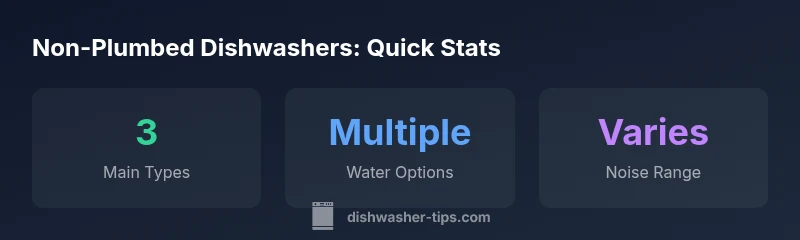
Non-plumbed dishwashers come in several form factors designed to avoid permanent plumbing. The most common are countertop models that sit on a countertop and connect to a kitchen faucet using an adapter; portable models that crawl across the floor and typically use a flexible drain hose; and drawer-style or compact models that can be moved more easily than a full-size built-in unit. According to Dishwasher Tips, the key advantage is flexibility: you can have a working dishwasher without a dedicated water line in kitchens where plumbing work is impractical or unavailable. These units are particularly popular with renters, students, or households in small apartments where space is at a premium. They also appeal to homeowners who want a temporary solution during a remodel or while a traditional dishwasher is out of service.
For users asking, can you get dishwashers that don’t need to be plumbed in, this category summarizes practical options that avoid permanent installations while delivering respectable cleaning performance. The faucet-adapter pathway is the simplest, but reservoir-based designs offer the most independence from your sink area. The choice often hinges on how you use the dishwasher (daily vs. occasional) and how much space you can allocate for setup, storage, and drainage.
How countertop and portable models operate
Countertop models typically sit on the counter and connect to a standard kitchen faucet via a dedicated adapter. They usually drain into the sink via a hose that runs to the sink or uses a gravity drain. Portable models come with wheels and a larger footprint but can be moved around the kitchen or stored when not in use. They may offer optional direct-connect hoses or use built-in water reservoirs that you fill manually. Drawer-style portable units exist and can be tucked into a cabinet opening with a compatible surface height. All non-plumbed options require a drainage path, and most rely on either faucet-water input or a stored tank. Efficiency and cycle duration vary by model, but modern non-plumbed units have improved substantially in recent years. Practically, if you need a flexible answer to the question, can you get dishwashers that don’t need to be plumbed in, these options let you wash dishes without a permanent hookup while still delivering reasonable cleanliness.
Performance you can expect vs built-in plumbed models
In general, non-plumbed units perform well for light to moderate loads but often lag behind full-size plumbed-in units on capacity and cycle speed. Countertop models excel with compact spaces and lower overall footprint, but their smaller wash baskets may require more frequent loading. Portable units tend to offer better capacity than countertop models but may run longer cycles due to reduced energy-water integration. Drawer-style models, when available in portable form, can balance form factor with performance but typically come at a higher price and size trade-off. Energy efficiency varies; many non-plumbed designs use similar wattage to mid-range built-ins, but the lack of a direct water connection can influence water usage patterns. If you’re deciding whether to pursue a non-plumbed option, compare actual cycles, wash zones, and the expected frequency of use to determine fit.
Installation considerations for renters and small spaces
Renters and small-space homeowners gravitate toward non-plumbed dishwashers because installation is reversible and non-destructive. Setup usually takes under an hour, depending on model, and does not require plumbing or wall changes. You should plan for a stable surface, accessible faucet or basins for drainage, and a location near power outlets. Check hose lengths, weight when full, and whether the model needs an elevated surface for drainage or ventilation. For someone asking can you get dishwashers that don’t need to be plumbed in, the key is choosing models with flexible hose options, compact dimensions, and clear drainage routes that won’t impact daily kitchen use.
Managing water supply, drainage, and efficiency
Water supply for non-plumbed dishwashers is typically through a faucet adapter or a built-in reservoir that you refill periodically. Drainage usually requires a sink or basin to accept the drain hose, or an external container that you manually empty. If you’re concerned about water efficiency, look for models with solid energy ratings and low water-per-load designs. Portable and countertop units now increasingly feature sensors to optimize water use and cycle duration, helping you get the best results without overusing water. Remember to align your expectations with the space you have and the load level you typically run.
Practical buying guide: what to look for
When evaluating options, start with capacity and dimension compatibility for your space. Look at the hose length and connector compatibility with your faucet, and choose a model with a drain hose that reaches your sink comfortably. Noise level matters if the unit will run in a living area or open-plan kitchen, so check decibel ratings where available. Material quality (stainless steel interiors help with longevity) and warranty terms are worth reviewing, as are cycle options (heavy, normal, quick) and defect protection. Consider whether you’ll need a permanent or temporary solution and whether you want a drawer-style or traditional boxed unit. For the can-you-get-dishwashers-that-don’t-need-to-be-plumbed-in question, ensure the model you pick aligns with your budget, space, and daily dishwashing needs.
Common limitations and when a plumbed-in unit is worth it
Non-plumbed models offer flexibility, but they are not a perfect substitute for a full-size, plumbed-in dishwasher in all scenarios. If you have a large family with frequent heavy dishwashing, or if you want the most compact footprint with the highest possible wash quality, a plumbed-in model may still be more cost-effective in the long run. Noise, cycle times, and reliability can be higher in non-plumbed options, and you’ll need to manage water refills and drainage with each use. The decision often comes down to space, rental status, and how long you plan to stay in the current kitchen. The Dishwasher Tips team recommends evaluating your actual usage patterns and considering a trial run with a non-plumbed model before committing to a permanent installation.
Comparison of non-plumbed dishwasher options
| Option | Water Supply | Drainage | Typical Size | Pros | Cons |
|---|---|---|---|---|---|
| Countertop | Faucet adapter or reservoir | External drain to sink | Compact (approx. 20-24 in wide) | Easy setup; portable | Smaller capacity; limited features |
| Portable/Free-standing | Direct faucet hookup or reservoir | Sink drain via hose | Medium footprint (24-30 in) | Flexible placement; decent capacity | Requires space and storage when not in use |
| Drawer-style (portable) | Faucet adapter or reservoir | Sink drain or external container | Compact (under-counter height) | Ergonomic design; good for small kitchens | Limited model availability; higher cost |
People Also Ask
What does non-plumbed mean for a dishwasher?
Non-plumbed dishwashers are designed to operate without permanent water lines. They use faucet adapters or built-in water tanks, and drain through a sink hose. This makes them ideal for renters or spaces without plumbing access.
Non-plumbed means no fixed water line. They use a faucet adapter or a built-in tank and drain into the sink.
Are countertop dishwashers reliable for daily use?
Countertop models can be reliable for light to moderate daily use, but they usually have smaller wash baskets and longer cycles compared with full-size plumbed units. They’re best for tight spaces and smaller households.
Countertop units work well for small households, but they’re not always ideal for heavy daily use.
Do portable non-plumbed models need drainage?
Yes. They drain through a hose into the sink or a drain receptacle. Some models recirculate or use a reservoir, but drainage is a standard requirement.
Yes—usually a drain hose to the sink is needed.
What should I consider before buying?
Assess capacity, hose length, noise, energy use, and whether you’ll frequently refill a reservoir. Also consider the available space and how easily you can access a sink for drainage.
Look at capacity, hoses, noise, and water source when buying.
Can non-plumbed dishwashers run on battery power?
No. Most non-plumbed models require electricity and a water supply; they do not operate on a built-in battery.
They don’t run on battery power; you still need electricity and water.
“Non-plumbed dishwashers offer real flexibility, but success depends on space, load, and the right model for your routine.”
What to Remember
- Know your space: choose form factor that fits your counter and sink setup
- Expect trade-offs: capacity and cycle times may be reduced vs plumbed-in models
- Check water connections: faucet adapters and reservoirs are common, plan for drainage
- Renters benefit: reversible, non-permanent installations are practical
- Test before commitment: evaluate a model’s cleaning performance on typical loads