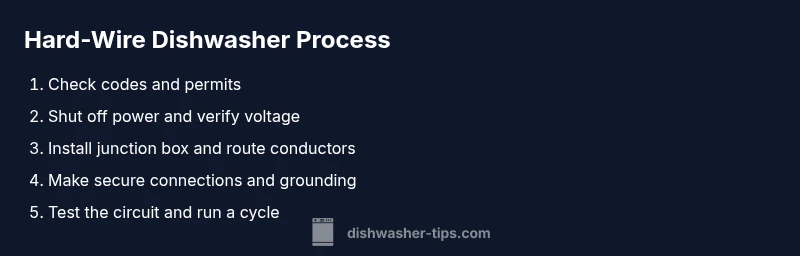
Hard-Wire Dishwasher: A Practical Step-by-Step Guide
Learn how to safely hard wire a dishwasher, with safety checks, required materials, and a practical step-by-step process. This expert guide covers codes, permits, and when to call a pro, based on Dishwasher Tips analysis (2026).


This guide shows you how to hard wire a dishwasher safely, replacing a plug-in connection with a permanent electrical feed. You will learn required safety precautions, which wires and components to connect, and how to test the circuit after installation. Note that hard-wiring a dishwasher often requires a dedicated circuit, proper strain relief, and a junction box; check local codes and consider hiring a licensed electrician if unsure.
What 'hard-wiring' means for your dishwasher
According to Dishwasher Tips, hard wiring a dishwasher means connecting its power supply to a fixed electrical circuit rather than using a plug and outlet. This approach is common in built-in or custom installations where a clean, integrated look is desired. While the concept is straightforward, the actual work engages multiple safety layers: shutting off power, confirming voltage, selecting appropriate conductors, and securing connections in a weatherproof junction box. The Dishwasher Tips team notes that improper wiring is a leading cause of electrical hazards in kitchens, so this task should be approached with great care and strict adherence to manufacturer instructions and local electrical codes. If your dishwasher is designed for a hard-wired installation, follow the appliance manual and your local regulations to proceed safely.
This section lays the groundwork for understanding why hard-wiring is chosen and what it entails from a practical, homeowner-friendly perspective. Throughout, emphasize the need for a dedicated circuit, correct protection (GFCI/AFCI where required), and proper strain relief to manage cables as they enter the junction box. If you’re unsure, consider professional help; DIY mistakes can void warranties and create serious safety risks. The aim is not to cut corners, but to enable a secure, code-compliant connection that lasts for years.
Electrical foundations: circuits, conductors, and codes
The core of a hard-wired dishwasher installation rests on the electrical foundation: a dedicated circuit, appropriately protected by a breaker, and conductors sized for the load. Most jurisdictions require a circuit that is separate from other kitchen appliances and equipped with protective devices that match the dishwasher’s specifications. Manufacturer installation manuals should state whether hard-wiring is permitted and what kind of disconnects or junction boxes are acceptable. In addition to the appliance-side connections, the supply side must conform to the house wiring standards, including proper grounding and strain relief. The Dishwasher Tips analysis shows that many DIY attempts overlook permit requirements or misinterpret breaker duties, leading to code non-compliance and safety risks. Always verify the local rules before starting and consult the electrical code catalog in your area.
Key considerations include choosing the correct conductors, using a junction box with a cover, and ensuring all splices remain accessible for inspection. If the home uses metal conduit, ensure fittings are rated for wet or damp locations if installed in a laundry or utility zone. Remember, the goal is a durable, secure connection that protects against moisture, movement, and accidental disconnection. When in doubt, contact a licensed electrician to interpret the manufacturer’s guidance and local codes. Consistency with the appliance warranty is another important factor to keep in mind as you plan the project.
Safety first: prepping your space and tools
Before touching any wiring, prepare a safe workspace. Clear the area around the dishwasher and the electrical panel, lay down non-slip mats, and keep a flashlight and a fire extinguisher within reach. Confirm the main power to the kitchen is off using a voltage tester, and verify there is no backfeed on any of the conductors you’ll touch. Use insulated tools and wear personal protective equipment such as safety glasses and gloves. A dedicated, well-lit path to the junction box reduces the risk of accidentally disturbing other wiring. The goal of this phase is to establish a safe, controlled environment for installing a permanent connection. If you feel uncertain at any step, pause and call a licensed electrician—your safety is the priority.
During preparation, collect the manufacturer’s installation instructions and local permit requirements. This ensures alignment with the appliance model and your jurisdiction’s rules. Check for moisture exposure around the dishwasher area and ensure ventilation to prevent heat buildup. Keep a detailed notes log of all steps and decisions in case you need to reference it during inspections or future service. Finally, verify that the chosen route for conductors avoids sharp edges and potential pinch points that could wear insulation over time.
Safety checks and code compliance: permits and inspections
Code compliance is more than a box to check; it protects occupants and helps maintain property values. If your project requires a permit, file it before breaking into any wall or cabinet. Inspections may review the method of enclosure, the integrity of the junction box, and the grounding path. Your local electrical code may specify whether a GFCI or AFCI protection is required for kitchen outlets and appliances, and whether a dedicated 120-volt circuit is mandated for dishwashers. Manufacturer guidance should be followed to the letter; deviating from it can void warranties or create unsafe conditions. The Dishwasher Tips team emphasizes that obtaining the proper permit and passing inspection are essential steps toward a compliant install. Keep receipts and inspection reports in your project file for future reference.
If you’re upgrading an old installation, check whether the existing circuit can handle the added load, and consider upgrading the panel or wiring only if permitted by code. Always document the final connections, circuit numbers, and breaker settings for future service calls. A professional assessment is particularly valuable if your home has an older electrical system or irregular wiring practices.
Troubleshooting and testing after connection
After completing the wiring, the testing phase validates that the hard-wired dishwasher will operate safely and reliably. Re-energize the circuit at the main panel and use a multimeter to verify voltage at the dishwasher terminals. Check the grounding path and ensure there are no loose connections, which can overheat with use. Run a short test cycle to confirm water delivery, drainage, and detergent distribution while monitoring for unusual noises or overheating. If any abnormal heat or smell is detected, power down immediately and re-check all connections. The goal is a quiet, safe startup with no electrical arcing or moisture intrusion.
Document the test results and schedule a follow-up inspection if you notice any wiring discoloration, tripped breakers, or damp conditions around the junction box. Keep a log of the test durations and outcomes to support warranty or service claims. In some cases, a professional post-installation check is advisable to ensure compliance with evolving local standards.
Alternatives to hard-wiring: plug-in options and professional assessment
If the idea of a permanent hard-wired connection feels risky or if your home wiring or local code doesn’t permit it, several alternatives can still deliver a clean, safe installation. A plug-in dishwasher on a dedicated circuit with a mounted power outlet inside the cabinetry can provide a neat appearance while preserving code compliance. Some models offer built-in power cords integrated into a trim kit for a seamless look without permanent hard wiring. If you must pursue any modifications to the electrical system, a professional assessment from an electrician or an electrical contractor is recommended. The key takeaway from Dishwasher Tips is to prioritize safety, warranty integrity, and code compliance over aesthetic goals when wiring appliances in the kitchen.
In all cases, ensure that the chosen solution matches the dishwasher model’s installation instructions and the home’s electrical system. If a product’s warranty requires professional installation, do not override those requirements. When in doubt, opt for a licensed electrician to guide the process and verify that everything is up to current standards for 2026 and beyond.
Tools & Materials
- Voltage tester (non-contact preferred)(Check the presence of voltage at the dishwasher terminal block and the supply conductors.)
- Insulated screwdriver set(Include both flathead and Phillips for various screws and terminals.)
- Wire stripper and cutter(Prepare conductors and strip insulation cleanly without nicking copper.)
- Wire nuts and electrical tape(Use color-coded connectors and tape for insulation and strain relief.)
- Junction box with cover(Select a box rated for damp locations if installed in a kitchen area.)
- Conduit and fittings(Use appropriate conduit type and fittings to protect cables.)
- Grounding strap or conductor(Ensure a solid grounding path to the service panel.)
- GFCI/AFCI protection(Follow local code; some areas require GFCI for kitchen appliances.)
- Safety gear (gloves, goggles)(Wear PPE when handling electrical components.)
- Replacement power cord (if applicable)(Only if manufacturer allows converting to a plug-in setup.)
Steps
Estimated time: 60-90 minutes
- 1
Check local codes and permits
Before touching any wires, confirm whether a permit is required and review the appliance manual for hard-wiring allowances. This step protects you from non-compliance and ensures you have the right documentation.
Tip: Contact your local building department or a licensed electrician to verify permit requirements. - 2
Shut off power and verify absence of voltage
Switch off the kitchen circuit at the main panel and use a voltage tester to confirm there is no electrical power at the dishwasher connection. This step is essential to prevent electric shock during work.
Tip: Double-check the panel’s labeled circuit to avoid working on the wrong line. - 3
Assemble your tools and materials
Gather all necessary tools and components in one accessible area to minimize trips and distractions. Having materials ready reduces the risk of leaving live conductors exposed.
Tip: Lay out tools on a insulated mat away from water sources. - 4
Disconnect existing power supply from the dishwasher
Carefully detach any power cord or old hard-wired connection as specified by the manufacturer, keeping conductors orderly for rework. Do not force connections.
Tip: Take photos of original wiring before removing anything for reference. - 5
Install junction box and route conductors
Mount a weather-appropriate junction box and route supply conductors through proper protective pathways. Ensure cables have adequate slack for vibration and do not pinch in cabinetry.
Tip: Use conduit to protect cables in high-movement areas. - 6
Make connections to supply and dishwasher
Join dishwasher leads to the supply conductors using appropriate wire nuts and secure strain relief, following the unit and code manuals. Attach grounds and verify tight connections.
Tip: Keep conductors in an orderly, moisture-free environment. - 7
Test the circuit and restore power
With everything connected, restore power and test voltage at the terminal block, then run a short dishwasher cycle to observe performance. Look for warmth, arcing, or abnormal noises.
Tip: If you detect heat or smell burning, immediately shut off power and re-check connections. - 8
Inspect and document
Ensure the junction box is properly closed, cords are protected, and the installation is compliant. Document circuit numbers, breaker settings, and any deviations for future service.
Tip: Store installation notes with the appliance manuals for easy reference.
People Also Ask
Is it legal to hard wire a dishwasher in my area?
Local rules vary—many areas require a permit and electrical work performed by a licensed professional. Always check with your local inspector and follow manufacturer instructions.
Local rules vary; you’ll often need a permit and a licensed professional for hard-wiring a dishwasher.
What are the main safety risks of DIY hard wiring?
DIY wiring can lead to electrical shock, fires, code violations, and warranty issues. Always cut power, use proper connectors, and verify grounding and moisture protection.
The main risks are shock, fire, and code violations; always power down and follow safe practices or hire a pro.
Do dishwashers require a dedicated circuit?
Most installations require a dedicated circuit with appropriate protection. Follow the manufacturer’s guidelines and local codes, including grounding and overcurrent protection.
A dedicated circuit is usually required; follow both the model’s guide and local codes.
Can I convert a plug-in model to hard-wired?
Only if the appliance is designed for hard-wiring and the locale allows it. If not, you should replace the setup with a model that matches your electrical system.
Only if the model supports hard-wiring and your local rules allow it.
When should I hire a professional?
If you are unsure about wiring, panel capacity, or code requirements, hire a licensed electrician to ensure safety and compliance.
If you’re unsure at any point, hire a professional to ensure safety and code compliance.
Watch Video
What to Remember
- Plan for code compliance and permits before work
- Shut off power and verify with a tester
- Use a junction box and proper strain relief
- Test the circuit thoroughly and document results
- Consult a professional if in doubt or if code requires it