How Much Does It Cost to Install a Dishwasher? A Practical Budget Guide
Understand realistic dishwasher installation costs, what drives price, and how to budget. Learn ranges, scenarios, and smart tips for 2026.


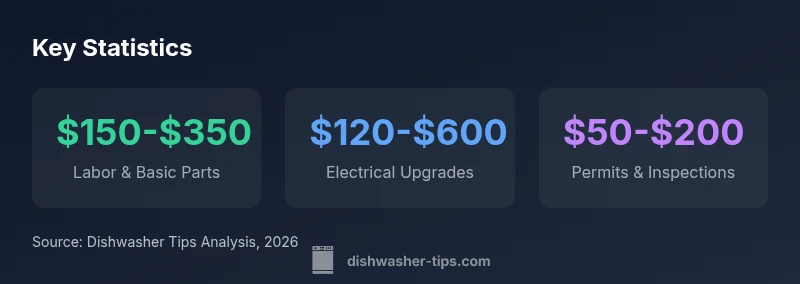
Typical installed costs range from roughly $100 to $900, depending on hookups, electrical work, and permits. A simple, pre-plumbed install may run $150-$350 for labor and materials. If you need new wiring, a dedicated outlet, or drainage changes, total costs can rise to $500-$900 or more.
Cost drivers for dishwasher installation
According to Dishwasher Tips, cost variability for installing a dishwasher primarily hinges on your home's existing connections, local labor rates, and any permit requirements. The main cost drivers fall into four categories:
- Plumbing readiness: Is there an existing hot water supply, a drain line, and a compatible shutoff valve? If these are already present and accessible, labor can be minimal.
- Electrical readiness: Does your kitchen have a suitable 120V circuit, a dedicated outlet, and a GFCI if required by code? If wiring must be upgraded, costs rise noticeably.
- Appliance type and fit: Built-in 24-inch models usually need more prep than compact or portable units, and alignment with cabinet space can affect labor time.
- Code and permits: Some jurisdictions require permits or inspections for new wiring, drain re-routing, or venting changes, adding project time and fees.
Other factors include regional labor rates, access to the installation site, and whether the old unit must be removed and disposed of. In short, your location and existing infrastructure set the baseline, while the specific model and extra work push the total.
Baseline cost ranges and what they include
Understanding what you’re paying for helps benchmark the estimate. A basic install where the home already has adequate plumbing and electrical connections typically includes labor, mounting hardware, and basic fittings, with costs around 150–350. If simple adapters or a new drain hose are needed, you might see an additional 20–60. The more common situation—adding or upgrading a dedicated outlet or a new supply line—could bring the subtotal into the 200–600 range. Finally, if the project requires longer piping runs, trenching, or major electrical work, total costs can reach 700–900 or more, depending on local rates and permit needs. These figures cover labor plus the typical kit of valves, hoses, and connectors, but exclude any major kitchen rewiring, relocation of the water line, or structural modifications. By breaking the job into labor, basic materials, and specialty upgrades, you can compare quotes more accurately and avoid sticker shock.
How existing plumbing and electrical affects price
Most installs require a working 120V circuit and a drain connection. If your kitchen already has a dedicated outlet and accessible drain, the installer can complete the job quickly, often within 2–4 hours. If the electrical panel is far away or if the water line needs to be rerouted, electricians and plumbers may need to run longer cable, upgrade breakers, or install a new shutoff valve, increasing both time and cost. Similarly, if your sink cabinet lacks a clear drainage path or has a clogged trap, drainage work may be necessary. Drainage efficiency and water pressure influence how easily the appliance operates and can add minor costs if adapters are needed. The more you preserve existing plumbing and electrical, the lower the final bill.
Permits, codes, and inspections
In many cities, replacement with no change to the electrical or plumbing layout does not require a permit, but changes to the circuit, drainage rerouting, or venting may. If a permit is required, you’ll typically pay a fee and schedule an inspection, which can add days to the project and add to the labor cost. Some contractors include permit processing in their service or offer it as an add-on. Always verify permit requirements with your installer and local building department before scheduling. Your price can vary widely based on the municipality’s permit fees and inspection cadence.
Hidden costs to watch for
Even with a straightforward install, some costs aren’t obvious until the job is underway. Potential extras include: replacing a corroded shutoff valve, extending a water supply line, installing a longer drain hose with a proper air gap, and upgrading to a dedicated circuit with a new outlet. If the kitchen wiring is older, the electrician may recommend upgrading to a newer circuit or GFCI protection. Additional disposal fees for the old dishwasher, protective toe-kick trimming, or a rough-in for future cabinetry can add up. Ask for a line-item estimate to avoid surprises, and request a written warranty on labor and parts to protect your investment.
How to estimate your total: a quick calculator approach
Create a simple budget using three buckets: labor, basic parts, and upgrades. Start with a base labor estimate for your area and model type, then add 1) electrical upgrades if required, 2) plumbing changes or drainage work, and 3) any permit fees. Don’t forget a contingency of 10–20% for surprises. Collect at least three quotes that break out each line item so you can compare apples to apples. Use a consistent scope of work across bids to ensure reliable comparisons.
How to minimize installation costs without compromising safety
Pre-work pays off. Confirm existing connections are compatible with your chosen dishwasher. Keep to standard 24-inch built-ins where possible, and avoid extra piping or venting unless required. Ask whether the installer can reuse parts you already own (valves, hoses) to save money. Request quotes that include removal of the old unit and disposal. Finally, consider bundled installation offers from retailers or installers—these can reduce the overall price while guaranteeing service quality.
Choosing the right installer: questions to ask and quotes to compare
When interviewing installers, ask about license and insurance, warranty terms, and whether permit handling is included. Request a detailed, line-item estimate and a fixed-price option with a written scope of work. Check references and review local ratings. Verify that the contractor is experienced with the dishwasher model you’ve purchased and that they will haul away the old unit safely.
Real-world scenarios: low, mid, and high-end install paths
Low-end: If your home already has a 120V circuit and a drain, you might pay for labor and basic fittings only, roughly in the 100–350 range. Mid-range: Adding a dedicated outlet or minor plumbing adjustments typically brings costs to 350–700. High-end: Major electrical work, drainage rework, or permit-heavy upgrades can push the total toward 700–1500 in some markets. These spreads reflect regional differences and the specifics of each job, and they align with typical industry ranges observed in 2026.
Estimated installed costs by scenario
| Scenario | Estimated Installed Cost | Key Factors |
|---|---|---|
| Basic install (pre-plumbed) | 150-350 | Labor + basic parts |
| Electrical upgrade required | 350-700 | New outlet/wiring + permit |
| Drainage/modifications | 400-900 | Drain/vent work + plumber |
| Full remodel (extensive upgrades) | 900-1500 | Code changes + longer labor |
People Also Ask
Is installation included in the dishwasher price?
Typically installation is a separate service with its own fee. Some retailers offer installation bundled with the purchase. Always verify what's included in quotes.
Installation is usually separate; check if the retailer offers bundled installation with the purchase.
Do I need a permit to install a dishwasher?
Most replacements don’t require permits if there’s no electrical or plumbing work. Upgrades or rerouting typically require one. Check with your local building department and the installer.
Permits are often required only when electrical or plumbing changes are made.
Can I install a dishwasher myself to save money?
DIY is possible for simple replacements if you’re comfortable with basic plumbing and electrical tasks. Many homes need licensed professionals for safety and code compliance.
DIY is possible in simple cases, but verify local codes first.
What costs drive the most price variation?
Electrical upgrades, plumbing rerouting, drainage components, and permit fees are the main drivers of cost variation.
Electrical and plumbing work cause the biggest cost swings.
How long does installation take?
Most installs take 2–4 hours, depending on site readiness and upgrades. Allow extra time for permits if needed.
Most installs take a few hours, sometimes longer if upgrades are required.
“Accurate budgeting comes from understanding your home's existing connections and local codes. Always plan for contingencies during a dishwasher installation.”
What to Remember
- Identify existing plumbing and electrical before requesting quotes.
- Expect permits and electrical upgrades to raise costs.
- Get multiple quotes and compare line-item estimates.
- Choose standard models and install paths to minimize complexity.
- Budget a 10-20% contingency for unforeseen issues.