Should a Dishwasher Be On Its Own Circuit? A Practical Guide
Discover if your dishwasher needs a dedicated circuit, the right breaker size, and wiring basics. This Dishwasher Tips guide explains code basics, safety steps, and practical installation guidance for a reliable kitchen electrical setup.


Yes — in most homes a dishwasher should be on its own dedicated circuit. This generally means using a 15- or 20-amp branch circuit with its own breaker, properly sized wiring, and GFCI protection in kitchens. Avoid sharing the circuit with garbage disposals, microwaves, or outlets to prevent nuisance trips and ensure safety.
Why a dedicated circuit matters
A dishwasher is a high-demand appliance that can cause voltage fluctuations and nuisance trips if it shares a circuit with other kitchen devices. The Dishwasher Tips team emphasizes that dedicated wiring improves reliability, reduces wear on your panel, and makes troubleshooting easier. With a dedicated circuit, the dishwasher’s start-up surges and water-heating cycles won't pull power away from lights, outlets, or the disposal. In practical terms, adding a separate circuit protects both safety and performance, and aligns with common kitchen electrical practices. If you’re experiencing frequent trips or dimming lights when the dishwasher runs, a dedicated circuit is often the first fix to investigate. Working with a dedicated circuit also makes it simpler to enforce correct grounding and protective devices, which helps prevent shock hazards around water and metal components near the sink.
Understanding circuits, breakers, and amperage
Electrical circuits in a home are designed to carry loads without overheating. A dedicated circuit for a dishwasher means installing a single pathway from your panel to the appliance, with a protective device sized for the load. Modern kitchens typically rely on a standard 120-volt circuit in which a single appliance draws current as it operates, especially during the heating cycle. The key idea is that the dishwasher should not be competing with other devices for power. This separation helps prevent unexpected shutoffs and makes diagnosing issues easier if something goes wrong in the future. If you’re unsure about your panel layout, consult a professional or reference your local electrical code.
GFCI protection and code expectations in 2026
GFCI protection is a common requirement for kitchen receptacles and often extends to dedicated dishwasher circuits through the breaker or a GFCI-protected receptacle. Codes vary by locality, so check your jurisdiction and your home’s age, since older homes sometimes require updates to meet current safety standards. A GFCI helps prevent shocks in damp environments and reduces the risk of electrical fires in areas near water. If your dishwasher is hard-wired, a GFCI-protected breaker is a typical solution; if it plugs into a receptacle, the outlet must be GFCI-protected.
Wiring options: dedicated 15A vs 20A, gauge, and receptacle vs hardwire
There are two common paths for a dishwasher circuit: a dedicated branch circuit wired to a receptacle, or a hard-wired connection directly to the dishwasher terminal block. The gauge and breaker rating should match the dishwasher’s electrical requirements. In practice, most households opt for a dedicated circuit that uses appropriate wiring and protective devices, with a clean run from the panel to a junction box or a dedicated box behind the dishwasher. If you’re replacing old wiring, you’ll need to plan for the correct gauge, secure routing, and proper strain relief to prevent damage over time.
How to evaluate your current kitchen circuit and panel capacity
Before you start, determine whether your panel has space and capacity for a new dedicated circuit. Look for free slots on the breaker panel and measure whether your wires can reach the destination safely. Consider the distance from the panel to the dishwasher and any obstacles along the route. The aim is to avoid over-fusing the circuit or forcing an upgrade that is unnecessary. If the panel is crowded or you’re unsure about load calculations, a licensed electrician can perform a safe assessment and provide a recommended solution.
Renting vs DIY: safety, permitting, and when to call a pro
Electrical work inside a kitchen can involve code compliance, permitting, and potential hazards. While basic safety practices are universal, many jurisdictions require licensed electricians for new or upgraded dishwasher circuits. If your panel needs repositioning, if you lack the necessary space, or if you’re uncomfortable with wiring and breaker work, it’s prudent to hire a pro. The Dishwasher Tips approach is to respect local codes and safety first: don’t bypass protective devices or attempt to wire a dishwasher on an improvised circuit.
Common mistakes to avoid when wiring a dedicated circuit
Avoid sharing circuits with heavy loads like disposals or microwaves. Do not tuck wires into cramped spaces without strain relief or proper protection. Never work on a live circuit; always switch off the main and verify with a tester. Misjudging wire gauge, breaker size, or protection type can lead to nuisance trips, overheating, or electrical fires. Plan routes for the cable that minimize bends and physical damage, and always secure cables with appropriate staples and clamps.
Testing, labeling, and documenting your installation
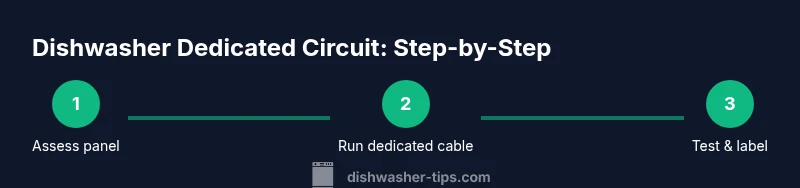
After wiring, test the new circuit with a voltage tester and verify the dishwasher starts and runs without tripping others. Confirm proper grounding and GFCI protection where required. Label the breaker clearly in the panel and update any home electrical diagrams to reflect the new dedicated circuit. Keeping documentation handy helps future service calls and safety inspections, and it supports maintenance around the kitchen’s water and metal fixtures.
Safety reminders and ongoing maintenance
Even with a dedicated circuit, periodic checks are important. Inspect wiring for wear, secure connections, and ensure the protective device remains properly sized for the load. Keep the area around the dishwasher free of moisture hazards and consult the local code guidance if you notice repeated trips or unusual electrical smells. Regular maintenance reduces the risk of shocks, fires, and inconvenient outages, protecting both property and people.
Tools & Materials
- Non-contact voltage tester(Used to verify de-energized lines without contact.)
- Digital multimeter or voltage tester(For precise measurements and safety checks.)
- Copper electrical cable (12/2 or 14/2 with ground)(Gauge depends on breaker size; choose based on local code.)
- Dedicated circuit breaker (appropriate size)(GFCI-protected option often preferred in kitchens.)
- GFCI protection device or GFCI outlet(Provides residual-current protection in wet areas.)
- UL-listed wire nuts and electrical tape(Secure and insulate connections.)
- Screwdrivers (flathead and Phillips)(For panel and connections.)
- Wire clamps/strain reliefs and staple gun(Protect wiring at entry points and along runs.)
- Cable conduit or protective tubing (optional)(Adds extra protection for exposed runs.)
- Panel space planning tools (permanent marker, tape)(Label and plan route clearly.)
Steps
Estimated time: 2-6 hours
- 1
Verify local electrical codes
Check whether a dedicated circuit and GFCI protection are required for a dishwasher in your area and whether a permit is needed. Review any recent code changes that could affect routing, grounding, or panel upgrades.
Tip: Document code references and permit requirements before starting. - 2
Turn off power and confirm isolation
Switch off the main breaker or the specific branch feeding the kitchen to ensure the entire area is de-energized. Use your voltage tester to verify all wires in the work zone are safe to handle.
Tip: Lock out/tag out the panel if you’re working around multiple trades. - 3
Plan the route from panel to dishwasher
Measure the path, identify obstructions, and choose a protected route that minimizes bends. Decide whether you’ll install a receptacle or a hardwired connection and prepare the junction box location.
Tip: Avoid running cables through heat sources or under heavy appliances. - 4
Install the dedicated breaker
Select a breaker size appropriate for the dishwasher and install it in an available slot. Ensure the breaker is compatible with GFCI if required by your local code.
Tip: Check panel rating and ensure there’s space for future upgrades. - 5
Run the conductors to the kitchen
Fish the cable from the panel to the kitchen area, securing it with staples and protective clamps. If using conduit, install the conduit with proper bends and fittings to maintain a safe run.
Tip: Avoid sharp bends and protect cable from physical damage. - 6
Make connections at the dishwasher junction
Connect the circuit to the dishwasher’s terminal block or a properly placed receptacle as per the manufacturer’s instructions. Grounding and neutral connections must be secure and compliant.
Tip: Double-check polarity and ground continuity before energizing. - 7
Install GFCI protection if required
If the circuit isn’t already GFCI-protected at the breaker, install a GFCI breaker or use a GFCI outlet in the kitchen circuit. Confirm the protection is active during testing.
Tip: Test GFCI function with the test button after setup. - 8
Test the circuit and dishwasher
Restore power and test the dishwasher’s operation. Verify no nuisance tripping occurs and check for proper grounding and leakage protection.
Tip: Observe the first few cycles and listen for abnormal noises or smells. - 9
Label and document the installation
Label the breaker clearly and update the home electrical diagram or panel directory. Keep the installation record for future maintenance or inspections.
Tip: Save a quick sketch of the circuit path for future service calls.
People Also Ask
Should a dishwasher always have a dedicated circuit?
In most cases, yes. A dedicated circuit reduces the risk of nuisance trips and makes diagnostics easier. Local codes will determine the exact requirements.
Yes, a dedicated circuit is typically required to ensure safety and reliability.
Can a dishwasher share a circuit with a garbage disposal?
Sharing with a disposal is generally not recommended because both devices are heavy loads and can cause tripping or voltage drops.
Not usually recommended to share with a disposal.
What size breaker is typically used for a dishwasher?
Most installations use a dedicated circuit rated for the dishwasher’s requirements, commonly 15- to 20-amp, depending on the model and local code.
Typically a dedicated 15 or 20 amp circuit.
Do I need GFCI protection for a dishwasher?
Many jurisdictions require GFCI protection in kitchens, including night wiring and dedicated circuits. Check your local code and whether the protection is via breaker or outlet.
Most kitchens require GFCI protection; confirm your local code.
Is DIY wiring of a dishwasher circuit safe?
Electrical work inside a kitchen carries risk and often requires a licensed electrician, especially when upgrading panels or routes. If unsure, hire a pro.
DIY electrical work is risky; hire a licensed electrician if unsure.
What are signs my current circuit is overloaded?
Frequent breaker trips, warm outlets, or flickering lights near the kitchen indicate an overloaded or compromised circuit that should be investigated.
Frequent trips or warm outlets suggest overload.
Watch Video
What to Remember
- Dedicate a dishwasher to its own circuit for safety.
- Check local codes and obtain any required permits.
- Choose proper wiring and protective devices for reliability.
- Do not share circuits with high-load appliances.
- Test thoroughly and label the circuit for future service.