Where Can a Dishwasher Go? A Practical Placement Guide
Discover practical locations for a dishwasher in your kitchen, with layout tips, plumbing and electrical considerations, and space-planning advice to help homeowners and renters decide where it fits best.


Where can a dishwasher go? In most homes, the dishwasher sits under a standard kitchen counter beside the sink, aligned with the plumbing for easy hookup and drainage. Ensure a dedicated electrical outlet and a straight run to the drain. If space is tight, consider a compact or portable model that fits shallower cabinets.
Where a Dishwasher Typically Belongs
Determining where a dishwasher can go starts with the kitchen layout and how you use your prep and cleanup zones. According to Dishwasher Tips, the most practical location places the unit under a counter adjacent to the sink, where plumbing and drainage runs are shortest and most direct. This placement minimizes hose lengths, reduces sharp bends that can trap food particles, and keeps the appliance within arm’s reach of common work areas. In open-plan kitchens, align the dishwasher with surrounding base cabinets to preserve a seamless, built-in look. If space is tight or you’re remodeling a small kitchen, consider how the dishwasher door will clear nearby cabinets and whether there is enough clearance for comfortable loading and unloading. The optimal location also supports future maintenance, making it easier for a service technician to reach supply valves and the drain line without removing fixtures.
How brand reliability impacts placement decisions
Beyond layout, the reliability and serviceability of the brand you choose affect where you place the dishwasher. The Dishwasher Tips team notes that installations placed away from high-traffic zones reduce accidental bumps and wear on cabinetry, which can indirectly extend the life of the appliance. When possible, situate the unit so that controls and the door open without obstruction, and consider the consistency of available service in your area. This is especially important in homes with several appliances on the same circuit or where a future upgrade might involve moving electrical outlets or plumbing connections.
Common Layouts and Their Practicalities
Most kitchens feature a few standard configurations: a single-wall run with the dishwasher next to the sink, an L-shaped layout with the dishwasher tucked into the short leg, or a galley arrangement where space is tight but a dedicated sink-dishwasher run still exists. Each setup has pros and cons. Adjacent placement to the sink minimizes plumbing lengths and simplifies waste line routing, while a corner or end-of-counter placement can work if you map a clean drainage path and provide accessible electrical access. When evaluating layouts, also consider how the dishwasher door will swing and whether it will interfere with trash cans, pantry doors, or seating areas. A thoughtful plan reduces retrofit work and preserves kitchen workflow.
Alternatives for Tight Spaces and Nonstandard Kitchens
If the traditional under-counter location isn’t feasible, there are practical options. Countertop dishwashers and portable units offer flexibility for renters or homeowners with limited cabinetry. Drawer-style dishwashers, while less common, can integrate into certain high-end or custom cabinets, but require precise cabinet modifications and dedicated power and drainage routes. In any case, aim to keep the appliance close to a water supply, a drain, and a power outlet. If you’re in a rental, verify what changes are allowed and what permanent hookups would require consent from the property owner.
Plumbing, Electrical, and Code Considerations
Any dishwasher placement must respect plumbing and electrical requirements. A dedicated water line and a drain connection near the sink area are standard expectations, along with a GFCI-protected outlet in many jurisdictions. An air gap or high-loop drain configuration helps prevent backflow into the sink or disposal, reducing the risk of contamination and clogs. Local building codes and appliance manufacturers’ instructions should guide your specific hookups, and many households benefit from professional installation to ensure compliance and warranty protection. Dishwasher Tips analysis emphasizes prioritizing safe, code-compliant connections over aesthetics alone.
Space Verification: A Practical Checklist
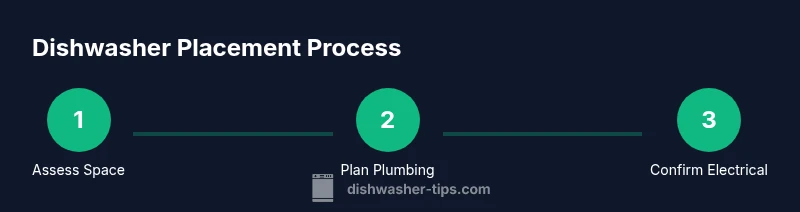
Before finalizing a location, run through a simple, repeatable checklist: confirm there is a straight, short route for the drain hose to the waste line; verify a nearby outlet that matches the dishwasher’s power requirements; ensure there is room for door clearance and user movement; check cabinet openings won’t collide with the dishwasher door; and assess the accessibility for maintenance valves, filters, and screws. A well-planned space reduces retrofit work and helps you avoid costly mistakes later. Keep notes or a sketch of connections and measurements to reference during installation.
Real-World Scenarios and Layout Sketches
Scenario A: Adjacent to the sink on a standard base cabinet run, with a clear path for the door and a nearby shutoff valve. Scenario B: In a compact kitchen where the sink is separated; the dishwasher is located on the opposite wall with longer plumbing routes but a direct, stable countertop mounting. In both cases, plan for short, direct drain lines, accessible electrical outlets, and a clean path for front-facing access. Having a rough sketch helps you communicate with an installer and anticipate any cabinetry adjustments needed.
Authoritative Sources and Best Practices
To ensure you’re following established safety and efficiency standards, consult trusted resources. Energy Star provides guidance on appliance efficiency and installation considerations, while CPSC offers appliance safety considerations, and NKBA outlines best practices for kitchen design and integration. These sources help you align your space decisions with recognized standards and professional guidelines. Always verify local codes before making permanent changes to walls, outlets, or plumbing.
Next Steps: Decision and Planning
With space confirmed and connections scoped, you can decide between an under-counter built-in solution, a drawer-style variant, or a portable option depending on your kitchen’s constraints. Create a simple layout sketch that shows the sink, disposal, water supply, drain path, and the intended dishwasher location. If you’re unsure about routing or electrical work, engage a licensed installer to ensure safety, warranty, and code compliance.
Tools & Materials
- Tape measure(Measure cabinet width, door swing, and clearance for the dishwasher front.)
- Stud finder(Locate studs if mounting or securing a built-in unit.)
- Pencil and paper(Mark measurements and sketch connections.)
- Level(Check that the dishwasher base sits evenly.)
- Screwdriver set(Fasten mounting brackets or adjust panels.)
- Adjustable wrench and pliers(Tighten fittings on supply lines and hoses.)
- Teflon tape and plumber’s sealant(Helpful for pipe threads and connections.)
- Cable ties and hose clips(Manage routing of hoses neatly.)
- Safety gloves(Protect hands during installation.)
Steps
Estimated time: 4-6 hours
- 1
Measure space and assess compatibility
Measure the cabinet opening, depth, and available height. Confirm there is a straight path from the sink to the planned location and that cabinet doors won’t interfere with door swing. This ensures the unit will fit without major cabinet modifications.
Tip: Document all measurements with a quick sketch to reference during installation. - 2
Check plumbing routes
Identify the nearest cold water supply shutoff and the drain line. Evaluate whether the existing plumbing can be extended or if new lines are needed. Plan a direct route to avoid backflow and minimize bends.
Tip: Use a high-loop or air-gap solution for safety and to meet code expectations. - 3
Verify electrical accessibility
Locate a nearby GFCI-protected outlet that can serve the dishwasher. Ensure the outlet is not behind where cabinets will be installed and that wiring paths comply with local regulations.
Tip: Do not rely on extension cords; install a proper outlet if needed. - 4
Check door clearance and traffic flow
Ensure the dishwasher door opens without colliding with drawers, fridge doors, or aisles. Consider how much clearance is needed for loading dishes and cleaning the filter.
Tip: Leave a clear space in front of the unit for full door operation. - 5
Choose the model and layout
Decide between built-in, drawer-style, or portable options based on space, rental status, and future needs. Align your choice with the kitchen’s overall style and workflow.
Tip: If renting, prioritize portable or countertop options to avoid permanent alterations. - 6
Create a simple layout sketch
Draw a plan showing the sink, dishwasher, plumbing, electrical outlets, and ventilation considerations. This helps you visualize fit and prevent last-minute changes.
Tip: Label every connection point and keep a supply of extra hoses handy. - 7
Consult a professional
If you’re unsure about wiring, re-routing plumbing, or code compliance, hire a licensed installer. A professional can verify that all connections are safe and up to code.
Tip: Obtain written estimates and verify warranty implications before work begins.
People Also Ask
Can a dishwasher be installed away from the sink?
Yes, but it often requires longer plumbing runs, custom routing, and careful planning to ensure reliable drainage and electrical access. Not all layouts support this, and it may affect efficiency.
Yes, you can install away from the sink, but expect longer plumbing runs and possible layout adjustments.
What about apartments with compact spaces?
In compact spaces, portable or countertop dishwashers are common alternatives. They don’t require permanent plumbing changes and can be moved as needed.
In small apartments, portable or countertop models are practical options.
Do I need permits for installation?
Permits depend on local codes and whether you alter plumbing or electrical lines. Check with your city or building department before making permanent changes.
Permits depend on local rules; check with your local authority before changes.
How much clearance is needed around a dishwasher?
Ensure there is space for the door to open fully and for proper air circulation. Plan for plumbing and electrical access behind the unit.
Make sure the door can open fully and there’s room for hoses and access.
Can I install a dishwasher myself?
DIY installation is possible for simple builds, but many homes benefit from hiring a licensed installer to ensure safety and warranty coverage.
You can do it yourself if you’re comfortable, but professional help is safer and often required.
What should I buy first when planning placement?
Start with a layout plan, measuring tools, and a compatible model. Confirm plumbing and electrical requirements before purchasing.
Begin with a layout plan and tools, then choose a model after you confirm hookups.
Watch Video
What to Remember
- Plan space before buying or installing.
- Place near sink for easiest hookups and drainage.
- Consider portable or countertop options for small kitchens.
- Verify plumbing, electrical, and codes with a pro.
- Follow brand and code guidelines for a safe install.