Can Cast Iron Go in the Dishwasher? A Practical Guide
Discover whether you can dishwasher-clean cast iron, the risks involved, and how to clean and re-season safely. Expert guidance from Dishwasher Tips to protect your cookware.


According to Dishwasher Tips, can cast iron go in the dishwasher? Generally no for plain cast iron: dishwasher cycles strip seasoning, promote rust, and can warp the pan. Enamel-coated varieties may be labeled dishwasher-safe by manufacturers, but hand washing is still recommended to protect seasoning and prevent scratches. In short: avoid the dishwasher unless you know the piece is dishwasher-safe.
Why Cast Iron Care Matters
Cast iron has a unique patina that protects it from rust and enhances flavor over time. The care routine you choose directly affects the pan's longevity, nonstick performance, and resale value. As the Dishwasher Tips team notes, the seasoning layer acts like a protective mineral barrier that can be damaged by harsh cleaning methods, high heat, or prolonged moisture exposure. Treating cast iron with respect and consistency saves you time and money in the long run, especially for homeowners and renters managing a busy kitchen. This section lays the foundation for why you should think twice before loading cast iron into a dishwasher.
- The seasoning on a well-used pan is a polymerized layer of oil that builds up with use and heat. Dishwashers can strip or dull this layer, triggering rust and reduced performance.
- Temperature fluctuations in dishwashers can cause iron to warp or develop micro-cracks, especially on older or thinner cookware.
- Enamel-coated cast iron behaves differently; some pieces may tolerate the dishwasher, but many enamel finishes can chip or fade with aggressive cycles.
Dishwasher Tips analysis shows that most cast iron lovers prefer hand washing to maintain patina and performance. When in doubt, treat your cast iron like a treasured heirloom—clean gently and re-season as needed.
Can Cast Iron Go In The Dishwasher? The Risks And Realities
The short answer is: avoid it for non-enamel cast iron. The dishwasher’s hot water, detergents, and prolonged soaking can strip the seasoning, accelerate rust formation, and cause rust spots to appear on the interior surfaces. If your pan has a robust, thick coating of polymerized oil, it can hold up differently, but most household pans are not engineered for dishwasher cycles. Enamel-coated cast iron is the outlier; some pieces are marketed as dishwasher-safe, but even then, repeated cycles can dull the surface and reduce gloss or cause crazing in the enamel. The risk is not just aesthetics; compromised seasoning means more maintenance later to restore performance. Dishwasher Tips recommends: treat plain cast iron as hand-wash only, and verify the enamel coating and manufacturer guidance before deciding.
Plain Cast Iron vs Enamel-Coated: What to Know
Plain cast iron relies on its seasoning to stay slick and rust-free. Dishwasher detergents are alkaline and strong enough to strip away that seasoning, leaving the metal vulnerable to moisture. Enamel-coated pans have a glass-like surface that can withstand more aggressive cleaning, but the glaze isn’t as forgiving as a seasoned surface. Over time, dishwasher use can dull the enamel or lead to chips along the lip and edges. When choosing cookware, many cooks prefer enamel-coated pieces for dishwasher compatibility, but cost and weight should be weighed against the ongoing care routine. Dishwasher Tips emphasizes confirming dishwasher-safety claims with the manufacturer; when in doubt, assume hand washing.
Safe Cleaning Practices: Hand Washing Your Cast Iron
For most cast iron, the safest approach is hand washing. Use warm water, a small amount of mild dish soap if you’re cleaning stubborn residue, and a non-metal brush or sponge. Rinse thoroughly and dry immediately with a towel to prevent rust. While it may seem counterintuitive to use soap on seasoned surfaces, modern soaps won’t ruin seasoning if you rinse well and dry promptly. After drying, apply a light coat of oil to restore the seasoning layer. If the pan shows signs of rust, scrub gently with a stiff brush and re-season in stages to rebuild the protective patina.
If You’re Curious About Dishwasher Exceptions
There are rare cases where a manufacturer explicitly labels a piece as dishwasher-safe. In those situations, follow the exact care instructions on the product label. Otherwise, the dishwasher remains a risky environment for cast iron. Enamel-coated cookware with a strong glaze may survive a cycle, but repeated dishwasher exposure can dull or chip it. Always check the user manual and contact customer support if you’re unsure. Dishwasher Tips notes that confirming safety claims with the manufacturer helps you avoid accidental damage.
Rust, Patina, And Re-seasoning After Dishwasher Exposure
If you’ve accidentally run your cast iron in the dishwasher, don’t panic. Rinse, dry, and inspect for rust. If rust appears, scrub with a non-metal brush and a small amount of mineral oil or flaxseed oil, then re-season gradually. Re-seasoning involves coating the pan with a light oil layer and heating it in a hot oven or on the stovetop to polymerize the oil. Repeating this process a few times builds a resilient patina that again protects against moisture. The key is consistency—regular, light maintenance is easier than a full restoration.
Maintenance Routines To Prevent Dishwasher Dependence
- Clean by hand after every use, especially when cooking acidic foods that can degrade seasoning.
- Dry thoroughly and oil the surface after each wash.
- Store in a dry place to prevent rust and humidity effects.
- If you notice dullness or rust, re-season and re-test the pan’s performance before using it for critical tasks.
- Periodically inspect for enamel chips (if enamel-coated) and address with manufacturer-approved repair steps.
Common Mistakes To Avoid
- Using aggressive metal scrubbers that strip seasoning.
- Soaking pans overnight in water or leaving them damp.
- Assuming dishwasher-safe means no maintenance; enamel-coated pieces still need care.
- Stacking hot cast iron without cooling, which can warp or loosen enamel.
- Ignoring signs of rust or pitting—address them promptly to prevent further damage.
Tools & Materials
- Mild dish soap (optional)(Only use a tiny amount if residue is stubborn)
- Non-metal scrub brush or sponge(Avoid steel wool)
- Clean microfiber towel(For thorough drying)
- Neutral oil for seasoning (e.g., flaxseed, grapeseed)(Optional but recommended)
- Paper towels(Useful for quick drying)
- Oven or stovetop(Required for re-seasoning after washing)
Steps
Estimated time: 15-30 minutes
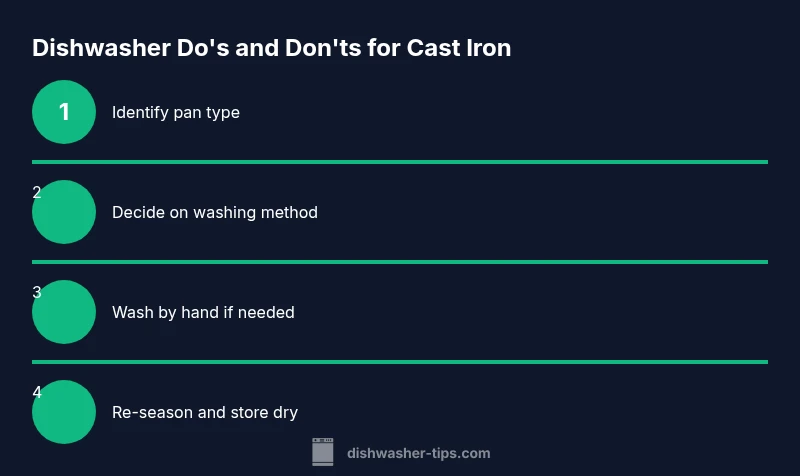
- 1
Identify pan type
Check whether your cast iron is bare, seasoned, or enamel-coated before any washing. If uncertain, treat it as uncoated and avoid dishwasher.
Tip: If there are enamel chips, avoid dishwasher entirely to prevent further damage. - 2
Decide on washing method
Prefer hand washing for non-enamel cast iron. For enamel-coated pieces, verify manufacturer guidance first before selecting a cleaning method.
Tip: When in doubt, choose hand washing to preserve patina. - 3
Rinse with warm water
Rinse under warm water to loosen stuck-on bits. Use a brush rather than a wire scrubber to protect surface.
Tip: Avoid soaking in water for extended periods. - 4
Scrub gently and dry
Scrub with a non-metal brush, rinse, then dry immediately with a towel to prevent rust.
Tip: Drying quickly is essential to maintain seasoning. - 5
Apply light oil and re-season
Apply a thin layer of neutral oil and heat to re-polymerize the oil. Repeat as needed to build a protective patina.
Tip: Wipe off excess oil to avoid a sticky surface. - 6
Storage and maintenance
Store in a dry place and re-oil periodically, especially if you use high-heat cooking often.
Tip: Inspect for rust monthly and re-season as necessary.
People Also Ask
Is enamel-coated cast iron dishwasher safe?
Some enamel-coated pieces can tolerate a dishwasher cycle, but many enamel finishes wear down over time. Always check the manufacturer’s guidance before washing in a dishwasher.
Some enamel-coated pots can be dishwasher safe, but you should check the label before washing to avoid chipping or dulling the glaze.
What happens if I run plain cast iron in the dishwasher?
Dishwashing plain cast iron can strip seasoning, promote rust, and potentially warp the pan. It’s best avoided unless you’re certain the piece is dishwasher-safe.
Dishwashing plain cast iron can remove seasoning and cause rust, so it’s generally not recommended.
Can I re-season after dishwasher exposure?
Yes. If the pan shows dullness or rust after dishwashing, scrub rust away, dry completely, and re-season in layers until a smooth patina returns.
Absolutely—re-season if dishwasher exposure damaged the patina.
How should I dry cast iron after washing?
Dry immediately with a towel, then place on a warm stove or in an oven to ensure all moisture evaporates before applying oil.
Dry your pan immediately, then re-season to prevent rust.
Is it ever okay to soak cast iron?
Long soaking invites rust and can degrade seasoning. If needed, quick rinses are preferred over extended soaking.
Avoid soaking; quick rinses work best.
What are signs of enamel damage after dishwasher use?
Look for chipping, dulling, or cracking glaze around edges. If you see these signs, stop using the pan until repaired.
Watch for chips or dull glaze; discontinue use if you see damage.
Watch Video
What to Remember
- Avoid dishwasher for plain cast iron.
- Hand wash, dry thoroughly, and re-season regularly.
- Enamel-coated may vary; check manufacturer guidance.
- Rust signals re-seasoning is needed.
- Proper storage prevents future issues.