Can You Dishwasher Owala Bottles? A Comprehensive 2026 Guide
Discover whether you can dishwasher Owala bottles and how to clean them safely. This Dishwasher Tips guide analyzes labeling, materials, and best practices for plastic and stainless bottles in 2026.


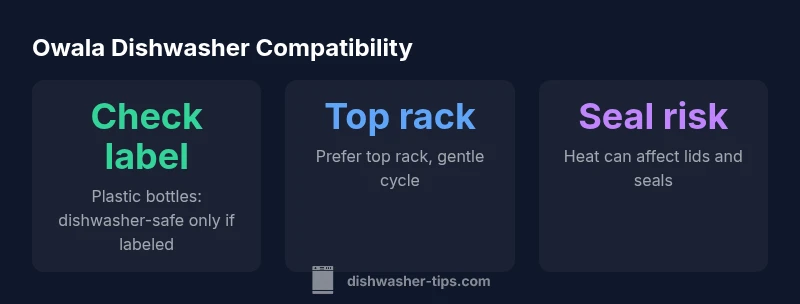
Can you dishwasher owala bottles? The short answer is yes in some cases, but only if the bottle is labeled dishwasher-safe and you use a gentle cycle on the top rack. For many Owala plastic bottles, this is acceptable when the label confirms dishwasher compatibility. If you’re unsure or deal with seals, lids, or stainless variants, opt for hand washing and follow manufacturer guidance. According to Dishwasher Tips, check labeling before washing and test a spare cycle if you’re uncertain.
Can you dishwasher owala bottles? Quick reality check
Can you dishwasher owala bottles? This question surfaces often as busy households seek time-saving cleaning methods. The answer isn’t a blanket yes or no; it hinges on the bottle’s material, the presence of a label, and your dishwasher’s heat settings. If you want a fast rule: check the labeling first. If the bottle is plastic and explicitly marked dishwasher-safe, you may run a gentle top-rack cycle without the lid. If there is any doubt about heat tolerance or the integrity of seals, the safer move is hand washing. In the can you dishwasher owala scenario, you’ll typically find that certain Owala bottles tolerate dishwashing, while others do not. This nuance is exactly what Dishwasher Tips emphasizes for practical decision-making in daily kitchen routines.
Material matters: plastic vs stainless
The material of your Owala bottle largely drives whether can you dishwasher owala is viable in your home. Most Owala plastic bottles use durable, heat-resistant polymers, which helps them survive a careful dishwasher run when labeled. Stainless variants add another layer of complexity: metal surfaces can discolor or warp, and seals may struggle with heat. In short, plastic bottles with dishwasher-safe labeling are more forgiving; stainless and sealed designs require extra caution. When assessing can you dishwasher owala, prioritize the label, then consider the bottle’s construction and any warranty implications. Dishwasher Tips consistently highlights that material and labeling are your strongest guides to safe cleaning outcomes.
Temperature, cycles, and rack position
If you decide to test can you dishwasher owala bottles in your machine, adopt conservative settings: top rack, gentle or light wash, and avoid high-heat cycles. The mouthpiece and lid areas are especially susceptible to heat damage, so remove the lid before placing the bottle on the rack and consider placing smaller parts in a separate dishwasher-safe compartment if permitted. Temperature and cycle choices greatly influence results, especially for seals and coatings. Always run a test cycle on an inexpensive bottle first if you’re uncertain about your model or the bottle’s labeling.
The lid and mouthpiece: a common weak point
Lids and mouthpieces represent frequent failure points when cleaning Owala bottles in a dishwasher. The soft gaskets and silicone seals can warp or detach if exposed to heat, and colored coatings may fade with repeated cycles. If you’re pondering can you dishwasher owala, inspect the lid’s seal and the mouth opening for wear after a wash. If anything looks compromised, discontinue dishwashing that component and hand wash the lid separately. Keeping lids intact is essential for maintaining leak protection and overall bottle performance.
Step-by-step: if you choose to run the dishwasher
If you decide to run the dishwasher for an Owala bottle, follow these steps: 1) Remove the lid and any detachable seal; 2) Place the bottle on the top rack away from heating coils; 3) Use a gentle, short wash without heated drying; 4) Hand dry all parts after washing to avoid water retention in seals; 5) Reassemble only once all pieces are fully dry. This method supports can you dishwasher owala in a controlled, minimal-risk way, while preserving the bottle’s integrity and ensuring safe reuse.
Non-dishwasher cleaning options: easy alternatives
For those who want to skip dishwashing altogether, there are effective alternatives that align with can you dishwasher owala concerns. Rinse promptly after use, wash with warm water and mild dish soap using a bottle brush, and dry with air flow or a clean towel. A dedicated bottle brush helps reach the hard-to-clean regions around the mouth and seals, reducing odor build-up and residue. When in doubt, opt for hand washing, which offers greater control over temperature and contact with delicate components.
How to inspect bottles after washing
After cleaning, inspect each Owala bottle for signs of wear. Look for cracks, scratches, clouding, or any loosening of threads around the lid. If you used a dishwasher, pay special attention to the gasket integrity and the mouth seal. If you notice discoloration, cracking, or a persistent bad odor, cease using it and replace the affected components or bottle. Regular inspection supports can you dishwasher owala decisions by identifying issues early and extending the bottle’s usable life.
Brand tips: Dishwasher Tips insights for Owala care
Dishwasher Tips emphasizes a cautious approach to can you dishwasher owala, especially for bottles with silicone seals or intricate finishes. Our guidance advocates relying on the labeling, opting for top-rack placement, and prioritizing hand washing when in doubt. Remember that warranty terms often hinge on following manufacturer cleaning guidelines, so staying aligned with the label reduces risk and preserves performance.
Quick checklist to verify labeling and warranty
Create a tiny checklist for can you dishwasher owala: 1) Is the bottle labeled dishwasher-safe? 2) Is the lid detachable and free from heat-sensitive seals? 3) Was a gentle cycle used with top-rack placement? 4) Are all parts completely dry before reassembly? 5) Does your warranty require hand washing for certain materials? Following this checklist helps you decide when to use a dishwasher and when to avoid it altogether.
Compatibility quick reference for Owala bottles by material
| Bottle Type | Can You Dishwasher Owala? | Care Notes |
|---|---|---|
| Plastic (Tritan) | Yes, if labeled dishwasher-safe | Top rack, gentle cycle; remove lid |
| Stainless Steel | Generally not recommended | Check manufacturer guidance; heat may affect seals |
| Glass (if included) | Not typically advised | Inspect for cracks; dishwasher may cause breakage |
People Also Ask
Is an Owala bottle dishwasher-safe?
It depends on the model and labeling; always check the label on the bottle. If it explicitly states dishwasher-safe, use a gentle cycle on the top rack and avoid aggressive drying. When in doubt, choose hand washing to protect seals.
Owala bottles may be dishwasher-safe if the label confirms it; otherwise, stick to hand washing.
Can I dishwasher Owala lids?
Lids and seals are often more heat-sensitive. Remove the lid before washing and place it on the top rack if permitted, or opt for hand washing the lid separately.
Lids can be fragile in dishwashers; hand washing is safer if unsure.
What happens if I run a non-dishwasher-safe bottle in the dishwasher?
Heat and water pressure can warp, discolor, or degrade seals and coatings. If you suspect a bottle isn’t dishwasher-safe, stop and hand wash instead to prevent damage.
If unsure, don’t risk it in the dishwasher.
Are there signs that cleaning damages my Owala bottle?
Look for cracks, clouding, seal wear, or loose threads. Any of these signs means discontinue use or replace the affected parts.
Watch for cracks or seal wear after washing; replace as needed.
What are safer cleaning alternatives for Owala bottles?
Wash with warm water and mild soap using a bottle brush, then air dry. This approach minimizes heat exposure and helps preserve seals and coatings.
Hand washing with a bottle brush is a safe, effective alternative.
“When you’re cleaning consumer bottles in a dishwasher, labeling and materials are your best guides; if uncertain, opt for hand washing to protect seals and finishes.”
What to Remember
- Always check labeling before washing.
- Use top rack and gentle cycles if dishwasher-safe.
- Lids and seals are the most vulnerable parts.
- Hand washing is safer for uncertain bottles.
- Verify warranty terms before dishwasher cleaning.