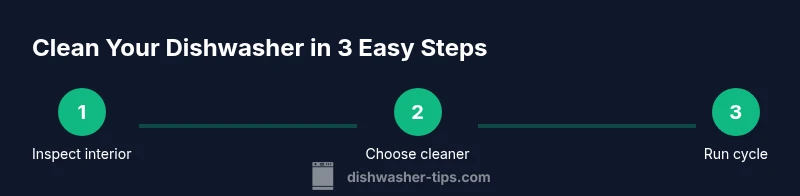
Can You Buy Dishwasher Cleaners? A Practical Guide
Discover where to buy dishwasher cleaners, the forms available, and how to use them safely to keep your dishwasher clean and efficient.


Yes — you can get dishwasher cleaner from supermarkets, hardware stores, pharmacies, and online retailers. Dishwasher cleaners come as tablets, powders, or liquids, and some include descalers or rinse aids. This quick answer helps you locate options and understand the different formats, so you can pick the right cleaner for your dishwasher and use it safely.
Understanding dishwasher cleaners
Dishwasher cleaners are products designed to remove buildup, mineral deposits, and odors from inside the machine. They come in several forms and are intended for periodic cleaning beyond your everyday dishwashing cycle. According to Dishwasher Tips, you can find dishwasher cleaners at many stores and online, making it easy to pick an option that fits your needs. This overview helps you understand what these cleaners do and why regular cleaning matters for performance, longevity, and energy efficiency.
Forms of dishwasher cleaners
Cleaners for dishwashers come in three main formats: tablets, powders, and liquids. Tablets are convenient and pre-measured, powders offer flexibility with dosing, and liquids can be fast-acting for targeted buildup. Some products include descalers to tackle hard water, while others emphasize odor control with rinse aids. For the best results, choose a form that matches your dishwasher model, water hardness, and cleaning goals. This section lays out pros and cons so you can compare options at a glance.
Where to buy dishwasher cleaner
Dishwasher cleaners are widely available at grocery stores, big-box retailers, hardware shops, pharmacies, and online marketplaces. Based on Dishwasher Tips analysis, you’ll typically find a range of brands and price points in the cleaning aisle or on the home goods shelf. If you’re shopping online, you can read user reviews to gauge effectiveness with your water type. Always check the product label for compatibility with your dishwasher’s model and cycle options.
How to choose the right cleaner for your dishwasher
Start by identifying your water hardness and the specific buildup you’re dealing with (odor, mineral scale, or greasy residue). Read labels to confirm the cleaner is safe for your dishwasher’s material and seals. If you have a stainless steel tub or hard water, look for products that explicitly state compatibility with those conditions. Consider whether you prefer a tablet with descaler properties or a general cleaning formula. Finally, verify that the cleaner is time-efficient and easy to use in your usual routine.
Safe usage and safety considerations
Always use cleaner products exactly as directed on the label. Never mix different cleaners, vinegar, or bleach with dishwasher cleaners, as this can create harmful fumes or chemical reactions. Run the dishwasher empty on the recommended cycle after applying the cleaner to ensure all residues are flushed out. If you notice persistent odors or residue after cleaning, a deeper service check of filters and spray arms may be warranted.
Common mistakes to avoid
Avoid using old or expired cleaners, as ineffective formulas waste time and money. Don’t skip the rinsing step, since residues can attract more buildup. Be mindful of silicone seals and stainless steel finishes; some formulas can cause discoloration or pitting if not labeled safe for your material. Finally, don’t assume one cleaner fits every problem; different cleaning cycles address different concerns.
Maintenance beyond cleaners: ongoing care
Regular maintenance goes beyond a single cleaner cycle. Clean the filter and spray arms periodically, inspect door seals for wear, and run a hot-water cycle with a rinse-aid when needed. Use a water-softening salt if your area has very hard water, as this reduces mineral buildup. Keeping a simple monthly routine can significantly extend the life of your dishwasher and improve cleaning performance.
References and authoritative sources
- https://www.epa.gov/saferchoice (epa.gov safety and product guidance)
- https://www.energy.gov/eere/buildings/articles/keeping-dishwashers-clean (energy.gov tips for appliance maintenance)
- https://www.consumerreports.org/cooking-dining/dishwasher-cleaning-tips-a1907053223/ (consumerreports.org appliance care guidance)
Tools & Materials
- Dishwasher cleaner product (tablet, powder, or liquid)(Choose the form recommended by your label and match your dishwasher model.)
- Hot water(For rinsing and helping dissolve residues.)
- Soft cloth or sponge(Use to wipe gaskets and interior surfaces after cleaning.)
- Measuring cup or spoon(Useful if using liquid or powder cleaners that require measuring.)
- Rubber gloves(Protect hands during cleaning and wipe-down.)
- Bucket or basin (optional)(Helpful for pre-cleaning the interior if buildup is heavy.)
Steps
Estimated time: 30-45 minutes
- 1
Inspect dishwasher and read label
Open the dishwasher and locate the cleaning product label. Verify compatibility with your model and water type, and remove any large food debris from the sump or filter area. This helps ensure the cleaner can work effectively without interference.
Tip: Always check the manual for any model-specific restrictions before using a cleaner. - 2
Prepare the interior
Remove racks if needed to access the bottom and walls. Wipe away loose crumbs or residue with a damp cloth to avoid trapping debris during the cycle.
Tip: A clean interior helps the cleaner reach every surface. - 3
Apply cleaner according to form
If using a tablet, place it in the dispenser as directed. For powder or liquid cleaners, add the recommended amount to the detergent cup or bottom of the tub, per label instructions.
Tip: Accurate dosing prevents over-foaming or insufficient cleaning. - 4
Run a hot cleaning cycle
Choose the hottest cycle your dishwasher offers and run it without dishes. This flushes cleaner residues and minerals from the interior.
Tip: If your water is very hard, consider an extended cycle or a cycle with higher heat. - 5
Inspect and rinse
After the cycle, inspect the interior and seals. Wipe away any remaining residue and run a quick rinse if necessary to clear lingering cleaner.
Tip: Residual cleaner can cause scent or film if not fully flushed. - 6
Reassemble and test
Replace racks and run a short cycle with plain water to confirm nothing remains behind. If odors persist, consider a repeat cleaning or deeper inspection of filters and spray arms.
Tip: Seasonal cleanings can prevent recurring smells or buildup.
People Also Ask
Can I use regular dish soap to clean my dishwasher?
No. Regular dish soap is not designed for dishwasher cleaning and can cause excessive foaming or residue. Use a dedicated dishwasher cleaner and follow the label directions.
No. Regular dish soap isn’t meant for dishwasher cleaning and can create foam or residue; use a dedicated cleaner and follow the label.
Is it safe to use vinegar or bleach when cleaning my dishwasher?
Vinegar can help with odors, but high acidity may impact gaskets and seals over time. Bleach should never be mixed with other cleaners in the dishwasher. Always follow cleaner labels and manufacturer guidance.
Vinegar may help odors but can harm seals, and bleach shouldn’t be mixed with cleaners inside the dishwasher.
How often should I clean my dishwasher with a cleaner?
For most households, a cleaner cycle every 1-3 months is sufficient, depending on water hardness and usage. If you notice odors or visible buildup, increase the frequency temporarily.
Most people clean every 1-3 months, adjusting for odors and mineral buildup.
What’s the difference between powder and tablet cleaners?
Tablets are pre-measured and convenient, while powders allow flexible dosing. Choose based on your preference and the specific buildup you’re targeting.
Tablets are pre-measured; powders give dosing flexibility. Pick what fits your cleaning goals.
Can I use lemon juice or other citrus cleaners in my dishwasher?
Citrus cleaners are not generally recommended for dishwasher cleaning. Their acidity can degrade seals over time. Use products labeled for dishwasher use.
Citrus cleaners aren’t recommended because the acid can wear seals—stick to dishwasher-safe cleaners.
How do I know if my dishwasher needs service rather than a cleaner?
Persistent odors, cloudy residue that won’t wash away, or frequent pipe clogs may indicate a failing pump, clog, or seal that requires professional inspection.
If odors persist after cleaning or you see frequent clogs, a professional check may be needed.
Watch Video
What to Remember
- Choose the right cleaner form for your dishwasher
- Follow label directions precisely for safe use
- Run the cleaner on an empty cycle to flush residues
- Maintain a regular cleaning schedule for best performance