How to Clean the Dishwasher Filter: A Step-by-Step Guide
Essential guide to clean the dishwasher filter, prevent clogs, and restore cleaning performance with simple tools, clear steps, and maintenance tips for homeowners and renters.


Learn how to clean the dishwasher filter and restore optimal cleaning performance. This quick guide covers removing the filter, rinsing away debris, scrubbing mesh, and reinstalling correctly, plus signals that you should replace the filter. You’ll also get safety tips and a maintenance routine to prevent future clogs and odors in your kitchen appliance.
What happens when a dirty filter affects cleaning
A dirty dishwasher filter disrupts the appliance's ability to capture food particles and circulate water effectively. The filter protects the pump and keeps debris from clogging the drain. When it becomes clogged, water flow is restricted and the spray arms lose pressure, which reduces cleaning power. The result is dishes that come out with stuck-on residue, longer wash cycles, and odors in the tub. According to Dishwasher Tips, a clogged filter is one of the most common culprits behind poor cleaning performance. Regularly cleaning the filter restores proper flow, protects the pump, and helps you achieve consistently clean dishes without re-washing.
From a practical standpoint, you can monitor condition by looking for visible buildup and by noting changes in wash outcomes. If you notice longer cycles, need to rinse dishes twice, or see a visible layer of debris on the filter, it’s time to act. In high-efficiency machines, even small amounts of debris can clog fine passages; neglecting this step can cause the dishwasher to work harder, consume more energy, and wear components sooner. By staying on top of filter maintenance, you improve water circulation, reduce strain on the motor, and minimize the risk of a more serious clog deeper in the drain system.
How the dishwasher filter is designed
Dishwasher filters come in several styles, including fixed mesh screens, removable cartridge filters, and hybrid designs with self-cleaning features. Most models place the filter in the sump at the bottom of the tub, where water is directed toward the pump and spray arms. The primary job of the filter is to catch large particles while allowing water to pass for circulation. A torn mesh or warped frame reduces filtration efficiency and can let particles into the pump and drainage path. Understanding your model’s design helps you clean more effectively and avoid damage. While some units require disassembly of the frame, others offer a simple twist-off cup that can be rinsed under running water. Refer to the user manual for model-specific steps.
Signs your filter needs cleaning
Look for obvious signs that your filter needs attention. Dishes may come out with residue or specks, or you may see longer cycles than usual. Water draining slowly or pooling in the bottom after a cycle can indicate filter buildup is restricting flow. A musty odor inside the dishwasher is another clue that organic debris has started to accumulate. If you notice reduced spray performance, such as weaker water flow or less effective rinsing, plan to inspect and clean the filter. Regular inspection helps prevent big clogs and keeps performance consistent.
Locating and removing the filter in common models
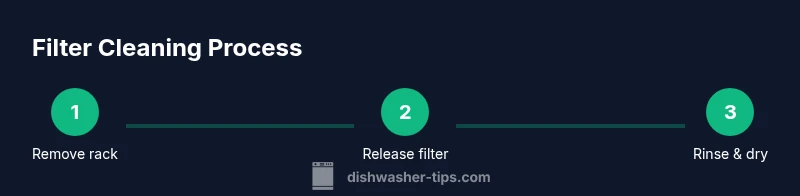
In many dishwashers, the filter sits under the bottom rack near the sump. Start by removing the lower rack to access the filter housing. Depending on the model, you may find a round, square, or rectangular insert held in place by a locking ring or central post. Gently twist or lift to release the filter, then place it on a towel for cleaning. If you’re unsure, consult the manual or search for your model name plus filter location. Photographing the setup before removal helps with correct reinstallation.
Cleaning methods: quick rinse vs deep clean
A quick rinse removes loose debris, while a deep clean tackles grease and mineral buildup. For a quick rinse, rinse the filter under warm water and use a soft brush to dislodge particles. For a deeper clean, soak the filter in warm water with a mild dish soap for 10–15 minutes, then scrub and rinse until the water runs clear. Dry the filter completely before reinstalling. If mineral deposits persist, you may use a gentle descaler following the product instructions, but avoid harsh chemicals that could degrade the plastic parts. The goal is a clean, dry filter ready to seal correctly when reassembled.
Common mistakes and how to avoid them
Common mistakes include using abrasive tools that can tear the mesh, soaking in bleach or acidic cleaners that can degrade plastic, and reinstalling a damaged filter. Never force the filter to lock into place; if it won’t fit, re-check the alignment and consult the manual. Also avoid leaving the filter wet in a damp environment, which can promote mold growth. Finally, don’t neglect the housing seals—built-up grime there can cause leaks after reassembly.
Maintenance routine for ongoing cleanliness
Create a simple monthly cycle: remove and clean the filter, wipe the sump and housing, inspect for wear, and reinstall. Set a reminder on your phone or calendar to perform this task every 1–3 months depending on use. If your water is hard, you may need to increase frequency slightly. Keeping the filter clean helps maintain optimal spray pressure and reduces the chance of clogs.
Handling stubborn clogs and replacement
If you cannot clear the filter after multiple attempts, remove the entire filter assembly and inspect the drain area for trapped debris. Use a soft brush and a flashlight to check nooks and crevices. When the mesh is torn or the frame is warped, replace the filter rather than attempting repairs. Replacement filters designed for your model often restore performance more reliably than ad-hoc fixes. Contact the manufacturer for compatible options and warranty considerations.
Final checks after cleaning and prolonging efficiency
After reassembling, run a short hot wash with nothing in the dishwasher to flush debris through the system. Listen for unusual noises that could indicate a partial clog elsewhere. Check the discharge hose and drain line for kinks or blockages. If the rinse cycle looks strong and the dishes come out clean, you’ve successfully extended the life of the filter and the overall appliance. Keep track of maintenance dates to schedule future cleanings.
Tools & Materials
- Dishwasher-safe sponge(Non-scratch, used for scrubbing the filter mesh)
- Warm water(For rinsing and loosening debris)
- Soft brush or old toothbrush(Gently scrub mesh and housing)
- Towel or microfiber cloth(Drying and blotting after cleaning)
- Gloves(Hand protection; optional)
Steps
Estimated time: 40-60 minutes
- 1
Power off and access the filter
Turn off the dishwasher at the wall or unplug the unit. Remove the lower rack to expose the filter housing and ensure no power is connected during handling.
Tip: Use a towel under the area to catch drips. - 2
Locate and remove the filter assembly
Identify the filter housing at the tub base. Depending on your model, twist to unlock a circular filter or lift a rectangular frame. Remove the filter and place it on a clean towel.
Tip: If you feel resistance, consult the manual instead of forcing the lock. - 3
Rinse the filter under warm water
Rinse away loose debris with running water. Use a soft brush to loosen particles from both the mesh and the housing.
Tip: Do not use hot water that could warp plastic components. - 4
Scrub the filter mesh and housing
Apply mild dish soap to a soft brush or sponge and scrub the mesh and surrounding housing. Rinse until the water runs clear and suds are gone.
Tip: Be gentle to avoid tearing the mesh. - 5
Inspect for damage and dry thoroughly
Check the mesh for tears and the frame for warping. Dry the filter completely with a towel before reinstalling to prevent mold.
Tip: If you see cracks or tears, replace instead of reusing. - 6
Reinstall and test
Reattach the filter in its original orientation and run a short hot cycle with water only to ensure proper function and no leaks.
Tip: Listen for leaks and observe the seal during the first cycle. - 7
Cleanup and storage
Wipe the area dry, store cleaning tools, and note the date of maintenance for your records.
Tip: Set a reminder for the next cleaning in 1–3 months.
People Also Ask
Why should I clean my dishwasher filter?
A clean filter prevents debris from circulating and helps the machine wash dishes effectively. It also protects the pump from damage caused by buildup.
Cleaning the filter keeps debris out of the pump and helps your dishes come clean.
How often should I clean the dishwasher filter?
Most households benefit from cleaning every 1-3 months, or more often with heavy use or hard water. Adjust based on dishwasher performance.
Typically every one to three months, or sooner if you notice poor cleaning.
Can I use bleach or strong cleaners on the filter?
Avoid bleach and harsh chemicals that can degrade plastic components. Use mild dish soap and warm water instead.
No, use mild soap and water to avoid damage.
What if the filter is torn or damaged?
If the mesh is torn or the frame warped, replace the filter rather than attempting repairs.
If damaged, replace. Do not reuse.
Is the filter the same as the spray arms?
No—the filter traps debris while spray arms distribute water. They serve different roles and both require maintenance.
They’re different parts; maintenance is separate for each.
Should I run a cleaning cycle after filter cleaning?
Yes. Run a hot cycle with water only to flush debris and verify proper drainage.
Yes, run a hot wash to flush the system.
Watch Video
What to Remember
- Clean the filter regularly to maintain water flow
- Rinse and dry thoroughly before reinstalling
- Inspect for damage and replace when needed
- Run a hot cycle after cleaning to flush debris
- Keep a simple maintenance schedule