Rinse Aid vs Salt: Understanding the Difference for Your Dishwasher
Explore the difference between rinse aid and dishwasher salt, how they work, and when to use each to optimize drying, prevent mineral buildup, and protect your dishwasher in hard and soft water conditions.


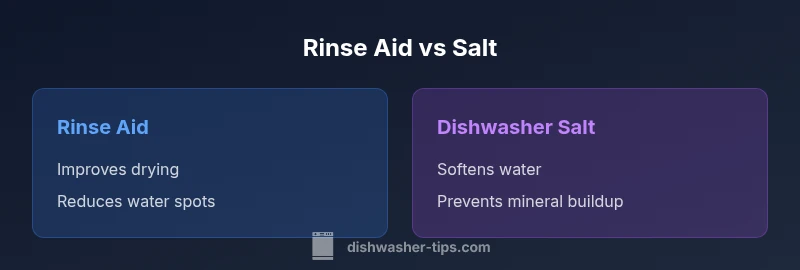
To optimize dishwasher results, understand the difference between rinse aid and dishwasher salt: rinse aid lowers surface tension for faster drying and fewer spots, while dishwasher salt softens water to prevent mineral buildup. Use both in hard water areas, but avoid overfilling or mixing products. Understanding these roles helps improve cleaning, drying, and appliance longevity.
Understanding the Roles: rinse aid vs dishwasher salt
The difference between rinse aid and dishwasher salt is foundational for anyone maintaining a home dishwasher. Rinse aid and dishwasher salt are not interchangeable; they serve distinct purposes that affect the outcome of every wash. Rinse aid works during the rinse cycle to alter how water beads and drips from surfaces, reducing film, spots, and cloudy glassware. Dishwasher salt, by contrast, feeds a built-in water softener that alters the mineral composition of incoming water, mitigating scale and mineral buildup that can impair cleaning performance. While the two products operate in different parts of the wash process, they complement each other in practice—especially in regions with hard water. By understanding the difference between rinse aid and dishwasher salt, you can tailor usage to your water conditions, dishwasher model, and dishware needs. This article explains how to use both correctly, so you achieve consistently sparkling results and protect your appliance over time. According to Dishwasher Tips, recognizing the roles of these products is the first step toward practical, evidence-based maintenance.
What rinse aid does in the wash cycle
Rinse aid is a performance additive designed for the final rinse. It reduces the surface tension of the rinse water, encouraging droplets to flatten and drain quickly from dishes, glassware, and plasticware. The immediate effect is less streaking and fewer water spots, especially on transparent glassware and glossy plastics. Rinse aid can also improve drying by promoting faster evaporation during the final rinse, reducing dampness when the cycle ends. It does not clean soils or grease by itself; its job is to optimize rinse efficiency and drying performance. The amount you use is typically controlled by a dial or dispenser setting, which should be adjusted based on your water hardness and the dishwasher’s design. The key is to balance sufficient dosing for clarity without excess that may foam or leave residue. The difference between rinse aid and dishwasher salt becomes most evident in how they influence the final appearance of your dishes and the dryness level after the cycle.
How dishwasher salt works with water softeners
Dishwasher salt is not a detergent; it feeds the water-softening system that many dishwashers include to manage mineral content in hard water. As water passes through the softening resin, calcium and magnesium ions are exchanged for sodium ions. This process reduces water hardness, which in turn minimizes mineral deposits on dishes and inside the machine. Softer water enhances cleaning efficiency and prolongs the life of the dishwasher by reducing limescale buildup on spray arms and heating elements. It’s important to use salt specifically designed for dishwashers; regular table salt may contain additives that could clog the system. The salt reservoir must be refilled according to the user manual, with more frequent checks in areas with very hard water. The distinction between rinse aid and dishwasher salt is clear here: salt addresses water chemistry upstream, while rinse aid optimizes the rinse and drying downstream.
When to use rinse aid and when to rely on salt
In most homes, both rinse aid and dishwasher salt play roles, and the current water chemistry will guide usage. In hard water regions, salt is particularly important for reducing mineral buildup, while rinse aid helps prevent spotting and improves drying. In softer water areas, salt use may be reduced or, in some models, not required if the machine’s softening system is not engaged. Nevertheless, rinse aid remains valuable for improving drying and spot-free results on glassware and plastics. Always consult your dishwasher’s manual; some models integrate advanced dosing that adjusts automatically based on detected water hardness. The practical takeaway: in regions with high mineral content, lean toward using both products correctly; in very soft water, you may rely more on rinse aid, but verify compatibility with your machine.
The interaction between rinse aid and salt in practice
When both products are used correctly, rinse aid handles the post-wash behavior of water on surfaces, while salt manages the quality of the incoming water. The rinse aid can smooth out water droplets during the final rinse, reducing streaks and speeding drying. The salt keeps the water softener functioning, which prevents mineral scale that can clog spray arms and reduce cleaning efficiency over time. A critical nuance is not to misplace or overfill either dispenser; incorrect dosing can lead to foam, residue, or wasted product. In practice, users should set rinse aid according to the manual, refill salt when the reservoir signals low, and monitor results across several wash cycles to determine if adjustments are needed. This careful calibration is especially important in areas with fluctuating water hardness throughout the year.
How to choose the right product for your dishwasher model
Choosing the right rinse aid and dishwasher salt depends on your machine’s design and your local water conditions. Start by checking the user manual for recommended products and dosing guidelines. If your area has hard water, look for a rinse aid with enhanced anti-spot properties and a salt that meets the hardness levels described by the manufacturer. For smaller households or apartments with limited storage, consider multi-pack solutions that combine cost efficiency with convenience. If your dishwasher supports adjustable dispensers or automatic dosing, you may benefit from using the built-in features and monitoring results over several cycles. In every case, avoid mixing products or using non-dedicated chemicals, as this can compromise performance and void warranties. The broader takeaway is that the difference between rinse aid and dishwasher salt lies in where and how they act within the wash process, and aligning choices with your model and water quality yields the best outcomes.
How to use rinse aid correctly
Use rinse aid as directed by your dishwasher’s manufacturer. Typically, you’ll fill the dispenser and adjust the setting to match water hardness, then run a cycle to observe results. For most households, a moderate setting works well in moderate-to-hard water regions; in very soft water, you may reduce the dose to avoid unnecessary residue. After several cycles, assess the level of spotting on glassware and the dryness of dishes. If spots persist, you may experiment with a slightly higher rinse aid setting, ensuring you do not exceed the maximum recommended level. Clean any dispenser residue periodically to prevent overflow or clogging. Remember, rinse aid enhances rinse and drying, but it does not replace the need for proper cleaning agents or good loading practices. The central idea is that the rinse aid difference is performance during the final rinse, influenced by water chemistry and dispenser settings.
How to fill and maintain the dishwasher salt compartment
Filling the salt reservoir is a straightforward maintenance task with real impact on performance in hard water conditions. Start by locating the salt cap or cap fastener on your dishwasher; remove it carefully and fill with dishwasher salt until the reservoir is near the top, then replace the cap securely. It’s normal to see a small amount of cloudy water during the first refill as salt dissolves and mixes with the resin. In areas with extremely hard water, you may refill more frequently, but avoid overfilling beyond the manufacturer’s recommended level. Periodically inspect the salt indicator light or gauge if your model provides one and plan refill schedules accordingly. A properly charged softening system reduces mineral buildup and helps rinse aid work more efficiently. The crucial distinction between rinse aid and dishwasher salt is that salt manages mineral content at the source, while rinse aid optimizes the final rinse and drying.
Common mistakes and misconceptions
Common misconceptions include assuming rinse aid cleans as well as detergent, or that dishwasher salt moisturizes dishes directly. In reality, rinse aid’s role is to improve drying and reduce water spots, while salt preserves the softening resin’s capacity. Another mistake is using table salt or other non-dedicated products in the salt reservoir, which can harm the softener and void warranties. Overfilling rinse aid can lead to excess foam or residue on dishes, while underfilling can produce more spots and longer drying times. Finally, some users neglect to adjust dosing with seasonal water hardness changes; this can degrade performance during winter when mineral content may increase due to regional supply changes. Understanding these pitfalls helps ensure you get the intended benefits from both products.
Practical tips for different water conditions
Hard water environments demand vigilance: keep the salt reservoir topped up and use a rinse aid setting calibrated for your hardness level. In soft water, you may be able to reduce rinse aid dosage and still achieve sparkling results, but confirm compatibility with your dishwasher model. If your area experiences seasonal water hardness shifts, consider adjusting the rinse aid setting temporarily during periods of higher mineral content. For glassware, ensure the rinse aid setting is sufficient to prevent cloudy residues. Finally, keep the detergent cycle separate from rinse aid and salt cycles—never substitute one for the other. The practical outcome is that your approach should reflect actual water hardness, appliance design, and observed wash outcomes.
Cost considerations and product selection
From a budgeting perspective, rinse aid and dishwasher salt are relatively affordable and widely available. The best value often comes from selecting concentrated formulas that deliver more cycles per bottle or bag, reducing overall cost per wash. When choosing products, prioritize compatibility with your dishwasher model, water hardness, and the ease of refilling the respective dispensers. If you notice persistent spots or poor drying, reassess your dosing settings and refill schedule rather than switching brands immediately. Using high-quality products that align with your water conditions typically yields better long-term results and can extend the life of seals and heating elements by reducing mineral buildup. The key point is that selecting the right products and dosing strategy for your water and machine is more important than chasing the newest brand feature.
Quick-start checklist
- Check your dishwasher manual for recommended rinse aid and salt usage.
- Determine your water hardness and set dispensers accordingly.
- Fill the salt reservoir to the indicated level and securely close the cap.
- Refill the rinse aid at its indicator or when you notice more spots or poor drying.
- Run a test cycle and observe drying, spotting, and overall cleanliness over several washes.
- Adjust dosing based on results and seasonal water hardness changes.
- Clean dispenser nozzles and seals periodically to prevent clogs and ensure consistent dosing.
Final thoughts: the practical difference that matters
In the end, the difference between rinse aid and dishwasher salt is about where they work in the wash cycle: salt addresses water hardness at the source, while rinse aid optimizes the final rinse and drying. Together, they reduce mineral buildup, improve drying performance, and extend the life of your dishwasher. Your best approach is to tailor usage to your water conditions and your model’s design, then monitor results and adjust as needed. This makes the distinction meaningful in day-to-day operation and long-term appliance care.
Bottom-line recommendations
For most households in hard water regions, use both rinse aid and dishwasher salt as directed by the manufacturer, adjusting for observed results. In softer water, you may rely more on rinse aid and verify whether salt is required for your model. Consistency in dosing, regular maintenance, and alignment with water conditions will yield the best balance of cleanliness, efficiency, and appliance longevity.
Comparison
| Feature | Rinse Aid | Dishwasher Salt |
|---|---|---|
| Primary function | Reduces surface tension to improve drying and reduce spots | Softens water by feeding the built-in water softener |
| Where it works in the machine | Dispenser in the rinse cycle | Salt reservoir for the softener system |
| Impact on drying | Promotes faster evaporation and fewer droplets on dishes | Prevents mineral buildup that impedes drying and cleaning |
| Best for | Glassware clarity and low-water-spot results | Hard water areas to reduce scale and extend softener life |
| Usage considerations | Adjust dose based on water hardness; avoid overfilling | Use as directed; refill according to manual to maintain softening capacity |
| Cost and availability | Widely available; generally affordable | Widely available; generally affordable |
The Good
- Improved drying and fewer water spots
- Prevents mineral buildup with hard water
- Relatively low ongoing cost and easy to source
- Supports glassware clarity and overall cleanliness
Disadvantages
- Requires correct dosing; misadjustment can cause residue
- Using wrong product in some machines can void warranties
- Overuse can lead to foaming or film on dishes
- Salt must be replenished periodically in hard water regions
Rinse aid and dishwasher salt together offer the best results in most homes.
Use salt to combat hard water and protect the machine’s softener. Use rinse aid to improve drying and reduce spots. Follow your model’s guidance and adjust dosing based on observed results for optimal performance.
People Also Ask
What is the main difference between rinse aid and dishwasher salt?
Rinse aid reduces surface tension during the final rinse to improve drying and reduce water spots, while dishwasher salt feeds the water softener to decrease mineral buildup. They operate in different parts of the wash cycle and address different problems. Together, they optimize performance, especially in hard water conditions.
Rinse aid helps drying and prevents spots, while dishwasher salt softens water to prevent mineral buildup. They work in different parts of the wash, and using both is best in hard water areas.
Do I need salt if my water is soft?
If your dishwasher relies on a built-in softener and your water is soft, you may not need to continuously add salt. Always check your model’s manual. Even in soft water areas, rinse aid is often beneficial for drying and spot prevention.
In soft water, you might not need salt, but rinse aid is usually still helpful for drying and preventing spots.
Can using salt harm my dishwasher?
Using detergent-grade dishwasher salt as directed by your manufacturer generally does not harm your washer. Avoid table salt or additives, and never mix salts from different sources. Incorrect dosing or using non-dedicated products can affect performance and warranty.
As long as you use dishwasher salt per the manual and avoid table salt, it’s safe for the machine.
How often should I refill rinse aid and salt?
Refill rinse aid when the dispenser runs low or when you start noticing more spots or less drying. Refill dishwasher salt based on the machine’s indicator or a hard-water assessment, usually more often in areas with high mineral content. Regular checks help maintain optimal performance.
Keep an eye on the rinse aid dispenser and the salt reservoir, refill as needed based on indicators and water hardness.
Is rinse aid necessary in soft water?
Rinse aid is not strictly necessary in very soft water, but it can still improve drying and prevent water spots on glassware. Many users keep it at a reduced setting. Always refer to your dishwasher’s guidance for best results.
Soft water may not require full rinse aid dosing, but it can still help with drying and spots.
What to Remember
- Identify whether your water is hard or soft
- Dose rinse aid to match water hardness and drying needs
- Keep the salt reservoir filled in hard water areas
- Never substitute non-dedicated products
- Regularly review results and adjust settings as needed