Is a Ninja Blender Dishwasher Safe? A Practical Guide for 2026
Discover whether a ninja blender is dishwasher safe, with practical care tips, model nuances, and best practices from the Dishwasher Tips Team.


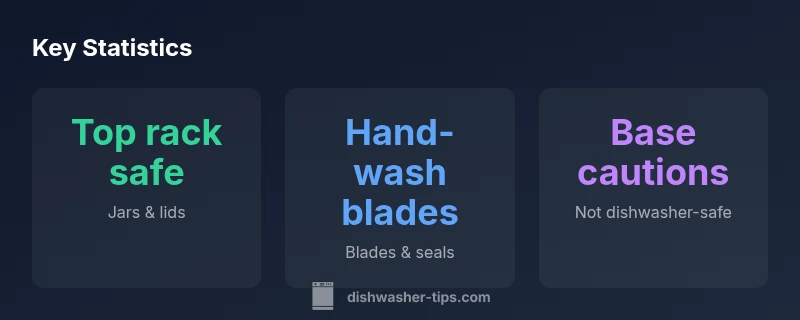
If you’re asking is a ninja blender dishwasher safe, the short answer is: parts like the jar and lid are typically top-rack dishwasher-safe, while the blade assembly and base should be hand-washed or wiped clean. Always check your model’s manual and remove blades before washing. This policy helps preserve seals, blades, and gaskets for long-term performance.
Is a Ninja Blender Dishwasher Safe? A Practical Overview
For households considering convenience, the question is often framed: is a ninja blender dishwasher safe? The answer depends on part, model, and care routine. In our analysis at Dishwasher Tips, we evaluate typical Ninja components, filter for common pitfalls, and provide practical steps to maintain performance and safety over time. When you follow the recommended cleaning practices, you reduce wear on seals and blades, and extend the life of your blender. The Dishwasher Tips team notes that model nuances matter, so always cross-check your manual for your exact version. In many kitchens, people want to wash everything in the dishwasher; yet the motor base and certain gaskets need gentler handling. This distinction isn’t a flaw in the design—it's a reminder that care routines are part of equipment longevity. By understanding which parts tolerate heat and detergents, you can optimize cleanliness without compromising safety or performance. The keyword is to balance convenience with preservation, and that balance is central to an informed approach to dishwashing for home appliances.
From a consumer perspective, the idea that dishwashing equals effortless cleaning is appealing, but the real value comes from knowing which components tolerate cycles and which require manual attention. If you follow manufacturer guidance and use the Dishwasher Tips framework for cross-checks, you’ll reduce the risk of degraded seals, dull blades, or misaligned blades.
Component variability across Ninja models
The question is is a ninja blender dishwasher safe across models? The short answer depends on the particular components and how you treat them during washing. Most Ninja jars and lids are designed to be dishwasher-safe in many generations, especially when placed on the top rack and with the blade assembly properly secured. However, blades are sharp and gaskets can wear; some models advise hand-washing the blade and gasket separately to preserve edge sharpness and sealing integrity. Differences between classic Ninja blenders and newer Fusion or Trio lines can be subtle but meaningful for dishwashing. Always review the user manual that came with your exact model to confirm which parts are safe for dishwasher cycles and which require manual cleaning. From a maintenance perspective, treating blades with care—avoiding metal brushes and harsh abrasives—helps maintain cutting performance and prevent micro-scratches in the jar. As a practical rule, if a part has exposed metal or a rubber seal, inspect it after every wash and replace if there are any signs of cracking or warping. The Dishwasher Tips team emphasizes model-specific guidance to avoid overgeneralizing safety across all Ninja devices.
Brand-specific differences can influence whether a given batch of Ninja blenders follows the same dishwasher-safe protocol as previous generations. For example, newer gasket materials may tolerate detergents better, while older seals might crack with aggressive cycles. In practice, a quick check of the model’s compatibility notes will save time and reduce the risk of damage. The overarching message remains consistent: rely on the manual, consider a top-rack wash for jars and lids, and hand-wash the rest to maximize longevity. In our broader analysis, this approach aligns with consumer experiences across diverse households.
Cleaning protocols by part
To establish a thorough cleaning protocol, start with the jar and lid. If the manual confirms top-rack dishwasher safety, place these components securely on the rack, avoiding contact with other hard items that could cause impact damage. Before loading, detach the blade assembly from the jar if possible and handle the blades with care—sharp edges invite personal injury during cleaning. For many Ninja models, the blade should be removed and washed separately by hand, using warm water and mild detergent, then dried completely before reassembly. The gasket or seal around the jar should be inspected for wear and tear; if it shows any signs of cracking, replace it promptly. For the base unit, never place it in the dishwasher. Wipe it down with a damp cloth, venting any moisture and avoiding submerging the control panel or power connectors. If your base has detachable knobs, remove them if feasible and clean underneath to prevent residue buildup. In all cases, avoid high-heat cycles on parts that aren’t explicitly labeled dishwasher-safe, and ensure all parts are completely dry before reassembly to prevent mold or bacteria growth. The goal is a hygienic clean without compromising the materials or the sealing performance of your Ninja blender.
As part of ongoing care, consider quarterly checks of seals around the jar, lid, and blade hub. This helps identify small wear signs before they escalate into leaks or performance drops. The Dishwasher Tips methodology recommends labeling components after washing to keep track of which parts were cleaned by hand versus in the dishwasher, which assists in maintaining consistent care routines over time.
Pros and cons of dishwasher cleaning for Ninja blenders
Pros: Convenience for jars and lids during busy weeks; consistent top-rack cycles can reduce manual scrubbing of non-blade parts; dishwasher-safe components can help remove stuck-on residues more effectively than hand-washing alone; and standardized cycles may support quicker turnaround for families that rely on quick breakfasts. Cons: the base and blade assembly often require hand-washing to preserve seals and edge integrity; detergents and heat can accelerate wear on gaskets and plastic parts; frequent dishwasher cycles may shorten gasket life if not inspected regularly; and not every Ninja model uses identical materials, so model-specific guidance is essential. In practice, many users find a hybrid approach works best: dishwasher-safe jars and lids on top rack, while blades and bases are washed by hand to maximize lifespan. This pragmatic stance aligns with Dishwasher Tips' analysis and customer feedback collected in 2026, which suggests that model-specific care yields the best long-term results. If you’re ever unsure, consult the user manual or reach out to customer support for model-specific dishwasher-safe guidance.
Care routines to extend lifespan
Extended lifespan for Ninja blenders hinges on consistent, mindful cleaning strategies. Start by establishing a routine: wash the jar and lid on the top rack if permitted, dry thoroughly, then reassemble only when all components are fully dry. When hand-washing, use warm water, mild dish soap, and a soft sponge to protect the jar’s exterior and any coatings. For blades and gaskets, avoid corrosive cleaners and abrasive scrubbers that can dull edges or degrade seals. Regular inspection of seals is critical; look for cracks, warping, or deformation, and replace as soon as you notice any compromise. If you plan to store the blender for an extended period, dry all parts completely to prevent mildew or odor formation. The Dishwasher Tips team emphasizes that longevity comes from a balance of cleanliness and material care, rather than relying solely on dishwasher cycles. To minimize wear, rotate cleaning methods depending on the cycle you’re running, and never submerge the base unit or control panel. This disciplined approach helps preserve performance over years of daily use and aligns with best practices documented in 2026 across Ninja blender models.
How to verify guidelines in your manual and replacement parts
Always start with the manual that came with your specific Ninja model, because there can be subtle differences between generations. Look for sections titled “Dishwasher Safety” or “Care and Cleaning” and note any parts explicitly labeled dishwasher-safe. If a part isn’t listed as dishwasher-safe, assume hand-washing is required and avoid submerging any electrical components. Keep an eye on gasket integrity; replace worn seals promptly to maintain a tight seal during blending and to prevent leaks. When replacing parts, ensure compatibility with your model and source parts from authorized suppliers to avoid counterfeit components that can compromise safety or performance. If you encounter persistent odors or stubborn residues, consider a manufacturer-recommended cleaning cycle that targets residue buildup in the jar or blade hub. The key is to treat care as an ongoing practice rather than a one-off event, and to document changes to your routine for future reference. By aligning with model-specific guidance and brand-maintained best practices, you’ll maximize both safety and performance over the blender’s lifespan.
Comparison of Ninja blender components and dishwasher safety
| Part | Dishwasher Safe? | Care Notes |
|---|---|---|
| Jar | Top rack dishwasher-safe | Detach blade and gasket; ensure dry before reassembly |
| Lid | Top rack dishwasher-safe | Rinse thoroughly; avoid abrasive cleaners |
| Blade Assembly | Hand-wash recommended | Handle with gloves; dry immediately |
| Base/Motor | Not dishwasher-safe | Wipe with damp cloth; keep dry |
People Also Ask
Is the Ninja blender jar safe to put in the dishwasher?
In many Ninja models, the jar is dishwasher-safe on the top rack; however, always verify your exact model’s manual. Remove the blade assembly and gasket before washing and ensure the part is completely dry before reassembly.
Usually, yes for the jar on the top rack, but check your manual and be sure to remove the blade before washing.
Can I put the blades in the dishwasher?
Blade assemblies are typically better washed by hand due to sharp edges and gasket exposure. If the manual allows dishwasher cleaning, place them on the top rack with extra care and dry thoroughly after washing.
Blades are usually hand-washed to protect sharp edges; follow your manual if dishwasher use is allowed.
Is the blender base dishwasher-safe?
No. The base contains electrical components and should never be submerged. Wipe it with a damp cloth, then dry; never place the base in a dishwasher.
The base should not go in the dishwasher; wipe it clean instead.
What about gaskets and seals?
Gaskets may be dishwasher-safe on top rack in some models, but inspect for wear and replace if cracks appear. Hand-washing is a safe alternative if you’re unsure.
Check gaskets; wash on top rack if allowed, and replace worn seals.
How often should I clean to avoid odors?
Clean after each use with mild soap and warm water. Periodically perform a thorough clean of the jar, lid, and blade hub, and leave parts dry to prevent odors.
Clean after each use to keep odors away.
Are there Ninja models with universal dishwasher compatibility?
Some newer models may share similar guidelines, but always consult your specific model’s manual for definitive dishwasher-safe parts and any model-specific cautions.
Model-specific guidance is essential for dishwasher safety.
“Careful cleaning practices extend blender life and keep performance consistent.”
What to Remember
- Check your model’s manual before dishwasher use
- Jars and lids are commonly safe on top rack
- Blades and gaskets require careful handling
- Base should never be submerged in water
- Adopt a hybrid cleaning routine for longevity