What to Put in Rinse Aid Dishwasher: A Practical Guide
Learn exactly what to put in rinse aid dishwasher, how to choose formulations, and how to use rinse aid effectively to prevent water spots and improve drying.


In most dishwashers, you should fill the rinse aid dispenser with a standard rinse aid product designed for automatic dishwashers. Use the dispenser that comes with your unit and follow the manufacturer’s dosage, typically a small capful per cycle. Avoid substitutes like hand soap or vinegar-based mixes, which can cause sudsing or residue.
Understanding rinse aid: what it does and why you need it
Rinse aid is a specialized dishwasher additive that lowers the surface tension of water during the final rinse. This helps water bead and sheet off dishes rather than forming droplets that scatter light, which reduces water spots on glassware and improves drying on plastics. According to Dishwasher Tips, using rinse aid correctly can lead to noticeably cleaner glasses and fewer film residues on plastics. The Dishwasher Tips team found that many homeowners forget to fill or adjust the dispenser, leading to inconsistent results. In this section we’ll explain the science in plain terms and outline how rinse aid interacts with water hardness and detergent, and with the different features of modern dishwashers.
Most rinse aids consist of a liquid carrier with surfactants and other additives designed to reduce surface tension. When the final rinse starts, the rinse aid is released in tiny amounts, coating the dishes so that water runs off more efficiently. You’ll often see improved drying on glasses and less streaking on stainless steel and plastics after a few cycles. If your dishwasher has a dosage dial or a dispenser with a MAX line, always stay within the recommended range. Using too little may produce little or no improvement, while too much can cause foaming or residue.
"## What to put in rinse aid dishwasher: product types" is a heading in this block. This section describes product types and cautions against substitutes. It emphasizes using only dishwasher-specific rinse aids and notes phosphate-free versions are widely available for environmental considerations.
How to choose a rinse aid: ingredients and formulations
Look for products labeled rinse aid and review the ingredient list. Surfactants are the key active ingredients that lower surface tension and promote sheeting. Some formulations include anti-spot or anti-fog features and additional film-control polymers. Phosphate-free options are common and are preferred by many environmentally conscious consumers. If your water tends to be hard, you might opt for a stronger formulation or a product marketed as good for hard water; softer water may require less dosage. Avoid fragrances if you have sensitive skin or allergies, and consider a dye-free version if you notice color transfer on dishes. Finally, ensure the product is compatible with your dishwasher’s guidelines and any energy-efficiency settings.
How to load and maintain the rinse aid dispenser
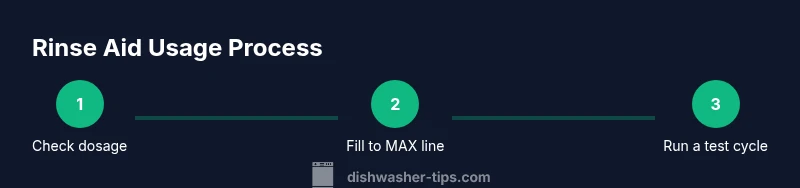
Start by locating the rinse aid dispenser, usually near the detergent dispenser on the inside of the door. Wipe the cap and surrounding area to remove dust or old residue. Open the dispenser and fill it up to the MAX line indicated on the reservoir. Avoid overfilling, as excess rinse aid can spill or foam during cycles. Wipe any drips from the rim, then close and reseal the cap securely. Run a test cycle on a full load to observe whether dishes dry evenly and without spots. If you notice overspray, adjust the dosage or consult the manual for your model’s settings. Keep the dispenser clean by wiping it monthly or when you refill.
Common mistakes and how to avoid them
- Skipping refills and running cycles with an empty dispenser, which reduces efficacy.
- Overfilling the dispenser or pouring directly onto dishes, which can cause foaming and residue.
- Using non-dishwasher-grade liquids (vinegar, dish soap) in or near the rinse aid dispenser.
- Not cleaning the dispenser or the cap, which can block release or create buildup.
- Ignoring hard-water signals; you may need a stronger rinse aid or higher dosage for persistent spots.
- Using the wrong product for your machine (consult the manual or the Dishwasher Tips guide).
Troubleshooting: what to do if dishes still spotting
If you still see spots after using rinse aid, start with the simplest checks. Clean the dispenser to remove any sticky residue that might impede release. Verify that the rinse aid dosage setting is appropriate for your water hardness and dishwasher model. Run hot water through the sink before starting a cycle to ensure the dishwasher receives warm water. Inspect spray arms and filters for clogs that can starve the rinse stage of water or distribute inconsistent flow. Consider using a phosphate-free product designed for hard water, or adjust the dosage slightly per the manual’s guidance. If spots persist, consider a service call to inspect seals and water supply.
Tips for special cases: hard water, glassware, plasticware
Hard water creates more mineral deposits on dishes; you may benefit from a stronger rinse aid or a higher dosage. For glassware, look for formulas marketed to reduce clouding and improve clarity. Plasticware can benefit from the sheeting action that rinse aids provide, but excessive dosing may leave a film. Always separate delicate glassware and run a shorter cycle for items that require extra care. If your home has very hard water, you may also want to consider water-softening treatment in combination with the rinse aid regimen. Finally, protect your dishwasher by keeping it clean and using the recommended products only.
Maintenance and long-term care of rinse aid usage
To maintain optimal performance, inspect the rinse aid dispenser monthly and clean the cap and nozzle to prevent buildup. Store rinse aid away from heat and sunlight, and replace the bottle before it becomes discolored or cloudy. Regularly review the dosage settings in your dishwasher’s manual and adjust as needed when seasons or water quality change. Over time, consistency in using rinse aid can lead to more reliable drying and fewer water spots across loads, especially in households with hard water.
Authoritative sources
For further reference, see the following reputable sources:
- U.S. Environmental Protection Agency: https://www.epa.gov
- University of Illinois Extension: https://extension.illinois.edu
- Oregon State University Extension: https://extension.oregonstate.edu
These resources discuss dishwasher detergents, rinse aids, water hardness, and safe consumer product use to help you make informed choices about kitchen cleaning routines.
Tools & Materials
- Rinse aid product (liquid)(Choose a standard dishwasher rinse aid; phosphate-free options are available.)
- Dishwasher owner's manual or dispenser guide(Locate the rinse aid dispenser location and dosage lines.)
- Soft cloth or microfiber towel(Use to wipe up spills around the dispenser.)
- Gloves (optional)(To avoid skin contact with concentrated rinse aid.)
Steps
Estimated time: Total: 10-15 minutes
- 1
Open the rinse aid dispenser
Gently twist or lift the cap to access the dispenser. Check that there is no old residue blocking the release mechanism. If your model has a dosage dial, set it to the normal operating level for typical loads.
Tip: Wipe the rim clean to prevent drips from seeping into the dishwasher drum. - 2
Check the maximum fill line
Inspect the MAX fill line on the reservoir so you know how much rinse aid to pour. Overfilling can cause foaming and leaks during cycles, while underfilling reduces effectiveness.
Tip: If your water is hard, consider using a slightly higher dosage per cycle as directed by the manual. - 3
Pour rinse aid to the max line
Slowly pour the rinse aid until the reservoir reaches the MAX indicator. Avoid splashing the rinse aid onto the door or interior surfaces.
Tip: Pour with the dishwasher door open to monitor spills and breathe easier. - 4
Wipe spills and reseal the cap
Wipe away any residual liquid from the dispenser rim before closing. Refit the cap securely so it doesn’t leak during the next cycle.
Tip: Make sure the cap clicks into place if your model uses a locking mechanism. - 5
Run a test cycle with a full load
Run a standard cycle with dishes to confirm the dispenser releases correctly and that drying is improved.
Tip: Check for any visible streaking or film after the cycle and note if adjustment is needed. - 6
Adjust dosage if needed
If you notice streaks or overspray, consult your manual and slightly adjust the dosage dial or dose line. Do not drastically change multiple cycles at once.
Tip: Document the change and test with a small load before applying to all cycles. - 7
Clean and maintain the dispenser monthly
Wipe the cap and nozzle, remove any buildup, and ensure the release mechanism remains unobstructed.
Tip: Regular maintenance prevents inconsistent dispensing and improves long-term performance.
People Also Ask
What is rinse aid and why do I need it?
Rinse aid lowers surface tension during the final rinse, helping water sheet off rather than bead. This improves drying and reduces spots on glassware and plastics.
Rinse aid makes drying easier by helping water sheet off the dishes, reducing spots and streaks.
Can I substitute vinegar or soap for rinse aid?
No. Substituting vinegar or dish soap can cause foaming and residues that stain dishes or clog the machine.
Avoid substitutes; use only dishwasher-approved rinse aid.
Will rinse aid affect glassware and plastics?
Used correctly, rinse aid improves clarity on glassware and reduces sticking on plastics. Excess dosage can leave a film on plastics.
It usually helps glass and plastics, but don't overdo it.
Do I need rinse aid on every load?
Most loads benefit from rinse aid, especially in hard water. If your results are consistently good without it, you may temporarily skip, but reintroduce if spots return.
In most cases, yes, but you can tweak based on results.
What should I do for hard water areas?
In hard water areas, choose a rinse aid formulated for hard water and consider adjusting the dosage to improve drying and reduce mineral deposits.
Hard water may need a stronger rinse aid or higher dosage.
Where is the rinse aid dispenser located?
It's usually near the detergent compartment on the inside of the door. Check your manual if you’re unsure.
Look near the detergent compartment; consult your manual if needed.
How do I know if I’m using the right dosage?
Follow the manufacturer’s guidelines and adjust based on results. Start with the standard setting and test with a full load.
Start with the standard dose and adjust based on results.
Watch Video
What to Remember
- Use a dishwasher-specific rinse aid in the dedicated dispenser.
- Fill to the manufacturer’s max line and avoid overfilling.
- Choose phosphate-free options if environmental impact matters.
- Regularly clean and calibrate the dispenser for best results.