Whirlpool Dishwasher Filter Change: How to Clean and Replace the Filter
Learn how to perform a Whirlpool dishwasher filter change to restore cleaning power, prevent clogs, and extend your appliance’s life with a clear, step-by-step guide.


Learn how to perform a Whirlpool dishwasher filter change to restore cleaning power, prevent clogs, and extend your appliance’s life. This guide covers locating the filter, safely removing debris, cleaning or replacing the filter, and running a test cycle. You’ll get practical safety reminders and maintenance tips to keep dishes sparkling.
Why Whirlpool dishwasher filter change matters
Effective filtration is the unsung hero of any dishwasher’s performance. When you perform a Whirlpool dishwasher filter change, you’re restoring flow, reducing particle recirculation, and preventing buildup that can lead to odors or clogs. The filter catches food scraps and mineral particles that would otherwise redeposit on dishes or obstruct spray arms. Regularly changing or cleaning the filter helps sustain optimal water circulation, ensuring heat, detergent distribution, and rinse action work together to produce spotless results. According to Dishwasher Tips, consistent maintenance reduces service visits and prolongs the life of the pump and seals. By staying on top of filter care, you also protect your plumbing from debris that can back up into the sink or drain. This section explains why you should integrate filter maintenance into your routine and how neglect can cascade into more expensive repairs. You’ll learn how to recognize signs that the filter needs attention, such as longer cycle times, poor drying performance, or dishes still appearing gritty after a wash. The Whirlpool filter system is designed to be user-accessible, but you still need to handle components carefully to avoid damage. A clean, properly seated filter helps achieve better cleaning power, lower energy use, and quieter operation, which adds up to real-world savings over time.
Tools and safety basics
Before you begin a Whirlpool dishwasher filter change, gather the right tools and observe basic safety. Essential items include: gloves to protect your hands, a soft brush or cloth for cleaning, a microfiber towel for wiping, and a small tray or towel to catch any water when you open the filter housing. You may also need a screwdriver if your model uses screws to hold the filter cover. A flashlight can help you see the filter interior in a dim tub. For safety, unplug the appliance or switch off the circuit at your breaker to prevent accidental shocks, and never reach into a running dishwasher. If your water supply has a history of hard minerals, a soft brush helps remove mineral buildup without damaging the filter. Keep a spare filter or screen on hand if your Whirlpool model uses replaceable parts. Finally, work on a stable surface and avoid bending or twisting the filter housing to prevent cracks. With the right tools and caution, you’ll complete the change efficiently and reduce the chance of mishaps.
Filter types and model considerations
Whirlpool uses several filter designs across its dishwasher line, including flat screens, cylindrical baskets, and multi-part assemblies. The exact filter type your model uses will determine how you access it and what you clean or replace. Some models have a bottom-mounted filter that rests under the lower spray arm; others use a two-part system with a mesh screen and a solid cap. Because designs vary, always consult your user manual for the correct filter part numbers and installation orientation. If you’re unsure, you can identify the style by looking for a removable circular or rectangular component at the bottom of the tub, just beyond the spray arm. When in doubt, you can contact Whirlpool support or a qualified appliance technician to verify you have the right part. Ensuring you have the correct filter is not just about compatibility—it directly affects how thoroughly debris is captured and how water flows during cycles. Mismatched parts can allow food particles to pass through or cause the filter to sit improperly, leading to poorer cleaning performance and potential damage over time.
Locating and removing the filter
Most Whirlpool models place the filter assembly near the bottom of the dishwasher tub, beneath the lower spray arm. Start by pulling out the lower rack to give yourself clear access. If your model uses a three-part filter, you’ll first remove the debris screen, then lift the main filter housing, and finally extract the outer cap. Place the removed parts on a towel to prevent losing small pieces. Rinse the filter under lukewarm running water to loosen trapped particles, avoiding harsh scrubbing that can damage delicate mesh. If you encounter stubborn buildup, use a soft brush lightly and avoid metal tools that could puncture the screen. Inspect the area for stuck food bits or mineral deposits and wipe away any residue. After cleaning, inspect the gasket surrounding the filter housing for cracks or wear. A compromised gasket can lead to leaks after you reinstall. By taking the time to thoroughly inspect and prep the space, you’ll ensure a smooth reassembly and reliable performance.
Step-by-step: change process
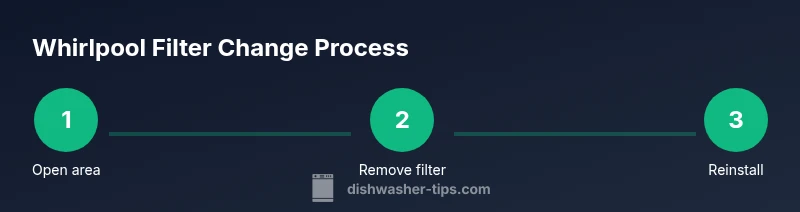
Follow these steps to complete the Whirlpool dishwasher filter change, keeping safety and model variations in mind. The process is designed to be straightforward, but some models may differ slightly in how you access the filter components. Always refer to your user manual for model-specific instructions, especially if you see screws or unusual fasteners. The core idea is to remove the filter, clean the mesh and housing, and reinstall with a secure seal. After reinstalling, run a short test cycle with dishes to verify proper function and check for leaks or poor drainage. This section provides a practical, model-agnostic approach that works for most Whirlpool configurations while highlighting where variations commonly occur.
Post-change testing and maintenance
With the filter change complete, you should test the dishwasher to confirm that cleaning performance has improved and that there are no leaks. Start with a normal cycle without heavy load and observe spray action and drainage. If you notice unusual noises, slow draining, or water leakage around the filter area, recheck the filter seating and gasket condition. Regular maintenance should include a quick monthly check of the filter and a deeper clean every 2–3 months, depending on usage and water hardness. Consider keeping a small maintenance log to track when you clean, replace, or inspect the filter. This habit helps you plan replacements before problems arise and keeps your Whirlpool running at peak efficiency. Finally, adopt a preventive routine: rinse dishes before loading, avoid large hard particles, and use the dishwasher’s high-temperature cycle periodically to sanitize the interior and prevent mineral buildup.
Authority references and common mistakes
For guidance beyond this article, keep in mind general appliance maintenance principles from trusted sources. While filter design varies, the core tasks—unplugging, accessing the filter, cleaning debris, and reseating the seal—remain consistent across Whirlpool models. Common mistakes include using metal tools to pry the filter, skimping on cleaning the gasket, or reassembling with a loose seal. These habits can lead to leaks or reduced cleaning performance. Always verify compatibility with your model’s filter and, if in doubt, consult the owner’s manual or reach out to Whirlpool customer support for model-specific instructions. Regular maintenance aligns with best practices documented by reputable outlets such as Energy.gov and ConsumerReports.org, which emphasize routine appliance upkeep and safe maintenance practices. By following a careful, deliberate process and staying proactive, you’ll extend your dishwasher’s life and continue to enjoy clean, spotless results on every cycle.
Tools & Materials
- Whirlpool-compatible dishwasher filter (cylindrical or flat mesh, depending on model)(Check your model’s manual to ensure you have the correct filter design)
- Gloves(Water-resistant to keep hands clean and protected)
- Soft brush or sponge(For gentle cleaning of mesh and housing)
- Microfiber cloth or towel(Drying and wiping the housing surfaces)
- Screwdriver (Phillips or flathead, if needed)(Some models use screws to secure the filter cover)
- Tray or large towel(Catches initial water and debris during removal)
Steps
Estimated time: 20-40 minutes
- 1
Power down and prep
Unplug the dishwasher or switch off the circuit at the breaker. Open the door and pull the lower rack out so you can access the filter housing. Place a tray or towel beneath the area to catch any water that escapes.
Tip: Taking these safety precautions first prevents shocks and keeps your workspace clean. - 2
Access the filter housing
Locate the filter cover or the debris screen. Some models use a twist-off cover; others require lifting a clip to release the filter assembly. If you see screws, remove them with the appropriate screwdriver.
Tip: If the cover is tight, apply steady pressure and avoid prying with metal tools that could damage the housing. - 3
Remove filter components
Carefully lift out the debris screen and the main filter housing. Note how the pieces fit together so you can reassemble correctly. Place components on a towel to keep small parts from rolling away.
Tip: Take a quick photo of the assembly before removal to guide reinstallation. - 4
Clean the filter and housing
Rinse each piece under lukewarm water to remove trapped debris. Use a soft brush for stubborn buildup and avoid metal tools. Check the gasket around the housing for cracks or wear and wipe away any residue.
Tip: Be gentle with the mesh to prevent punctures that can compromise filtration. - 5
Inspect the gasket and seals
Look for cracks, tears, or deformities in the gasket. A damaged seal can cause leaks after reinstall. If you notice wear, plan for gasket replacement or professional service.
Tip: A properly seated gasket is essential for leak-free operation. - 6
Reinstall the filter assembly
Return the filter housing and debris screen to their original positions. Make sure any locking clips are fully engaged and the cover is snug. Wipe away any additional moisture in the area.
Tip: Double-check alignment before securing screws (if used). - 7
Test the dishwasher
Replace the lower rack, reconnect power, and run a short cycle with no or light loads. Observe spray action and drainage. Check for leaks around the filter housing after the cycle completes.
Tip: If you detect leaks, reseat the filter and recheck the gasket promptly. - 8
Record maintenance and plan future checks
Note the date of the filter change and set a reminder for your next inspection. Regular checks every 1–3 months (more often in hard water) help maintain performance and extend component life.
Tip: Create a simple maintenance log to keep track of filter changes and cleanings.
People Also Ask
Where is the Whirlpool dishwasher filter located?
Most Whirlpool models place the filter near the bottom of the tub, under the lower spray arm. Access usually requires removing the lower rack and identifying either a circular or rectangular filter assembly. If uncertain, consult your manual or Whirlpool support.
Most Whirlpool models place the filter at the bottom of the tub, under the lower spray arm. Remove the lower rack to access it and check your manual if needed.
Can I run the dishwasher without a filter?
Running without a filter is not recommended. Debris can clog spray arms and the pump, leading to poor cleaning and potential damage.
No, don’t run the dishwasher without a filter; debris can clog important parts and damage the system.
How often should I inspect or clean the filter?
Check the filter monthly and clean as needed. If you notice dull cleaning, longer cycles, or residue on dishes, inspect sooner.
Check monthly and clean as needed; if dishes aren’t coming out clean, inspect sooner.
Do Whirlpool models differ by filter type?
Yes, Whirlpool uses several filter designs. Verify you have the correct filter for your specific model before replacement.
Whirlpool has different filter designs; confirm your model’s filter type before replacing.
What should I do if water leaks after filter change?
Stop the cycle and reseat the filter, then inspect the gasket for cracks or wear. If leaks persist, contact support or a technician.
If a leak occurs, recheck the filter seating and gasket; contact support if it continues.
Can I hire a professional to change the filter?
If you’re unsure about your model or encounter fit issues, a professional service can ensure correct installation and avoid damage.
Yes, a professional can ensure proper installation if you’re unsure.
Watch Video
What to Remember
- Unplug before starting maintenance
- Clean or replace with the correct Whirlpool filter
- Ensure the seal is intact to prevent leaks
- Test cycle to verify proper function
- Maintain a regular filter-cleaning schedule