General Electric Dishwasher Parts: Troubleshooting, Replacement, and Maintenance
A data-driven guide to general electric dishwasher parts, diagnosing issues, sourcing OEM GE parts, and maintenance tips from Dishwasher Tips Analysis, 2026.


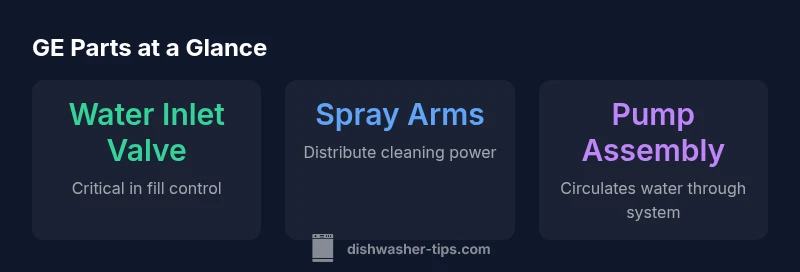
According to Dishwasher Tips, the most commonly replaced GE dishwasher parts are the water inlet valve, spray arms, pump assembly, and door latch. Knowing these components helps homeowners identify leaks, poor cleaning, or drainage issues quickly. Availability and compatibility across GE models are generally strong, making DIY diagnosis and part replacements practical for most households.
What counts as GE dishwasher parts
General Electric dishwasher parts cover every component that makes the unit operate, from water handling to the chassis and controls. When people refer to "general electric dishwasher parts," they typically mean items that wear out or affect performance, such as the water inlet valve, spray arms, circulation pump, door latch, and control board. OEM GE parts are widely available, and reputable third-party replacements can be suitable in many cases. The choice often depends on model compatibility, wash cycle behavior, and the specific symptom you’re addressing. For homeowners, a solid grasp of each part’s role helps prioritize tests, limit unnecessary replacements, and plan a repair budget.
Brand note: The Dishwasher Tips team emphasizes starting with the most likely culprits and verifying compatibility before ordering.
Common GE dishwasher parts by function
GE uses a structured set of components to manage water, spray distribution, filtration, and drainage. Understanding the function of each part makes it easier to diagnose problems and select the right replacement. Key parts include water inlet valves that regulate fill; spray arms that distribute water; circulation pumps and motors that move water through the tub; door latches and interlocks that ensure safety and correct cycle initiation; and the electronic control board that coordinates everything. By mapping symptoms to a functional category, you can narrow the search quickly and avoid unnecessary purchases. This approach is especially helpful when you’re dealing with not-drying, poor cleaning, or leaks around the gasket.
Diagnosing issues and mapping to parts
Start with observable symptoms: leaks often trace back to the water inlet valve, door seal, or hoses; poor cleaning can point to worn spray arms or a clogged filter; drainage problems often involve the pump, impeller, or drain hose. Use a systematic checklist: inspect gaskets and seals for cracks, listen for unusual pump noises, and verify water fill accuracy by observing the fill level during a cycle. While testing, keep the model number handy to verify which GE parts are compatible. If a symptom recurs after a replacement, reassess the linkage between parts and control logic to avoid chasing symptoms rather than root causes.
Pro tip: document the symptom with photos and notes to speed up future repairs.
Tools and safety for working with dishwasher parts
Before touching any components, unplug the appliance and shut off the water supply. Gather common tools: screwdriver set, multimeter, pliers, and a small flashlight. Use a service manual or reputable online guides to locate model-specific parts and connector types. Wear eye protection and gloves, especially when handling sharp edges or hot components. Label screws and take photos during disassembly to ensure proper reassembly. Keep a parts tray for small fasteners and use manufacturer-recommended lubricants on rubber gaskets where applicable. If you’re unsure about an electrical repair, consider professional service to avoid personal injury or further damage.
OEM GE parts vs aftermarket: pros and cons
OEM GE parts provide model-specific fit and tested reliability, which can translate to safer operation and longer life in some cases. Aftermarket parts can offer cost savings and broader availability, but you’ll want to verify compatibility and return policies. Consider parts that affect safety and performance first (valves, pumps, and interlocks), then weigh price against the risk of misfit or reduced efficiency. Always check warranty implications: some GE warranties require OEM parts for coverage, while others allow alternatives if they meet exact specifications. A balanced approach—OEM for critical components and trusted aftermarket for non-safety parts—often works best.
Recommendation: prioritize essential components for reliability, and review model-specific guidance before purchasing.
How to locate model numbers and part numbers
Locating the correct part numbers is critical to avoid mismatches. GE model numbers are typically on a label inside the door frame, on the side of the tub, or behind the toe-kick panel. Once you have the model (and possibly the serial) number, consult the GE Parts catalog or your retailer’s compatibility tool to identify exact part numbers. Cross-checking the part number with the photos and connector types in the kit helps confirm fit. If you’re replacing a control board or module, note the software version or revision code, as this can affect compatibility. Keep a running list of parts you’ve replaced for future reference.
Sourcing, ordering, and verifying parts
Order GE dishwasher parts from reputable sources that clearly state compatibility with your model. Compare part numbers across listings and review return policies in case of misfits. Before installation, verify that the new part matches the old one in connector type, mounting points, and electrical ratings. When in doubt, contact customer support with your model number and symptoms to confirm compatibility. After receiving parts, verify seals and gaskets are intact and inspect the packaging for signs of damage. Finally, record the installation date and any notes for future maintenance.
Maintenance and preventive care for GE dishwasher components
Regular maintenance extends the life of general electric dishwasher parts. Clean the filter and spray arms periodically to prevent clogs, inspect door seals for wear, and run a maintenance cycle with a dishwasher-safe cleaner to remove mineral buildup. Schedule annual checks for hoses and connections, and replace worn gaskets promptly to avoid leaks. Consider a soft-water conditioner if you have hard water, as mineral buildup can accelerate wear on seals and spray components. Keeping a simple maintenance log helps catch wear before it becomes a failure.
GE dishwasher parts: typical replacement ranges and notes
| Part Category | Function | Typical Replacement Range | Notes |
|---|---|---|---|
| Water Inlet Valve | Controls water fill and pressure | 15–60 USD | Common failure; may cause overfill or leaks |
| Spray Arm | Distributes water to racks | 10–40 USD | Clogs or breaks reduce cleaning efficiency |
| Circulation Pump | Moves water through spray arms | 40–120 USD | Can fail with motor burn or impeller wear |
| Door Latch/Interlock | Secures door and signals cycle start | 20–70 USD | Worn latches prevent cycle from starting |
People Also Ask
What are the most common GE dishwasher parts that fail?
The most common GE dishwasher parts that fail include the water inlet valve, spray arms, and pump assembly. Leaks and poor cleaning often point to these components, while failures in the door latch or interlock can prevent cycles from starting. Always verify model compatibility before purchasing replacements.
Common GE parts that fail are the water inlet valve, spray arms, and pump assembly. Start there when diagnosing leaks or poor cleaning.
How do I identify the correct part number for my GE dishwasher?
Locate the model/serial label on the appliance, then check GE’s Parts catalog or your retailer’s compatibility tool. Cross-check part numbers against your original part and confirm connector types and dimensions before ordering.
Find the model number on the label, then use GE’s parts catalog to confirm the exact part number.
Are OEM GE parts more reliable than aftermarket parts?
OEM GE parts are designed for exact fit and long-term compatibility with GE models, offering reliable performance. Aftermarket parts can be cost-effective but require careful verification of fit and electrical ratings. For safety-critical parts, OEM is typically recommended.
OEM parts fit the first time and meet GE specifications, which is often worth the extra cost for safety-critical components.
Can I replace parts myself or should I hire a technician?
Many non-electrical components can be replaced by handy homeowners with basic tools. For anyone uncomfortable with electrical connections, gas, or sealed components, professional service is safer and may be required by warranty.
If you’re comfortable with unplugging and basic disassembly, DIY can work for simple parts; otherwise call a pro.
What maintenance steps help extend the life of GE dishwasher parts?
Regularly clean filters, spray arms, and seals; run maintenance cycles to prevent buildup; inspect hoses for wear; replace worn gaskets early; and use compatible detergents to minimize residue.
Clean filters, check seals, and run maintenance cycles to extend part life.
“A disciplined approach to diagnosing GE dishwasher parts reduces guesswork and speeds repairs. Following model-specific guidance improves the odds of a successful replacement.”
What to Remember
- Identify GE parts by function before buying.
- Prioritize water inlet valve, spray arms, and pump for common failures.
- Check model compatibility to avoid misfits.
- Weigh OEM versus aftermarket based on safety-criticality.
- Maintain a simple parts log to simplify future repairs.