Is a Dishwasher Worth Repairing? Repair vs Replacement
Evaluate when repairing a dishwasher makes sense vs replacing it. This analytical guide covers costs, reliability, energy efficiency, and decision criteria for homeowners and renters.


Repairing a dishwasher is often worth it when the unit is still relatively young, and the fix is affordable. If a simple component fails or a minor leak costs less than a new model's price, repair makes sense. But once repairs stack up or the machine is aging and inefficient, replacement may deliver better value.
When Repair Is Worth It
Determining if a dishwasher is worth repairing starts with a simple question: how old is the appliance, and will the fix restore reliable performance at a reasonable cost? According to Dishwasher Tips, the central decision factor is remaining useful life versus repair price. If the machine is younger than about a decade and the failure is isolated (a clogged spray arm, a faulty latch, a leaking door gasket, or a jammed pump), a repair often pays off. The upside is preserving the original cabinet, racks, and any bells and whistles that came with the unit. The downside is the risk of a repair not addressing the root cause, or fixing one problem while another component nears failure. In practice, homeowners weigh two numbers: the predicted repair bill and the replacement price for a new or refurbished model. If the repair is a small fraction of the cost of a new unit and can be completed quickly, the repair path is usually preferable. If the repair would consume a large share of a new unit’s price, or the dishwasher is already showing multiple issues, replacement deserves consideration. The question isn’t simply “can you fix it” but “will fixing it deliver reliable, efficient performance for years to come?” That lens guides the rest of this article. The Dishwasher Tips team emphasizes clarity over sentiment, focusing on value rather than emotions around ownership.
Practical Criteria: Age, Cost, and Usage
To decide whether to repair or replace, homeowners should rate three practical factors: age, estimated repair cost, and how you actually use the machine. Age matters because older dishwashers are more prone to cascading failures and diminished efficiency. If the unit is approaching the end of its expected life and you’ve already invested in multiple fixes, replacement becomes more compelling. For cost, consider both parts and labor. If a repair would push toward the price of a basic new model, or if a single repair won’t address the most likely future failures, it’s worth exploring a replacement. Finally, usage patterns matter: if you run the dishwasher heavily or rely on it for frequent parties, a newer, more efficient model could provide tangible savings on water and energy. In short, use a simple framework: will the fix extend useful life, and will it do so at a reasonable price relative to a new unit? If yes, repair; if not, replace. This framework helps avoid nostalgia-driven decisions and leads to practical outcomes.
How to Estimate Repair Costs Without a Quote
Estimating repair costs without a formal quote is challenging but doable with a structured approach. Begin by identifying the failing subsystem (drain, pump, door latch, spray arm, or heating element) and listing likely parts needed. Then estimate labor hours based on the technician’s typical rates in your area and the complexity of the fix. Don’t forget ancillary costs: diagnostic fees, travel charges, and potential refrigerant or safety-related adjustments if the issue intersects with plumbing or electrical systems. It’s wise to ask your technician for a rough range before scheduling and to request a written estimate that includes parts, labor, and any discretionary costs. If the estimate approaches or exceeds a sizable portion of a new dishwasher’s price, ask whether you’re better off replacing. The goal is a clear apples-to-apples comparison between “repair now” versus “replace later.” This kind of upfront planning aligns with Dishwasher Tips’ data-driven approach and helps homeowners avoid surprise bills.
Energy Efficiency and Longevity: Does Repair Increase Lifespan?
Repairing can extend the life of a dishwasher, particularly when issues are isolated and addressed promptly. However, the impact on energy efficiency depends on the age and model. A very old unit may be outperformed by a newer model that uses less water and electricity per cycle. If a repair restores performance but does not bring efficiency up to modern standards, you may still save money on immediate repairs while spending more over time due to higher operating costs. Conversely, if a repair enables the dishwasher to perform at or near its original efficiency, it can be a short- and long-term win. The trade-off is ensuring the repair actually resolves the root cause rather than masking symptoms. A thoughtful approach combines assessing the repair’s impact on energy use with considerations of reliability and maintenance needs. The Dishwasher Tips analysis emphasizes evaluating energy savings alongside durability when weighing repair versus replacement.
Warranty, Parts Availability, and Aftercare
Warranty coverage can be a decisive factor. If you’re still within a manufacturer’s coverage or if the repair is performed by an authorized service provider, you may receive parts and labor support that makes repair more attractive. Parts availability becomes a practical constraint as models age. For older dishwashers, a favorite model’s most common parts (gaskets, seals, motors) may be scarce or pricey, driving up repair costs or forcing improvisation. In contrast, a newer model benefits from readily available parts and longer warranties, which reduces risk and uncertainty. Aftercare matters too: a well-executed repair should come with follow-up guidance, filter and spray arm maintenance recommendations, and a plan for routine service to extend the machine’s life. This block highlights why warranty and parts availability are not just technical details but essential decision factors.
Decision Framework: 4-Question Checklist
Use this concise framework to decide in minutes: (1) What’s the estimated repair cost relative to a new unit? (2) How old is the dishwasher, and what is its expected remaining life? (3) Will the repair improve energy and water efficiency meaningfully? (4) Are parts readily available and does the repair affect warranty eligibility? If the answer to most questions is favorable toward repair, proceed with repairs and set expectations for follow-up checks. If the answers point to limited gains or rising risk, consider replacement and a fresh warranty. This framework keeps decisions practical and aligned with long-term value.
The Financial Perspective: Cash Flow and Budgeting
Financing a repair versus a replacement involves not just upfront costs but long-term budgeting. A repair might require a smaller immediate outlay and allow you to spread costs over time, especially if you pay in parts or over several installments. Replacement, while demanding a larger initial investment, may yield lower ongoing costs due to improved efficiency and reduced repair needs. Homeowners should compare the total cost of ownership over the next 5–7 years, factoring in energy and water savings, maintenance frequency, and potential resale value of the repaired unit. The aggregate view often favors replacement when efficiency gains and reliability are substantial enough to offset the higher upfront price. The goal is to create a realistic financial forecast that reflects your household’s usage, not just the sticker price of a new machine.
How to Get the Best Repair Outcome
If repair is the chosen path, set yourself up for success with a few practical steps. Start by selecting a reputable, licensed technician with dishwasher specialization and positive references. Request a written diagnostic assessment that clearly defines the root cause, recommended parts, and expected timeline. Ensure you get a detailed cost estimate and confirm whether any parts carry a warranty. After the repair, verify that the machine functions as expected through a test cycle, and monitor for leaks or unusual noises in the days following the service. Finally, adopt a preventive maintenance plan: clean the filter regularly, inspect gaskets, and run a routine maintenance cycle with recommended detergents. By taking these precautions, you extend the life of your dishwasher and reduce the likelihood of repeat repairs.
When to Replace Instead: Quick Triggers
Some situations clearly favor replacement. If the dishwasher is older than 10–12 years, or if it has a history of frequent costly repairs, replacement often delivers better value. If the repair would fix one symptom but another major failure is imminent due to age, a replacement is prudent. If you’re experiencing persistent reliability issues, if the appliance is inefficient compared to modern standards, or if you want quieter operation and enhanced features, replacing with a newer model may be the wiser long-term choice. In these cases, consider a model with strong energy efficiency ratings and a durable warranty to maximize long-term savings.
Real-World Scenarios: Quick Reference Points
- Scenario A: A 7-year-old dishwasher develops a leaking door seal. The repair is straightforward and inexpensive; replacement is likely unnecessary. Repair now but monitor for other issues.
- Scenario B: A 12-year-old unit shows frequent clogs, poor cleaning, and rising energy bills. Repair may be costly and provide limited benefits; replacement will likely offer better long-term value.
- Scenario C: An appliance with a failing motor and worn-out seals in a high-use home. Replacement is typically the better choice for reliability and efficiency, especially if the model is older.
Section Wrap: Next Steps
This guide is designed to empower homeowners with a structured decision framework. Start by evaluating cost, age, and energy considerations, then consult a trusted technician for a transparent assessment. Whether you repair or replace, prioritize options that maximize reliability, minimize waste, and fit your budget. The Dishwasher Tips team emphasizes that the smart choice aligns with long-term value and household needs. The final decision should be grounded in data, not emotion, with a clear plan for maintenance going forward.
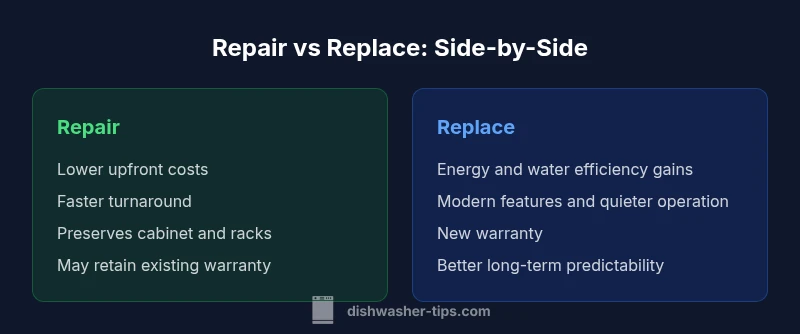
Comparison
| Feature | Repair | Replace |
|---|---|---|
| Upfront cost | Lower | Higher |
| Long-term cost | Potentially lower if life is extended | Often higher if repairs recur |
| Downtime / inconvenience | Usually shorter downtime for fixes | Longer downtime for new installation and disposal |
| Energy efficiency & performance | Maintains current efficiency | Potential gains with newer models |
| Warranty & coverage | Repair may preserve existing warranty if applicable | New unit includes warranty and parts availability |
| Disposal impact | Less waste if repaired | Increased waste if replaced |
| Parts availability | Depends on model age | New units have readily available parts |
The Good
- Lower upfront costs for minor fixes
- Preserves existing cabinet and features
- Reduces disposal and environmental impact
- Quicker turnaround for simple repairs
- Can preserve warranty if repair is covered
Disadvantages
- Potentially recurring issues needing further repairs
- May not address root design flaws in older units
- Some major repairs are costly relative to replacement
- Parts availability may dwindle for very old models
Repair is generally the better initial option when the unit is relatively new and the repair cost is modest.
If the dishwasher is within its expected lifespan and the fix is affordable, repairing preserves value and reduces waste. However, if age is a dominant factor or repairs stack up quickly, replacement tends to offer better long-term value.
People Also Ask
Is repairing cheaper than replacing a dishwasher?
In many cases, a repair is cheaper upfront than a full replacement, especially for minor issues. The decision hinges on the repair cost relative to the price of a new or refurbished unit and how long you expect to use the old model. If repairs would soon be repeated or extended, replacement may offer better value.
Repairing can be cheaper in the short term, but consider expected life and future repairs to decide if replacement saves money in the long run.
How do I know if the repair is worth it?
Ask if the repair extends the appliance’s life by several years and if the cost is well below buying a new model. Consider energy efficiency gains with a newer unit and whether the repair reduces the risk of further breakdowns.
If the repair adds years of reliable use at a reasonable price, it’s usually worth it.
What maintenance helps extend a dishwasher’s life?
Regularly clean filters and spray arms, inspect door seals, run a maintenance cycle, and use recommended detergents. Address leaks or unusual noises promptly to minimize cascading failures.
Clean filters, inspect seals, and run maintenance cycles to keep it lasting longer.
Does replacing improve energy efficiency?
Yes, newer models often use less water and power per cycle, which can reduce operating costs over time. If your current unit is very old, the efficiency gains can be substantial.
Newer models save energy and water, which lowers ongoing costs.
Will repairing preserve the warranty?
Warranty terms depend on the manufacturer and service provider. Repairs performed by authorized technicians are more likely to preserve any applicable warranty or offer parts coverage.
Check if the repair qualifies under your warranty and who performs it.
How long does a typical repair take?
Most common repairs can be completed within a day, but more complex failures or parts ordering can extend the timeline. Always ask for an estimated start-to-finish duration before authorizing work.
Most repairs take a day or less, but some fixes may take longer if parts need ordering.
What to Remember
- Assess age and repair cost relative to a new unit
- Weigh potential energy savings with reliability gains
- Check warranty status and parts availability
- Avoid repair fatigue by forecasting future failures
- Plan for long-term budgeting with maintenance