Can You Leave a Dishwasher On When Not Home? A Safety Guide
Learn whether it's safe to leave a dishwasher running when you're away, explore safety features, and discover practical steps to minimize flood risk and energy waste.


The short answer is: generally avoid leaving a dishwasher running when you’re not at home. Even with safety features like auto shutoff and flood sensors, leaks, valve failures, or power faults can cause floods or other damage. If you must, use a delay-start, unplug after the cycle, and consider a smart monitor or valve shutoff to reduce risk.
The risk profile: can you leave a dishwasher on when not home?
When the question can you leave a dishwasher on when not home comes up, the prudent answer is usually no. The risk isn’t just about the machine running; it’s about what could happen while you’re away. A malfunctioning valve, a water supply line leak, an electrical fault, or a clogged drain can create a rapid flood behind cabinets or under floors. Even with built-in safety systems, a cycle that’s unattended can lead to long doors of water exposure, potential mold growth, and costly remediation. According to Dishwasher Tips, homeowners often underestimate the time floodwaters have to spread before a leak is detected, especially in multi-story homes where water damage cascades quickly. In short, treating a dishwasher like a babysat resource—something you know’s not safe to leave unchecked—helps prevent unnecessary losses.
For most households, the safest approach is to plan for loads when you are home and have contingency steps for short absences. If you frequently forget cycles or need to run during the workday, consider models with remote monitoring, built-in safety shutoffs, or the option to cancel a cycle mid-run. The Dishwasher Tips team emphasizes that risk assessment should start with the basics: water supply off when away, power secured, and the ability to stop the cycle if something feels off.
wordCount1: null}],
toolsMaterials_of_blockData_null?1
toolsMaterials={"items":[{"name":"Water shutoff valve wrench or pliers","required":true,"note":"Use to shut off the under-sink valve in an emergency"},{"name":"GFCI-protected outlet or dedicated smart plug","required":true,"note":"Ensure it’s rated for appliance use and dry locations"},{"name":"Unplug cord or switch off at the wall after the cycle","required":true,"note":"Prevents standby power draw and accidental restart"},{"name":"Leak detection sensors","required":false,"note":"Place near the base and door for early warnings"},{"name":"Owner’s manual and model features reference","required":true,"note":"Check for auto shutoff, flood protection, and remote start"},{"name":"Absorbent mats or towels","required":false,"note":"Contain any minor leaks during testing or absence"}]}
stepByStep
steps^1
title_placeholder
description_placeholder
tip_placeholder
estTime_placeholder
steps_placeholder_tbd
Tools & Materials
- Water shutoff valve wrench or pliers(Use to shut off the under-sink valve in an emergency)
- GFCI-protected outlet or dedicated smart plug(Ensure it’s rated for appliance use and dry locations)
- Unplug cord or switch off at the wall after the cycle(Prevents standby power draw and accidental restart)
- Leak detection sensors(Place near the base and door for early warnings)
- Owner’s manual and model features reference(Check for auto shutoff, flood protection, and remote start)
- Absorbent mats or towels(Contain any minor leaks during testing or absence)
Steps
Estimated time: 60-120 minutes
- 1
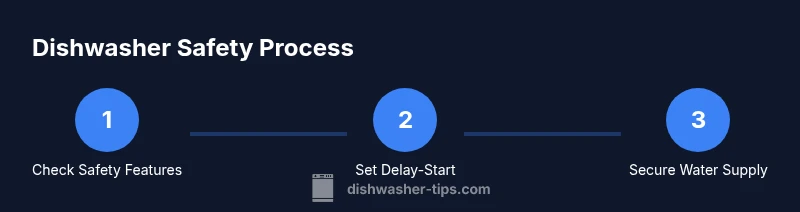
Review safety features and documentation
Locate the model’s safety features in the manual or settings menu. Confirm whether auto shutoff, flood sensors, or a water-leak alarm exist. Knowing your capabilities prevents overreliance on uncertain components when you’re away.
Tip: Check for recent firmware updates that improve safety features. - 2
Decide on a running plan before you leave
If you must run while away, choose a short, predictable cycle with a clean load. Activate delay-start to ensure the machine finishes while you’re home or near a monitor. Do not start a cycle if you cannot monitor it in person.
Tip: Set the delay to land within a window you can observe after returning home. - 3
Secure the water supply and power
Close or turn off the dishwasher’s water supply valve if you expect to be away for an extended period. Unplug or disable the circuit remotely if your setup supports it. This reduces flood risk even if the cycle starts accidentally.
Tip: Test the valve once to ensure it seals properly when closed. - 4
Install or use leak and flood protections
Place leak-detection sensors at the base and under the supply line. Connect them to a smart hub if possible so you receive alerts instantly. Do not rely solely on a single sensor; combine sensors with a physical shutoff valve for best protection.
Tip: Test sensors monthly to confirm alerts trigger correctly. - 5
Verify door latch and float mechanism
Ensure the door latch is secure and test the float switch if accessible. A malfunctioning latch or float can prevent the machine from stopping in an overflow event, increasing flood risk.
Tip: Run a quick dry-cycle to verify the door remains closed and the latch engages fully. - 6
Run a controlled dry-run before departure
If you have time, run a short cycle with no actual detergent and monitor for a leak or abnormal noises. This helps confirm safety features work and you understand the process in case you need to intervene while away.
Tip: Listen for unusual sounds that could indicate a loose hose or blockage. - 7
Have emergency steps ready
Know how to quickly shut off power and water. Keep the local plumber or appliance technician contacts handy. Consider a remote shutoff if you’re frequently away.
Tip: Practice the emergency steps so you can act quickly if needed. - 8
Post-trip check and verification
After returning online, inspect the area for any dampness or odors. Confirm the cycle ended normally and there’s no standing water. This confirms the safety measures worked as intended.
Tip: Document any anomalies and consult a technician if needed.
People Also Ask
Is it ever safe to leave a dishwasher on when you’re not home?
Generally not. If you must, ensure a cycle completes while you’re in the home or near monitoring, and enable safety features like auto shutoff, flood sensors, and a secure water shutoff.
Usually not safe to leave it on, but use safety features and monitoring if you must run it while away.
What safety features should I look for in a dishwasher to leave it on?
Look for auto shutoff, flood or leak sensors, a secure door latch, and a monitored water valve. Remote start or integration with a smart home system is a bonus.
Look for auto shutoff, flood sensors, and a secure valve and door latch.
Should I unplug the dishwasher if I will be away?
Unplugging is a strong precaution when you’re away, or use a smart plug with an auto-off and a secure outlet. If you unplug, ensure the cycle won’t restart unexpectedly.
Unplug it when you’re away, or use a smart plug with auto-off.
Can a smart plug control a dishwasher safely?
Smart plugs can offer remote control, but they must be rated for high-current appliances and used with caution. Do not bypass safety features by relying solely on a plug.
Smart plugs can help, but don’t rely on them to replace safety features.
What should I do for long trips?
Shut off water, unplug or disable the circuit, enable remote monitoring, and arrange for periodic checks if possible. Consider a professional service for extended absences.
For long trips, shut off water, unplug, and set up monitoring.
What if I have frequent trips away?
Consider a dishwasher with robust remote management, automatic shutoff, and a reliable leak-detection system. Create a household safety kit for quick actions during emergencies.
If you’re away often, invest in better safety features and have a plan ready.
Watch Video
What to Remember
- Plan ahead: run cycles only when you can monitor them.
- Secure water and power before leaving.
- Use sensors and smart controls to stay informed.