Can You Run a Dishwasher During Water Softener Regeneration?
Is it safe to run a dishwasher while your water softener regenerates? Learn what happens during regeneration, safe timing, and practical tips to protect dishes and appliances.


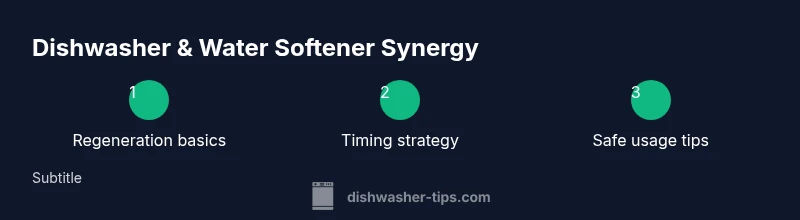
Yes, you can run the dishwasher while your water softener regenerates. Regeneration happens independently from the dishwasher, so there’s usually no risk to your appliance or dishes. To stay safe, plan dishwashing for times when water draw is light and avoid starting a cycle if a regeneration is halfway through, in case your supply experiences temporary pressure drops.
Understanding the basics: water softeners and dishwashers
Water softeners treat incoming water by exchanging calcium and magnesium ions with sodium or potassium. This process reduces scale buildup and improves soap efficiency. Dishwashers rely on consistent water pressure, precise detergent dosing, and rinsing performance to achieve clean dishes. In most homes, these systems run in parallel, but regeneration cycles in some softeners momentarily alter mineral content and flow patterns. According to Dishwasher Tips, modern systems are designed to operate independently so you can run a cycle during regeneration without dramatic effects. The key idea is that the softener handles resin bed regeneration internally, while your dishwasher draws water from the shared supply. The potential interaction is not about chemistry in the sink, but about water volume and pressure fluctuations during the regeneration window. If your home uses a larger softener or has older piping, you may experience brief pressure dips or changes in water hardness. However, for most households with standard setups, a normal dishwasher load will complete successfully during regeneration if you choose an appropriate time window.
Understanding the basics: water softeners and dishwashers
Water softeners treat incoming water by exchanging calcium and magnesium ions with sodium or potassium. This process reduces scale buildup and improves soap efficiency. Dishwashers rely on consistent water pressure, precise detergent dosing, and rinsing performance to achieve clean dishes. In most homes, these systems run in parallel, but regeneration cycles in some softeners momentarily alter mineral content and flow patterns. According to Dishwasher Tips, modern systems are designed to operate independently so you can run a cycle during regeneration without dramatic effects. The key idea is that the softener handles resin bed regeneration internally, while your dishwasher draws water from the shared supply. The potential interaction is not about chemistry in the sink, but about water volume and pressure fluctuations during the regeneration window. If your home uses a larger softener or has older piping, you may experience brief pressure dips or changes in water hardness. However, for most households with standard setups, a normal dishwasher load will complete successfully during regeneration if you choose an appropriate time window.
Tools & Materials
- No special tools required(This guide is informational; no tools needed to understand concepts.)
- Optional: water pressure gauge(Helpful to measure transient pressure dips during regeneration if you have variable pressure.)
- Access to softener manual(Model-specific regeneration details and timing can vary.)
- Access to dishwasher manual(For cycle timing and manufacturer-specific notes.)
- Calendar or scheduling app(Coordinate regeneration window with dishwasher cycles.)
Steps
Estimated time: 1-2 hours
- 1
Assess your schedules
Identify the typical regeneration window on your water softener and compare it to your dishwasher cycle lengths. Note if any cycles are unusually long or if pressure tends to dip during regeneration. This helps you decide whether to run the dishwasher during regeneration or to schedule around it.
Tip: Check your softener’s display for the next regeneration time and use a current-cycle test to confirm live conditions. - 2
Identify a low-demand water window
Choose a period when household water use is light—early morning or late evening—and when multiple high-water appliances aren’t running. A stable window minimizes the chance of reduced flow impacting the dishwasher.
Tip: If you have a smart meter, set reminders during off-peak hours to avoid conflicts. - 3
Run a test cycle with a small load
Before committing to a full load, run a small test cycle during a regeneration window to observe water pressure and rinse performance. This helps you gauge whether a full load will behave normally.
Tip: Use a light soil level setting to minimize rinse variations while you test. - 4
Monitor water pressure during the test
Pay attention to any brief changes in flow or pressure when the softener begins regeneration. If you notice a dip lasting more than a minute, consider postponing the full load.
Tip: Keep a log of observations for future scheduling decisions. - 5
Decide on future scheduling
If the test cycle went smoothly, you can repeat it for typical loads or adjust your dishwasher timing to align with the regeneration window. If you saw dips, rearrange to run the dishwasher outside regeneration.
Tip: Document what works and adjust calendars or routines accordingly. - 6
Coordinate with softener settings
Some softeners let you adjust regeneration timing. If your schedule is tight, choose a window that aligns with lower household water use, without compromising cleaning performance.
Tip: Make a one-time adjustment and re-test to confirm stability. - 7
Document results
Record the outcomes of the test runs and note any issues. Documentation helps you refine future cycles and communicate with any service technicians if needed.
Tip: Keep a simple table of date, cycle length, water pressure, and outcome. - 8
Set a go-to schedule
Create a repeating schedule that balances regeneration and dishwasher use. Decide on a standard window, and keep it flexible for seasonal changes or appliance usage.
Tip: Review the schedule quarterly to accommodate changes in water usage or family routines.
People Also Ask
Is it safe to run a dishwasher during water softener regeneration?
Yes, for most homes it is safe to run the dishwasher while the softener regenerates. The two systems operate independently, but monitor for any temporary pressure dips.
Yes, it’s generally safe to run the dishwasher during regeneration. Watch for brief pressure dips and adjust if needed.
Will running the dishwasher affect salt usage or resin regeneration?
No. Running the dishwasher does not affect the resin bed in your softener or the amount of salt used during regeneration.
No, using the dishwasher won’t impact the salt used by the softener.
Could a regen cycle cause a noticeable drop in water pressure?
In some setups with older plumbing or high-demand households, you might see brief pressure dips during regeneration. If this happens, adjust scheduling.
A short pressure dip can happen in some homes; if it does, try a different time.
Should I always schedule the dishwasher away from regeneration windows?
Not always. If your softener cycle is short and your water flow remains steady, you can run the dishwasher during regeneration as needed.
You don’t have to avoid regen entirely—test and decide.
Do different softener brands affect this compatibility?
Most modern brands are compatible, but consult your model’s manual for any exceptions or timers that might affect scheduling.
Most brands are compatible, but check your manual for specifics.
What should I do if I notice issues after running a cycle during regen?
Stop using high-water appliances, check plumbing for any unusual noises or pressure changes, and consult the manual or a technician if needed.
If you notice issues, pause and review the setup or call support.
Watch Video
What to Remember
- Plan around regeneration windows to avoid flow issues.
- Regeneration is typically independent from your dishwasher.
- Test short cycles to gauge impact before full loads.
- Document results and adjust scheduling as needed.