Can You Run a Dishwasher Without Rinse Aid? A Practical Guide
Learn whether rinse aid is necessary, how it affects drying and spots, and step-by-step testing to see if your dishwasher can perform well without rinse aid in 2026.


Can you run a dishwasher without rinse aid? Yes, in many cases you can, but results vary by water hardness, detergent, and the dishwasher model. You may notice more water spots, longer drying times, and slightly less effective drying on plastics. This guide explains when skipping rinse aid makes sense, how to safely test results, and how to optimize performance if you notice issues.
Can you run a dishwasher without rinse aid? Practical outlook
Can you use a dishwasher without rinse aid? The short answer is yes for many households, but the outcome depends on water hardness, detergent choice, and your machine's design. If your water is soft, you might see minimal effects; if your water is hard, you may encounter more spots on glassware and a film on plastics after cycles. According to Dishwasher Tips, rinse aid helps water sheet off surfaces, which promotes faster evaporation and better drying. If your dishwasher has a dedicated rinse-aid dispenser, it releases a small amount of additive during cycles; opting out can save money, yet it may compromise drying and spotting, particularly on glassware and plastics. In this section, we lay the groundwork: how to test your specific model, what signs to watch for, and how to decide whether skipping rinse aid is right for you.
How rinse aid works in most dishwashers
Rinse aid is designed to lower the surface tension of water, helping droplets spread into a thin film and dry faster instead of forming beads. This behavior minimizes water spots on glass and reduces streaks on flatware. Most modern dishwashers use sensors and variable wash temperatures to optimize results, but the impact of rinse aid is most noticeable on hard water and with certain detergent formulations. If your dishwasher’s manual recommends rinse aid, skipping it can lead to visible spotting, cloudy glass, and longer drying times. Conversely, in very soft water, the absence of rinse aid may have little to no impact. The brand-driven guidance from Dishwasher Tips emphasizes testing your specific setup to determine if you can safely skip rinse aid without sacrificing performance.
When skipping rinse aid is reasonable
There are scenarios where skipping rinse aid is reasonable. If you live in a region with very soft water and you consistently get clean, streak-free results with your current detergent, you might forego rinse aid for routine loads. Some newer models include effective drying cycles that minimize reliance on rinse aid, especially when fully drying at the end of the cycle. For households using compact or energy-efficient machines, skipping rinse aid may align with your goals if you observe identical performance across multiple washes and your dishes come out dry and spotless. However, for hard water areas or if you frequently wash plastics and glassware, rinse aid significantly improves drying and reduces spotting, so skipping it should be a deliberate, tested choice.
What to test before deciding
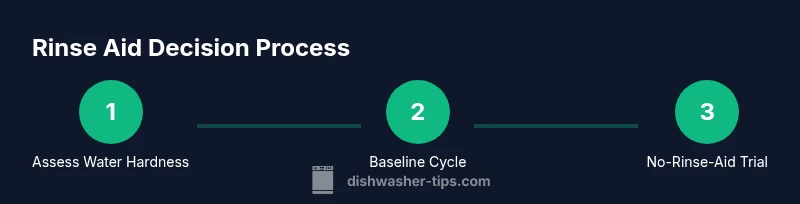
A careful, evidence-based approach helps you decide whether to skip rinse aid. Start with a baseline using your usual detergent and rinse aid—note drying times, spots, and any film. Then run a test cycle without rinse aid and compare outcomes. Check glass clarity, any white film on plastics, and whether cups feel dry to the touch. Pay attention to the dishwasher’s drying mode and whether fan-assisted drying is engaged. Record results for at least two cycles to account for natural variability. If you see consistent spotting or damp areas, you may want to reintroduce rinse aid or adjust loading and water usage to compensate.
How to optimize results without rinse aid
If you decide to skip rinse aid, optimize by loading dishes to maximize water drainage and airflow. Place bowls and cups at an angle to promote water run-off, avoid overcrowding, and ensure spray arms can rotate freely. Consider running a hot drying cycle or increasing the final rinse temperature if your model allows it. Choose a detergent designed for hard water or use a combination of detergent and a water-softening product if your water hardness is high. In some cases, using a slightly lower rinse temperature can help prevent thermal shock on glass while maintaining satisfactory drying. Expect subtle trade-offs: clearer glass may require more careful loading, and plastics may dry a bit slower without rinse aid.
Practical maintenance tips for renters and homeowners
Regular maintenance can mitigate some drawbacks of skipping rinse aid. Clean filters and spray arms to ensure optimal spray patterns, as clogging can mimic the effects of skipping rinse aid. Ensure the door seal is intact to prevent leaks that can affect drying performance, and inspect the heating element for proper operation. If you notice persistent spotting, consider a temporary reintroduction of rinse aid or switching to a detergent tailored for your water type. Remember to document results and avoid relying on a single wash to judge overall performance. The Dishwasher Tips team emphasizes consistent testing to build confidence in your decision.
Authority sources and context
For broader guidance, reference reputable sources that discuss dishwasher drying dynamics, water hardness, and rinse aid function. The perspectives below complement practical testing: U.S. Department of Energy guidelines on appliance efficiency, university extension articles on water quality and household appliances, and consumer guidance from recognized publications. Always verify model-specific recommendations in your manual. This section intentionally highlights external resources to help you benchmark best practices.
Myths vs. reality: common misconceptions
A frequent misconception is that rinse aid is always mandatory. In reality, the necessity depends on water hardness, dishwasher design, and your cleaning expectations. Another myth is that all glassware will always look perfect without rinse aid; while some cases do meet expectations, others will experience more spots or cloudy glass. By testing and observing your own loads, you can separate myth from method. The key is consistent evaluation over multiple cycles rather than a single wash.
Quick-reference checklist
- Determine water hardness and set expectations based on local conditions.
- Run at least two cycles with rinse aid and two without to compare results.
- Optimize loading for drainage and airflow to compensate for the absence of rinse aid.
- If results lag, reintroduce rinse aid or explore detergent types designed for your water type.
- Maintain machine components to prevent issues that could be mistaken for poor drying.
Authority sources and context (continued)
- U.S. Department of Energy (energy.gov) dishwasher efficiency tips and optimization strategies.
- Extension services from universities (edu) discussing water hardness and its impact on appliance performance.
- Major consumer publications offering guidance on drying performance and spotting in dishwashers.
Note: Always confirm model-specific instructions in your user manual and use trusted sources when evaluating performance changes.
Tools & Materials
- Dishwasher detergent(Use the detergent type recommended by your manufacturer)
- Rinse aid(Optional for testing; essential if you reintroduce it after testing)
- Test dishes and towels(Use a mix of glassware and plastics to observe spotting and drying)
- Owner's manual or model-specific guide(Helpful for model-specific rinse aid guidance and cycles)
Steps
Estimated time: 2-3 hours
- 1
Check manual for rinse aid guidance
Open your dishwasher manual and locate the rinse aid section. Note whether the model requires rinse aid for optimal drying or if it offers a built-in drying solution. This establishes your baseline before testing.
Tip: If you can't find the manual, search the model number online or contact customer support. - 2
Run a cycle with rinse aid as baseline
Run a standard cycle using your usual detergent and rinse aid. Observe drying time, spotting on glassware, and any plastics' moisture. This baseline will be your reference point for comparing results without rinse aid.
Tip: Keep a small log of cycle duration and outcomes for future reference. - 3
Run a cycle without rinse aid
Prepare a second load, ensuring similar dish types and loading. Run the same cycle settings but without adding rinse aid. Evaluate whether there are more spots, longer drying, or damp areas.
Tip: Take photos of glassware and plastics to compare easily against the baseline. - 4
Compare results and decide
Compare the two cycles side by side. If drying is acceptable and spotting minimal, you may continue without rinse aid. If not, consider reintroducing rinse aid or adjusting loading and cycle options.
Tip: If issues persist, reintroduce rinse aid on a trial basis to confirm improvements. - 5
Optimize loading and settings for no-rinse-aid
Adjust dish placement to maximize drainage, avoid overcrowding, and use a hotter final rinse if your machine allows it. Consider a cycle with extended dry time for plastics.
Tip: Ensure spray arms can spin freely and are not blocked by tall items. - 6
Decide on a long-term approach
Based on your tests, choose whether to continue skipping rinse aid or reintroduce it. Document your decision and monitor results over several weeks to ensure consistency.
Tip: Revisit the decision if you change water hardness or update detergent or dishwasher model.
People Also Ask
Will skipping rinse aid affect glassware?
In many cases, glassware may show more spots or cloudiness without rinse aid, especially in hard water. Your results depend on water quality and dishwasher design. Always test with your own loads.
Skipping rinse aid can increase spots on glassware, especially with hard water. Test with different loads to confirm.
Can skipping rinse aid cause hard water deposits on dishes?
Rinse aid reduces mineral deposition by helping water sheet off surfaces. Without it, you may see mineral spots on glasses and residues on plastics if water is hard.
Yes, hard water can leave mineral spots without rinse aid.
Is rinse aid legally required?
There is no general legal requirement to use rinse aid. Manufacturers provide guidance on whether it’s necessary for performance, especially in hard water areas.
Rinse aid usage isn’t legally required; it’s a performance aid advised by many manufacturers.
What if my dishwasher has no rinse aid dispenser?
Some compact or older models don’t have a dedicated dispenser. In these cases, rinse aid might still be added manually, but you should follow the manual for safe use and consider model-specific drying options.
If there’s no dispenser, consult the manual for alternatives and drying options.
How do I reintroduce rinse aid after skipping it?
Gradually reintroduce rinse aid in small increments and run several cycles to gauge impact. If spills or streaks persist, revert to your baseline with rinse aid.
Add rinse aid in small steps and monitor results over multiple cycles.
Watch Video
What to Remember
- Test with and without rinse aid to assess true impact
- Hard water increases the likelihood of needing rinse aid
- Optimize loading and cycle settings to compensate when skipping
- Maintain dishwasher components to support drying
- Document results before making a long-term change