Dishwasher Extension Cord: Safety, Alternatives, and Best Practices
Discover why a dishwasher extension cord is generally unsafe, what codes require, and practical alternatives to keep your kitchen safe and compliant.


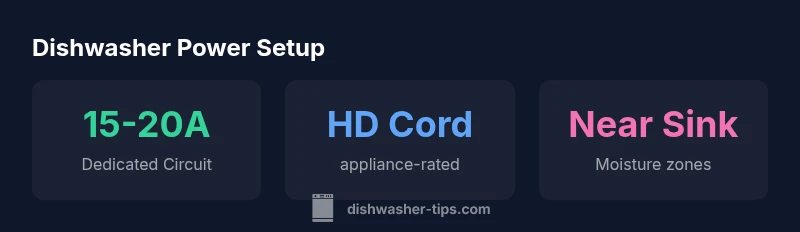
Dishwashers generally require a dedicated 15-20 amp circuit; using a dishwasher extension cord is unsafe and typically prohibited by electrical codes. While temporary power solutions may seem convenient, they increase the risk of overheating, water splash exposure, and fire hazards. For safe operation, install a proper outlet near the dishwasher and plan a dedicated circuit with correct gauge wiring.
The core safety issue with dishwasher extension cords
A dishwasher extension cord may seem like a quick fix when an outlet is inconveniently placed. In practice, this setup introduces several safety concerns. Dishwashers draw startup currents that can stress undersized cords, and many household extension cords are not designed for continuous loads at near-maximum rating. When a cord runs across damp or wet floors, the risk of moisture ingress increases, creating a potential path for short circuits or electric shock. Over time, the insulation on cords can degrade due to heat, foot traffic, or accidental tugging, setting the stage for arcing or fire hazards. For households with children or pets, the risk profile increases because cords can be chewed or snagged, exposing live conductors. The most reliable solution is a properly installed, dedicated outlet powered by a correctly wired circuit and protected by a GFCI where required by local code. By prioritizing fixed wiring, you remove the variable factor that an extension cord introduces into the equation.
From a safety perspective, the distance between the dishwasher and its outlet matters. The longer the cord, the greater the chance of voltage drop and overheating at the plug. Even if a cord is rated for a given current, the combined resistance of the cord and connection points can cause heat buildup under heavy wash cycles. In real-world terms, temporary fixes tend to become permanent, so it’s wise to treat a near-dishwasher outlet as a fixed requirement rather than a stop-gap. If you’re confronted with a space constraint, consult a licensed electrician about relocating the outlet or installing a dedicated circuit near the appliance.
Practical takeaway: never rely on a household extension cord as a long-term solution for powering a dishwasher. The risk-to-benefit calculation strongly favors fixed wiring and a properly located outlet. This is especially true in kitchens where splash zones are common and moisture levels fluctuate throughout the day.
What electrical codes say about extension cords near appliances
Electrical codes across jurisdictions generally discourage or prohibit using a standard extension cord as a substitute for permanent wiring for a fixed appliance such as a dishwasher. The core idea is simple: a dishwasher is a high-draw, water-exposed appliance that benefits from a dedicated, grounded, correctly wired outlet. Codes typically require a fixed outlet in a location that is both convenient and safe, enabling the appliance to be plugged in securely without exposed conductors or loose connections. Portable cords are allowed in some temporary scenarios, but even then they must meet stringent requirements for rating, gauge, and protection from moisture. Always verify local amendments with your local building department or a licensed electrician before attempting any non-permanent powering arrangement. The upfront cost of moving an outlet or adding a dedicated circuit is often small compared to the potential costs of a fire, electrical shock, or a failed warranty due to improper installation.
If a non-permanent setup is permissible in your area, insist on heavy-duty cords rated for appliance use, with strain relief at the plug and a clear path free from humidity or standing water. Because code language varies by region, consultation with a professional is essential to avoid inadvertent violations that could complicate insurance claims or future resale.
Real-world failure modes and how cords fail near water
When a dishwasher extension cord is involved, several failure modes are common. Heat buildup at the plug, exposed copper strands at the cord ends, and damaged insulation from constant flexing are frequent culprits. In kitchens with wet floors or frequent splashes from sinks and dishwashing cycles, water penetration can corrode connectors and create dangerous paths to ground. Over time, even cords that appear visually intact may develop micro-fractures that only show up under load, such as during hot cycles. A failing extension cord can arc, trip a breaker, or degrade the outlet itself. The practical implication for homeowners is clear: frequent inspection for cracking insulation, scorch marks around the plug, and any unusual warmth at the plug end. Replace any suspect cord immediately and avoid DIY repairs that bypass proper electrical components. The preferred approach remains a properly installed outlet with a dedicated circuit, eliminating the risk of using improvised power sources in the kitchen.
When a temporary extension may seem convenient
There are rare circumstances where a temporary extension might seem necessary—during a renovation, for instance, when outlets are being relocated or during an appliance replacement delay. Even in these cases, the solution should be temporary, clearly cordoned off, and installed with high-quality components, suitable strain relief, and a cord rated for appliance use. Always remove a temporary cord from service once the permanent wiring solution is ready. For households that cannot avoid a temporary arrangement, consider using a professionally installed, portable power distribution unit with built-in surge protection and a grounded outlet that is positioned to minimize exposure to water and prevent accidental contact. Remember that temporary does not mean risk-free; treat all temporary fixes as transitional, not permanent.
How to recognize legitimate power needs for a dishwasher
A dishwasher requires a supply that can handle peak startup current without overheating. The safe approach is a dedicated, grounded outlet on a circuit that matches or exceeds the appliance’s current draw, typically 15-20 amps in modern homes. The outlet should be located in a dry, accessible area near the installation space. If you’re unsure about your home’s electrical capacity, a licensed electrician can verify the circuit, sizing, and grounding, and confirm whether any AFCI/GFCI protections are required by local codes. A fixed outlet near the dishwasher also avoids the risk of cord damage from traffic, punctures, or moisture exposure. In practice, this means avoiding extension cords entirely and investing in fixed wiring that aligns with the appliance’s electrical needs and the kitchen’s layout.
Alternatives: best practices for outlet placement and dedicated circuits
The most reliable solution is a properly installed outlet on a dedicated circuit. This configuration minimizes the risk of overload, reduces voltage drop, and eliminates flexing at the plug that can lead to heat buildup. A professional electrician can determine the ideal outlet location considering cabinet layout, plumbing, and appliance clearance. Installing a receptacle in the adjacent cabinet wall or behind the dishwasher cabinet can keep the cord out of sight while maintaining a short, safe run from the appliance to the panel. If your kitchen design requires a new circuit, plan for a neutral, ground, and grounding path that complies with local codes. Consider adding GFCI protection near sinks or wet zones as required by regional rules, and ensure the cord-free solution integrates with your home’s overall electrical plan.
How to plan a kitchen electrical layout to avoid cords
Proactive planning is key. Start by mapping appliance locations and existing outlets, then design dedicated circuits for major fixed appliances like the dishwasher. Favor wall outlets tucked behind cabinetry or accessible panels that minimize cord exposure. Use rigid conduit or surface-mounted wiring when possible, especially in high-traffic kitchens or spaces prone to moisture. Ask your electrician to run individual circuits from the main panel, sized to the dishwasher’s rated amperage, and coordinate with other outlets in the kitchen to balance the load. A well-planned layout not only improves safety but also reduces nuisance trips of breakers during heavy wash cycles.
Choosing the right cord (if absolutely necessary) and installation tips
If a non-permanent arrangement is absolutely unavoidable, select a heavy-duty appliance-rated extension cord with proper strain relief, rated for at least the expected amperage, and with protection from moisture. Use the shortest cord possible to minimize voltage drop, and never route a cord across walkways or under rugs where it can be pinched or damaged. Inspect the connector and plug regularly for signs of wear, corrosion, or discoloration. If there is any warmth at the plug during operation, discontinue use immediately and pursue a fixed outlet solution. In all cases, avoid letting cords lie in splash zones, and never modify plugs or outlets to squeeze more power through an unsafe setup.
Maintenance and inspection for dishwasher electrical setup
Conduct routine checks of the outlet area, looking for scorch marks, melted insulation, loose switches, or any signs of moisture ingress. Keep the outlet cover clear of debris and ensure the plate is snug against the wall. Test GFCI outlets regularly using the built-in test button and arrange for AFCI/GFCI protection if required by your jurisdiction. Have a licensed electrician inspect the electrical system whenever you notice frequent trips, buzzing sounds, or if you renovate the kitchen and alter outlet placement. Regular maintenance reduces the likelihood of hidden hazards and extends the life of the dishwasher and surrounding wiring.
Actionable steps to take tonight
- Do not use a dishwasher extension cord as a long-term solution. If you currently rely on one, unplug the unit and arrange a professional outlet relocation or a dedicated circuit assessment today. - Contact a licensed electrician to inspect your current outlet location, wiring gauge, and panel capacity. - Plan a dedicated circuit near the dishwasher with proper grounding and moisture protections, and confirm whether GFCI or AFCI protection is required in your area. - If relocation isn’t immediately feasible, remove the extension cord from service and keep it out of reach of water and foot traffic until a proper solution is installed. - Document the change with your installer and update any home warranty or insurance notices to reflect a fixed wiring solution.
Comparison: extension cords vs dedicated outlets near dishwashers
| Aspect | Risk/Impact | Best Practice | Notes |
|---|---|---|---|
| Voltage drop risk | Medium to high with long cords | Install a nearby fixed outlet or dedicated circuit | Keep cord length minimal and avoid kitchen traffic paths |
| Code compliance | Often not allowed | Use permanently installed outlet | Check local codes before use |
| Fire hazard | High when damaged or wet | Never use damaged cords | Replace with proper outlet and circuit |
People Also Ask
Is it ever acceptable to use a dishwasher extension cord?
In general, no. Extension cords are not intended for permanent appliance power. A dishwasher should have a fixed, dedicated outlet and circuit installed by a licensed electrician. If a cord is used temporarily, it must be rated for appliance use, kept dry, and kept away from traffic and splash zones.
Generally not acceptable; prefer a fixed outlet and dedicated circuit.
What are safer alternatives to a dishwasher extension cord?
The safest alternative is a properly installed outlet on a dedicated circuit near the dishwasher. If relocation isn’t possible, work with an electrician to evaluate the panel, wire gauge, and grounding, and consider a purpose-built, code-compliant outlet setup.
Install a dedicated outlet with proper wiring.
How does code view dishwashers and extension cords?
Most jurisdictions view fixed appliances like dishwashers as requiring properly installed outlets rather than temporary cords. Local amendments can vary, so consult your electrical code official or a licensed electrician to confirm requirements.
Codes usually require fixed wiring for dishwashers.
If there is no outlet nearby, what should I do?
Plan a permanent solution: relocate the outlet or install a new dedicated circuit near the dishwasher. A temporary extension is not a long-term fix, and professional assessment ensures wiring sizing and safety.
Arrange a proper outlet nearby via a licensed electrician.
Can a GFCI outlet be used for a dishwasher?
GFCI protection may be required by code in some locations, especially near sinks. A licensed electrician can determine if GFCI is necessary and ensure the entire circuit is correctly installed.
GFCI protection may be required; check with an electrician.
What are warning signs of outlet problems near a dishwasher?
Look for warm outlets, scorch marks, buzzing sounds, tripped breakers, or a burning smell. If you notice any of these, stop using the outlet and call a professional immediately.
Watch for warmth, smells, or trips; unplug and call a pro.
“Using a dishwasher extension cord is a high-risk workaround; the safest solution is a properly installed outlet that is part of a dedicated circuit.”
What to Remember
- Avoid using a dishwasher extension cord entirely.
- Install a dedicated outlet near the dishwasher.
- Follow local electrical codes and hire a licensed electrician.
- Keep cords dry, undamaged, and away from water splash zones.
- Consider better kitchen layouts to minimize cord exposure.