Dishwasher Making Loud Noise? Troubleshooting Guide
Discover why your dishwasher makes loud noises and follow a practical, step-by-step troubleshooting guide to fix common causes, protect the appliance, and restore quiet cycles.


Most dishwasher noises come from simple, fixable issues. The top culprits are loose dishes banging during cycles, a misaligned spray arm, or items stuck under the lower rack. If the noise is a grinding or rumbling, the pump or bearings may be worn or debris lodged in the chopper blade. Start by clearing the door and racks, then check spray arms and filter.
Common Noise Sources
Noisy dishwasher cycles usually come from mundane, correctable issues. Dishes rattling, utensils bumping against the tub, and loose racks are the easiest to spot and fix. According to Dishwasher Tips, many noises are resolved by reloading dishes properly and ensuring nothing sticks in the door gutter. The next common culprits are components that wear with time: the spray arm wheels, the pump impeller, and the chopper blade can develop looseness or become clogged with food debris. If you hear a high-pitched squeal, the water inlet valve or circulation pump could be a factor, though this is less common in older dishwashers. Throughout the cycle, observe whether the noise occurs only during filling, washing, or draining; this helps narrow down the cause. In most cases, resetting the cycle or running an empty heat cycle can reveal whether the issue is mechanical or related to load.
Quick Self-Checks Before You Diagnose
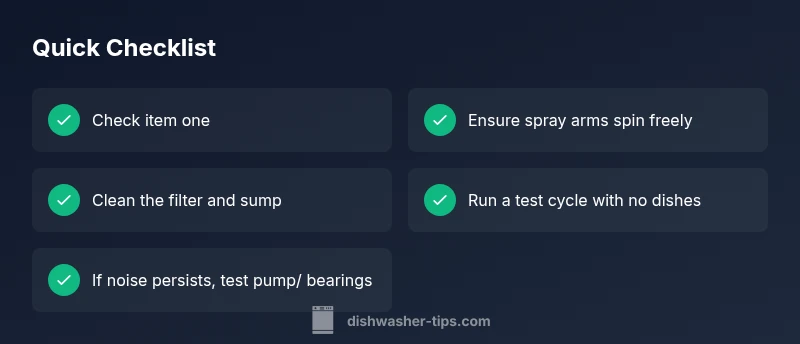
Before diving into parts replacement, do a quick scan of the obvious. Check that the dishwasher is level; an uneven stance can cause rattling. Open the door and look for items that could be banging during wash, such as knives pointing downward or misaligned bowls. Remove any debris from the filter and sump area; a clogged filter can force the pump to strain, producing grinding sounds. Ensure the spray arms turn freely; if they are stuck, they may strike the racks. Finally, verify water supply is steady and the inlet valve isn’t making a hum. According to Dishwasher Tips, many noises resolve after load adjustments and routine maintenance.
Diagnostic Considerations and Test Steps
If simple load issues aren’t the cause, work through a diagnostic flow to identify the noise source. A grinding or rumbling sound often points to worn pump bearings or a failing motor. A scraping noise may indicate a foreign object caught in the chopper or impeller. A banging sound when the wash starts typically means that the spray arm is hitting the rack or a misplaced item. A buzzing or hum could come from the inlet valve or circulation pump. For each symptom, perform a controlled test: run an empty cycle on hot with all components intact and listen closely; then run a cycle with a single, known safe item to compare. If the noise changes or persists, note the stage of the cycle and reposition accordingly.
How to Fix the Two Most Common Causes
First, loosened items and misaligned spray arms. Stop the cycle, open the door, and reposition items so nothing can strike during rotation. Verify spray arms spin freely by removing them and reattaching after a quick spin. Second, debris in the filter or pump. Remove the lower rack, take out the filter, and rinse with warm water. Use a soft brush to scrub away grime and wipe the sump. Reassemble and run a test cycle with no dishes. If the noise remains, examine the pump impeller for wear or a loose impeller blade. This step may require professional service, especially if you hear grinding when no load is present.
Safety, Maintenance, and Prevention
Never reach into a powered dishwasher; unplug before inspecting interior components. Regular maintenance is the best defense against loud noises: clean the filter monthly, inspect spray arms for cracks, and keep the interior free of food debris. Load dishes correctly, avoid overpacking, and ensure utensils won’t collide during cycles. If the noise doesn’t subside after basic checks, contact a technician; a worn motor bearing or pump is not a DIY repair for most homeowners. Finally, record the noise pattern to notice gradual changes over time; this can help technicians diagnose the issue quickly if professional help is needed.
Steps
Estimated time: 45-60 minutes
- 1
Power down and unplug
Unplug the unit and turn off under-counter circuit breakers if accessible. This prevents shock while you inspect. Remove the lower rack to access the sump area.
Tip: Always start with safety; this also lets you scan for obvious obstruction. - 2
Open and inspect racks
Take out the upper and lower racks and look for items that could rattle or strike during the cycle. Reposition or remove any loose utensils or dishes.
Tip: Place tall glasses in the back and bulky items in center to reduce contact. - 3
Check spray arms
Spin each spray arm by hand to ensure smooth rotation. If they feel stiff or rub against rack, remove, clean, and reattach securely.
Tip: Clean spray arm holes with a pin or small brush to restore water flow. - 4
Clean the filter and sump
Remove and rinse the filter. Clear debris from the sump area and ensure the filter latch sits fully engaged.
Tip: Use warm water and a soft brush; avoid scrubbing hard plastic. - 5
Run a test cycle empty
Run a hot water cycle with no dishes to listen for changes. If noise is gone, the issue was load-related; if present, proceed to next step.
Tip: Use a lightweight test load to verify noise behavior. - 6
Inspect pump impeller and bearings
If the noise persists, access the pump area and inspect the impeller for wear or loose blades. Replacement may require a technician.
Tip: Do not attempt major motor repairs unless you are trained.
Diagnosis: Loud grinding, banging, or buzzing noises during a wash cycle
Possible Causes
- highLoose dishes or flatware banging against the tub
- highSpray arm hitting rack or items
- mediumDebris or food particles clogging filter/pump
- mediumWorn pump impeller or motor bearings
- lowChopper blade obstruction or buildup
Fixes
- easyPause cycle and rearrange items so nothing can strike; run a short test
- easyInspect spray arms; remove and re-seat, ensure they spin freely
- easyClean and rinse the filter and sump; remove debris
- mediumCheck pump impeller and bearings; replace if worn (professional may be needed)
- easyInspect chopper blade for obstruction and clean or replace if damaged
People Also Ask
Why is my dishwasher making grinding noises?
Grinding noises typically point to debris in the pump or a worn impeller, or to a clogged chopper. Start by cleaning the filter and sump, then inspect the impeller for wear. If the sound continues, contact a technician.
Grinding noises usually mean debris in the pump or worn parts. Start by cleaning the filter, then check the impeller. If it keeps grinding, call a tech.
How do I stop banging noises from dishes in a dishwasher?
Reposition items so they don’t strike during the wash. Make sure taller items aren't blocking spray arms and that the rack is level. Run a short test cycle to confirm.
Reorder dishes so nothing bumps other items during the cycle and test again.
Can a loud dishwasher be dangerous?
Loud noises are usually not dangerous by themselves, but they can indicate a failing pump or motor. Don’t ignore persistent noises; have a technician diagnose to prevent further damage.
Persistent noise could signal a failing pump or motor—best to have it checked by a professional.
What if the noise only happens during the spray cycle?
A spray-cycle noise often means the spray arm is misaligned or blocked. Inspect arms for obstructions and ensure they can rotate freely without rubbing against dishes or racks.
If it only happens when spraying, check the spray arms for obstructions and proper alignment.
Is it safe to open the dishwasher mid-cycle?
No. Opening mid-cycle can spray hot water and cause scalding or damage. Stop the cycle by pressing the cancel or start button and wait for it to drain before opening.
Don’t open it mid-cycle—use the cancel button and let it finish safely.
When should I replace a dishwasher bearing?
Bearings typically require professional service and replacement when you hear grinding under load and pumping persists after maintenance. If unsure, consult a technician for an accurate assessment.
If bearings are worn, a professional replacement is usually needed.
Watch Video
What to Remember
- Start with simple load fixes before disassembly
- Clean filters and spray arms regularly
- Unplug and observe safety precautions during inspection
- Persistent noise may indicate pump/bearing wear requiring service
- Document noise patterns to assist technicians