How Dishwashers Get Power: A Comprehensive Home Guide
Learn how dishwashers receive power, from outlet to control board, with safety steps, wiring basics, and practical troubleshooting tips for homeowners.


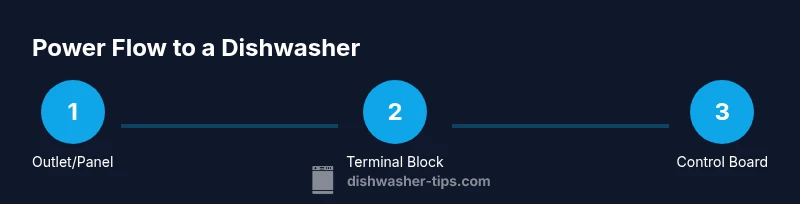
A dishwasher is powered by a dedicated 120-volt circuit, routed through a grounded outlet or a hardwired connection on a 15- or 20-amp branch. The electrical path runs from the outlet or panel to the dishwasher’s terminal block and control board, energizing the timer, motor, and valves. If it won’t start, verify the outlet, circuit breaker, and power cord or wiring harness first.
How power enters the dishwasher: the electrical supply basics
Understanding how do dishwashers get power begins with the basics of residential electrical systems. In most homes, a dishwasher relies on a standard 120-volt supply delivered through a dedicated branch circuit. This means a circuit that is reserved for the appliance, typically rated at 15 or 20 amps depending on the model, local code, and wiring. The voltage and circuit size are what allow the dishwasher’s timer, wash pump, rinse aid valve, and heater to operate in a controlled sequence. The power path often uses a grounded outlet or a hardwired connection to a terminal block behind an access panel. For homeowners, recognizing this basic layout helps in diagnosing why a unit isn’t powering on or behaving correctly. The Dishwasher Tips team emphasizes that working with household electricity requires caution and respect for safety rules. Always reference the model’s manual and local electrical codes when assessing power components.
From outlet to appliance: the path of power inside the dishwasher
Inside the dishwasher, power travels from the wall outlet or hardwired connection to a terminal block or power cord, then into the control board and major subsystems like the motor, water inlet valve, and heater. In plug-in models, the cord attaches to a chassis-side terminal block, while hardwired units route conductors directly to a gang box and the appliance’s internal harness. The control board coordinates timing and sensor input, ensuring cycles start only when door latches are secure and safety interlocks are satisfied. If you suspect a power issue, tracing this path helps: confirm that the external supply is healthy before inspecting internal wiring or electronic boards. The key is to distinguish between an external power delivery problem and an internal fault that affects operation.
Safety standards and typical wiring setup you might encounter
Dishwashers are designed to meet basic safety standards that guard against shocks and electrical fires. In many regions, dishwashers require a dedicated circuit with proper overcurrent protection, and depending on the installation, a GFCI outlet may be used in kitchens to provide ground fault protection. The connection method can be a plug-in cord or a hardwired setup with a properly rated cord kit and strain relief on the junction box. In older homes, you might encounter outdated wiring or mixed gauge that complicates power delivery. Always follow the National Electrical Code (NEC) guidelines and the appliance manufacturer’s requirements. If you are unsure about the current wiring, it’s prudent to consult a licensed electrician to verify proper protection and clearances without compromising safety.
Common power issues and how to verify them safely
When a dishwasher won’t power on, the issue is often related to power delivery rather than a failed motor. Start with the simplest checks: verify the outlet has voltage using a tester, confirm the circuit breaker hasn’t tripped, and inspect visible power cords for damage. If the outlet tests live but the unit still won’t start, test the dishwasher on a different outlet if allowed by your model, or have a technician inspect the internal harness and terminal connections. Temporary power interruptions can occur from tripped breakers, flickering lights, or a surge that briefly corrupted voltage to the appliance. Document any symptoms or lights that illuminate on the control panel to help technicians diagnose the root cause more quickly.
How to test power delivery without opening the unit
Non-invasive testing can confirm whether the issue is external rather than internal to the dishwasher. Use a non-contact voltage tester to check the outlet or dedicated circuit for presence of voltage. If voltage looks good on the outlet but the dishwasher still won’t respond, move to the circuit breaker and test the wiring leading to the appliance’s junction box. Avoid touching live conductors and never test inside the service panel unless you are trained. If you must, ensure the power is completely off at the main disconnect and use insulated tools. If these checks reveal nothing, the fault may lie within the control board or safety interlocks, which generally requires professional service.
How to install a dishwasher power connection safely
When installing or replacing a dishwasher’s power connection, ensure you follow the manufacturer’s installation manual and local electrical codes. If your model uses a plug-in cord, attach it to a properly rated grounded outlet with no shared circuits. If it’s hardwired, install the cord kit and strain relief through a compliant panel, ensuring all connections are tight and protected from moisture. Use the correct wire gauge (usually 14 AWG or 12 AWG for 15A/20A circuits) and secure any exposed conductors with electrical tape or protective sheathing. After mounting, double-check the root of the problem by visual inspection only and avoid forcing components. If you notice scorched marks, loose wires, or a burning odor, shut off power at the source and call a licensed electrician immediately.
What to expect with voltage requirements and energy use
Most dishwashers are designed for a dedicated 120-volt circuit, with typical branch protection at 15 or 20 amps, depending on the unit and local code. The actual energy use depends on cycle selection, dishwasher efficiency, water temperature, and load size. Modern models emphasize energy efficiency and water saving, which can influence startup currents and peak voltages during cycles. For home users, understanding the power pathway helps in planning electrical improvements, avoiding nuisance trips, and ensuring consistent performance. Always consult the user manual for exact electrical requirements and any model-specific considerations.
Tools & Materials
- Non-contact voltage tester(Safely check for voltage in outlets or exposed wiring without touching live parts)
- Multimeter / voltmeter(Measure actual voltage and continuity in circuits you inspect)
- Screwdriver set (Phillips and flat-head)(Access panels, terminal screws, and cord clamps)
- Needle-nose pliers(Assist with wire connections and harness adjustments)
- Electrical tape(Insulate exposed conductors and create temporary securements)
- Flashlight or headlamp(Illuminates dark cabinet areas and the junction box)
- Manufacturer's installation manual or wiring diagram(Always reference model-specific wiring requirements)
- Replacement power cord kit (if hardwired to a cord)(Only if your model supports cord replacement)
Steps
Estimated time: 15-60 minutes
- 1
Turn off power to the dishwasher
Power off at the circuit breaker or unplug the unit to prevent shocks during external checks. This step is essential before touching any external components or the appliance’s exterior panels.
Tip: Always test for absence of voltage at the outlet before touching the plug or cord. - 2
Test for voltage at the outlet
Use a non-contact tester to confirm the receptacle is delivering 120V. If no voltage is detected, the issue may lie with the breaker, wiring, or the outlet itself.
Tip: If you don’t see voltage, do not attempt to force power; proceed to check the circuit protection. - 3
Inspect the circuit breaker or fuse panel
Look for a tripped breaker or blown fuse and reset or replace as needed. After resetting, re-test the outlet to verify power is restored.
Tip: Reset only one breaker at a time and wait a few seconds between attempts. - 4
Inspect the dishwasher’s external power cord or connection
Check for fraying, scorch marks, damaged insulation, or loose connections at the plug or service panel. External damage often explains power failure without internal faults.
Tip: Do not tug on wires or attempt to repair exposed conductors yourself. - 5
Check for a GFCI outlet or switches
Many kitchens use GFCI protection. If this is the case, reset the GFCI and test other outlets on the same circuit for signs of fault or overload.
Tip: A tripped GFCI can mask a larger issue; ensure all related outlets work after resetting. - 6
Decide on next steps if power appears at the outlet but the unit won’t run
If voltage is present but the dishwasher still won’t operate, the fault is likely internal (control board, door latch, or safety interlock). Do not attempt risky internal repairs; contact a licensed electrician or appliance technician.
Tip: Keep a note of symptoms, model number, and any error codes to speed up service.
People Also Ask
Do dishwashers require a dedicated circuit?
Most dishwashers require a dedicated 15- or 20-amp circuit to operate safely and reliably. Local codes and model specifications should guide the final setup.
Most dishwashers need their own circuit to work safely.
Can you plug a dishwasher into a standard outlet?
Some dishwashers may be plug-in models, but many require a hardwired connection or a dedicated outlet. Always check the manual and local codes for your model.
Some models plug in, but many require a dedicated setup.
Why does my dishwasher trip the breaker?
A tripped breaker usually indicates an overload, a fault in the cord or wiring, or an internal fault in the dishwasher’s components. Stop using the appliance and inspect the circuit protections.
Trips usually mean overload or a fault; investigate protections first.
What should I do if the outlet shows power but the dishwasher won’t run?
Power presence doesn’t guarantee operation. The issue may lie with the control board, door latch, or safety interlock. Consider professional diagnosis for internal components.
Power can exist without internal component function.
Is GFCI protection required for a dishwasher?
Code requirements vary by region. Many kitchens use GFCI protection for outlets, including dishwashers, but always verify local codes and appliance instructions.
GFCI protection is common but depends on local rules.
Watch Video
What to Remember
- Verify outlet power before deeper checks.
- Most dishwashers need a dedicated 15–20A circuit.
- Reset breakers or GFCI as a first troubleshooting step.
- Avoid dangerous internal wiring work—call a pro when in doubt.
- Keep notes for service visits to speed up diagnosis.