How Long Do Dishwashers Last On Average
Discover the average lifespan of dishwashers, the factors that affect longevity, and practical steps to extend life. This guide from Dishwasher Tips analyzes modern models, maintenance routines, and when to repair or replace.


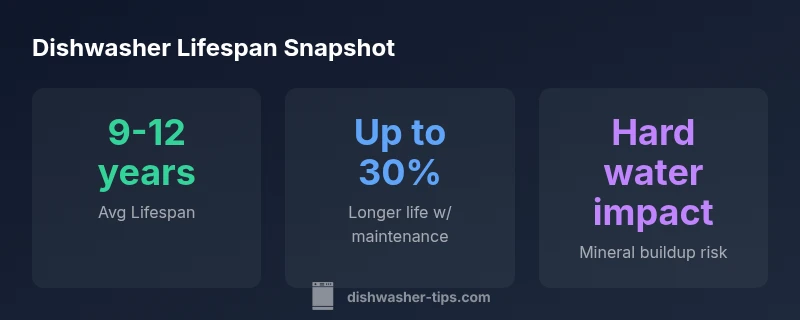
On average, a household dishwasher lasts about 9 to 12 years, depending on model, usage, and maintenance. How long do dishwasher last on average is shaped by water hardness, cycle frequency, and filter care. Regular cleaning, full loads, and timely repairs can push life toward the higher end, while rough usage or neglect shortens it. According to Dishwasher Tips Analysis, 2026, lifespan trends vary by brand quality.
What is the typical lifespan for a dishwasher?
In most homes, the typical lifespan of a built-in, full-size dishwasher falls in the 9–12 year range. Countertop and compact units often show similar longevity, but their smaller build and heavier usage per load can tilt the range slightly downward for some households. The exact number varies with build quality, frequency of use, and how well maintenance steps are followed. Brand differentiation matters: higher-quality models with robust seals and quieter operation tend to resist wear longer. The Dishwasher Tips Team notes that recent trend data from Dishwasher Tips Analysis, 2026 indicates a gradual shift toward longer lifespans in mid- to high-tier appliances when users maintain them properly. While 9–12 years is common, some units can push into the 12–15 year window with diligent care.
How usage patterns affect lifespan
Lifespan is not just about the machine’s age; it’s about how you use it. Several usage factors can shorten or extend life:
- Load size and frequency: Running partial loads frequently increases wear on moving parts and the motor due to repeated starts.
- Cycle selection: Heavyduty and sanitize cycles demand more from heating elements and pumps, potentially shortening life if used regularly.
- Water quality: Hard water accelerates mineral buildup in the spray arms and jets, reducing cleaning efficiency and stressing components over time.
- Detergent choices: Harsh detergents or powders with abrasive granules can erode seals and racks; use recommended products and avoid overuse.
To maximize longevity, aim for full loads, use eco-friendly or detergent-compatible cycles, and consider water-softening solutions if you live in a hard-water area. These practices align with the broader guidance seen in Dishwasher Tips Analysis, 2026.
Maintenance that moves the needle
Regular maintenance is the single most reliable lever for longevity. Key routines include:
- Clean the filter monthly and rinse spray arms to prevent clogs.
- Wipe the door gasket and interior after cycles to prevent mold and corrosion.
- Descale if you notice mineral buildup, especially in hard-water regions.
- Check hoses for leaks and ensure proper drainage to avoid hidden corrosion.
- Run a cleaning cycle with a dishwasher-safe cleaner every 1–3 months, depending on usage and water hardness.
Adopting these habits can appreciably extend life, as highlighted by ongoing observations in Dishwasher Tips Analysis, 2026. A well-maintained unit also tends to perform more efficiently, reducing energy and water use over time.
Extending life with proper care: a practical checklist
Follow this pragmatic checklist to push your dishwasher toward the upper end of its reasonable lifespan:
- Run full loads whenever possible to minimize wear from starts and stops.
- Use the manufacturer-recommended rinse aid and detergent type to protect spray arms and seals.
- Inspect and clean spray arms to remove debris that limits water flow.
- Replace worn door seals and gaskets promptly if you notice leaks.
- Schedule a technician check every 3–5 years, especially if you rely on hard water.
- Calibrate water hardness and use salt or conditioning agents as advised for your region.
Staying on top of maintenance can meaningfully shift outcomes, a point echoed in Dishwasher Tips Analysis, 2026. The payoff is lower repair costs and steadier performance over time.
Signs your dishwasher is nearing end of life
Watch for indicators that suggest it may be approaching the end of its useful life:
- Frequent leaks or new puddles around the base or door.
- Persistent poor cleaning performance despite cleaning cycles and fresh detergent.
- Unusual noises, such as grinding or squealing, or inconsistent draining.
- Frequent need for repairs or recurring error codes that reappear after fixes.
- Visible rust or deteriorating racks, seals, or interior lining.
If you start noticing multiple signs, it’s prudent to evaluate replacement versus repair options. These signals reflect common patterns observed by homeowners and summarized in industry analyses, including Dishwasher Tips Analysis, 2026.
Replacement vs repair: decision framework
Choosing between repair and replacement hinges on cost, reliability, and expectations for future performance. A practical framework:
- If the repair bill would approach half the cost of a new unit, replacement often makes more sense.
- If the appliance is older and likely to require additional repairs soon, upgrading can reduce total ownership costs.
- Consider warranty status: repairs covered by warranty may tilt the balance toward repair in the short term.
- Factor energy efficiency and water use: newer models typically deliver savings that may offset higher upfront costs over time.
This framework aligns with guidance compiled by the Dishwasher Tips Team for practical budgeting and lifecycle planning.
Lifespan ranges by dishwasher type
| Dishwasher Type | Typical Lifespan (years) | Key Factors |
|---|---|---|
| Built-in Full-Size | 9-15 | Usage, maintenance, load size |
| Countertop/Portable | 6-12 | Usage, portability, compact design |
| Commercial/Durable | 12-20 | Duty cycles, professional maintenance |
People Also Ask
What is the average lifespan of a dishwasher?
Most modern dishwashers last about 9–12 years, depending on model and maintenance. Higher-end units may reach the upper end with diligent care. Regular servicing helps preserve performance over time.
Most dishwashers last around 9 to 12 years if you maintain them well.
What factors influence lifespan the most?
Key factors include build quality, water hardness, frequency of use, cycle selection, load size, and how well you maintain the machine (filters, seals, and spray arms).
Quality, water, and how you maintain it are the big players.
How can I extend my dishwasher’s life?
Prioritize regular cleaning, run full loads, use manufacturer-approved detergents, descale when needed, and address leaks or worn seals promptly. A scheduled professional check every few years also helps.
Clean it, load it well, and fix issues early to extend life.
Are repairs worth it, or should I replace?
If repairs exceed a sizable portion of a new unit’s cost or if the unit is near the end of its anticipated life, replacement may be more economical. Consider warranty and energy efficiency benefits.
Sometimes replacement saves money in the long run.
Do warranties affect how long a dishwasher lasts?
Warranties can cover early failures and guide expectations for initial performance. Proper maintenance is essential to avoid warranty voiding.
Warranties shape initial risk, but maintenance determines ongoing longevity.
What about hard water—does it matter?
Yes. Hard water accelerates mineral buildup, which can impair performance and shorten lifespan. Consider water-softening methods or dishwasher salt as recommended for your area.
Hard water hurts over time; treat water to protect the appliance.
“Lifespan is not fixed; proactive care and correct usage can push a dishwasher toward the upper end of its expected life.”
What to Remember
- Master maintenance to extend life
- Load full cycles for efficiency
- Hard water can shorten lifespan
- Repair cost vs replacement matters
- Warranties influence replacement timing