How Often to Clean a Dishwasher Filter in 2026
Learn how often to clean a dishwasher filter, what factors affect frequency, and step-by-step cleaning tips from Dishwasher Tips to keep dishes spotless and the machine running efficiently in 2026.


How often should you check your dishwasher filter? For most households, inspect and clean the filter every 1-3 months. In areas with hard water or heavy use, aim for monthly checks. The Dishwasher Tips team notes that consistent filter maintenance helps improve cleaning performance, extend appliance life, and reduce drainage problems by preventing food debris buildup.
Why frequency matters
Maintaining a clean dishwasher filter is one of the simplest, most impactful maintenance tasks. The filter catches food particles and prevents clogs, helping ensure optimal spray arm flow and water circulation. If it becomes clogged, you may notice longer wash times, lingering odors, or reduced cleaning performance. That is why, according to Dishwasher Tips, establishing a regular check schedule can prevent headaches and keep your appliance running efficiently. The exact frequency to hit depends on home use, water hardness, and the type of dishes you run. Below, we outline a practical routine you can adopt without guesswork and with minimal disruption to daily life.
What drives how often you should clean
Several factors determine how often you should clean the filter. Hard water increases mineral buildup on the filter screen, while a busy household with kids or frequent greasy meals adds more residues to clog the path. Dishwasher models with multiple filtration stages may require different inspection points, and some newer units have self-cleaning features that reduce manual cleaning frequency. In all cases, establishing a baseline schedule helps you track changes over time and catch issues early. The Dishwasher Tips team recommends starting with a monthly check in the first 60–90 days, then adjusting to 1–3 months based on results and observed dish cleanliness.
Practical frequency guidelines by use case
- Average family, moderate soil: Check and clean every 1–3 months.
- Large family or high-use days (kids, party gatherings, heavy grease): Aim for monthly checks.
- Homes with hard water or known mineral buildup: Start with monthly checks and consider more frequent inspections during peak usage seasons.
- New dishwasher or dishwasher with unusual smells or drainage issues: Inspect sooner (within 4–6 weeks) to establish a baseline.
These guidelines are meant to be flexible and practical. If you notice soap residue on dishes, longer wash times, or standing water after cycles, increase frequency and perform a thorough clean.
How to inspect your filter
Move the lower rack to access the filter housing. Most dishwashers use a cylindrical or lattice filter that lives at the bottom of the tub. With the unit unplugged, remove the filter carefully so you don’t spill debris. Use a flashlight to examine the mesh for tears or holes. Rinse the filter under lukewarm running water. If you see stuck food, use a soft-bristle brush to loosen residues. Dry the filter completely before reinstalling. If your model has multiple filtration stages, inspect each stage separately and follow the manufacturer’s guidance.
How to clean the filter effectively
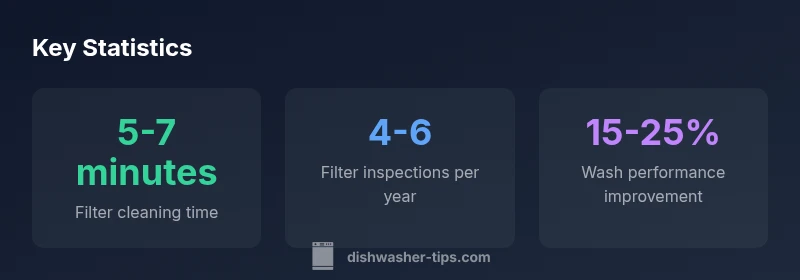
Begin by removing the filter and rinsing it under warm water. Soapy water can help loosen oily residues—use a small amount of mild dish soap if needed. Gently scrub with a soft brush or sponge; avoid abrasive pads that could damage the mesh. Rinse again until the water runs clear. Dry the filter with a clean towel before reassembling. After reinstalling, run a short empty cycle to ensure proper resealing and drainage. Regular cleaning is simple, and most households notice immediate improvements in wash performance.
What to do with a clogged or damaged filter
If the filter is visibly clogged or the mesh is damaged, cleaning alone may not restore performance. Remove and inspect for holes, tears, or bent frames. If damaged, replace the filter according to your model’s instructions. If clogging recurs quickly, check for other causes such as debris under the spray arms or blockages in the drain hose. In some cases, a professional service call may be warranted to assess seal integrity or filter housing.
Filter location by model type
Most standard dishwashers have a removable filter at the bottom of the tub, often under the lower rack. Some drawer-style or compact models place a filter behind a small panel near the door. High-end models may have two-stage filtration with separate baskets. If you’re unsure of your model’s exact layout, consult the user manual or search the model number on the manufacturer’s site. The key is to locate the filter housing, remove the filter, clean it, and re-seat it securely.
Maintenance plan and record-keeping
Create a simple maintenance calendar—paper or digital—that reminds you to inspect every 1–3 months. Keep notes on the date of the last cleaning, observed cleanliness, and any issues like odors or slower drainage. In hard water areas, consider pairing filter maintenance with regular descaling using manufacturer-approved products. This routine helps prolong dishwasher life and maintain efficient cleaning performance over time.
Quick-start checklist you can print
- Check the filter location in your model and remove the filter.
- Rinse under warm water, brush away stubborn debris, and inspect for damage.
- Reassemble carefully and run an empty cycle to validate drainage.
- Record the date of inspection and set your next reminder.
- If you notice recurrent issues, consider professional guidance or a filter replacement.
Common dishwasher filter types and maintenance tips
| Filter Type | Common Location | Maintenance Tip |
|---|---|---|
| Coarse mesh | Bottom of tub | Rinse and brush after every few uses |
| Fine mesh | Behind spray arm | Rinse, brush, and inspect seals every 1-3 months |
| Self-cleaning (built-in) | Integrated in filter housing | Follow manufacturer instructions; rarely needs manual cleaning |
People Also Ask
How often should I clean the dishwasher filter?
Typically, clean the filter every 1-3 months. If you notice slower draining or less effective cleaning, increase the frequency to monthly, especially in hard water areas or with heavy soil. Your routine should adapt to observed performance.
Clean the filter every 1-3 months, or monthly if you have hard water or heavy soil—adjust based on performance.
What are signs that my filter needs cleaning?
Visible debris on the filter, cloudy water, longer wash cycles, and dishes not coming out clean are typical signs. Odor in the tub can also indicate buildup. If you notice any of these, inspect and clean the filter before running another cycle.
Look for debris, longer cycles, and dirty dishes—these signal you should check and clean the filter.
Can I clean the filter with vinegar?
Use warm water and a soft brush; mild dish soap is optional. Avoid harsh chemicals or abrasive cleaners that could damage the filter. Vinegar is generally unnecessary for routine cleaning and may not be recommended for all models.
Stick to warm water and a soft brush; avoid harsh cleaners unless the manufacturer allows it.
How do I know if the filter needs replacement?
If the filter shows tears, holes, or bent frames that compromise its screening capability, replace it. Replacements should match your model’s filter part number to ensure proper fit and performance.
Damaged or torn filters should be replaced; otherwise clean as advised.
Do all dishwashers have removable filters?
Most do, but some models use different filtration layouts. If you’re unsure, check the user manual or model number on the manufacturer’s site. The goal is to access and clean the filter housing when needed.
Most have removable filters, but check your manual or model to be sure.
“Regular filter maintenance delivers noticeable improvements in wash quality and prevents costly clogs.”
What to Remember
- Check your filter on a regular schedule
- Clean, don’t replace, unless damaged
- Hard water increases how often you should clean
- Keep a simple maintenance log to stay on track
- A clean filter directly improves washing and drainage