How to Put Dishwasher On: Complete Guide for 2026
Learn how to put a dishwasher on safely and efficiently. This guide covers safety checks, loading, detergent use, cycle selection, starting, and maintenance. A practical, expert walkthrough from Dishwasher Tips.


By the end of this guide, you will confidently put your dishwasher on safely: verify the power and water connections, load dishes correctly, choose an efficient cycle, and start the run without leaks or excessive noise. You’ll learn quick checks to avoid common errors and what to do if you need to pause or cancel a cycle. This is a practical, safe approach to turning on your dishwasher.
Why You Need to Learn How to Put Dishwasher On
Knowing how to properly start a dishwasher saves time, energy, and water. The act encompasses safety checks, correct loading, cycle selection, and addressing potential issues before they become problems. According to Dishwasher Tips, most households benefit from establishing a routine that includes visual checks and a quick wash quality assessment. The team found that when users start from a standard process, cycles run more consistently, and the likelihood of leaks or unclean dishes drops significantly. This article walks you through exact steps you should follow to put your dishwasher on with confidence, focusing on practical actions you can perform in under 15 minutes for most loads. The guidance here reflects real-world scenarios homeowners encounter daily and is designed to be accessible for both beginners and seasoned renters alike.
Safety Checks Before You Start
Before you press Start, perform a quick safety sweep to prevent accidents and protect your appliance. Ensure the dishwasher is plugged into a grounded outlet and that the circuit breaker hasn’t tripped. Verify that the water supply valve is fully open and the inlet hose is free from kinks. Check the door latch and gasket for damage, and make sure the floor is dry to avoid slips when opening the door. If you notice any broken cords, leaks, or unusual smells, do not run the machine; unplug it and consult a technician. Doing these checks first reduces the risk of electrical shock, water leaks, or fire hazards, and keeps your kitchen safe while you run a cycle. Dishwasher Tips emphasizes safety as the foundation of every successful load and start.
Loading for Optimal Cleaning
Correct loading makes a big difference in results. Place plates and bowls facing the center and avoid blocking the spray arms. Heavier items belong on the bottom rack; lighter, taller items go on top. Make sure nothing protrudes into the spray path and that utensils are arranged in the basket with handles down for better flow. Check that durable plastics are dishwasher-safe and that wood items or non-dishwasher-safe metals are kept out. Rinse off excess food, but avoid pre-washing obsessively, as modern detergents and jets do most of the work. A well-loaded rack uses water efficiently and prevents redeposits of food. Dishwasher Tips notes that good loading translates to cleaner dishes with less energy usage over time.
Detergent, Rinse Aid, and Water Hardness Considerations
Add detergent according to the product’s instructions; avoid overflow by using the recommended scoop or tablet. Rinse aid improves drying and prevents mineral streaks on glassware, especially in hard water. If you know your area has hard water, choose a rinse aid with chelating agents and consider a higher-quality detergent. Do not mix detergents with cleaners not designed for dishwashers. Some newer machines have detergent compartments and auto-dose features; use them if your unit supports it, otherwise place the tablet in the designated slot or dose according to label directions. The right detergent and rinse aid can significantly influence drying quality and residue-free dishes.
Cycle Selection: Eco, Normal, Heavy, and Specialty Modes
Choose a cycle that matches the load: Eco for lightly soiled dishes, Normal for everyday meals, Heavy for baked-on residues, and Quick for a fast clean when dishes aren’t heavily soiled. If your dishwasher offers special settings (sanitize, glass, or sanitize-plus), align the setting with your needs. For energy savings, select Eco or a shorter cycle when appropriate and ensure the water heater temperature is set within manufacturer recommendations. Confirm that any pre-rinse or soil level options are set as intended. This section helps you optimize results and minimize energy use in real-world kitchens. Based on Dishwasher Tips research, combining proper loading with the right cycle yields the best balance of cleanliness and efficiency.
Starting the Wash and What to Expect
Close the door firmly and ensure it latches with a click. Press Start, or press and hold Start for models that require a long-press. Listen for the motor hum, water flow, and spray arms spinning; absence of these signals may indicate a problem. If there is an error code, consult your user manual, and do not ignore it. Most modern dishwashers display a light or code to tell you when the program begins. As the wash runs, avoid opening the door unnecessarily; doing so interrupts the cycle and may spill hot steam. If you must intervene, use the pause function and reclose the door after a moment. This step sets expectations for the run and reduces anxiety when you hear unfamiliar sounds.
Troubleshooting Quick Diagnostics
Sometimes the machine won’t start, displaying an error or not draining properly. Ensure the outlet is live and the fuse or breaker hasn’t tripped. Check the door latch, wiring, and control panel for signs of damage. If you hear buzzing or a grinding sound, it could indicate a jammed spray arm or a misaligned rack. In many cases, simply resetting the circuit or pausing and closing the door again resolves the issue. For persistent problems, consult the manufacturer’s troubleshooting guide or contact service support. This section equips you with fast checks to determine whether a problem is user-fixable or requires professional help.
Post-Run Steps and Routine Maintenance
After a cycle completes, wait a few minutes before opening the door to avoid steam burns, then unload the bottom rack first to prevent transferring water to clean dishes. Wipe the gasket and door edges with a damp cloth to remove any residue, and check the filter screen for clogs. Run a maintenance cycle or clean with a solution recommended by the manufacturer every 1-3 months. Regular cleaning helps maintain performance and reduces odors. Consistent upkeep also extends the life of seals and spray arms, so you’ll get better results over time. The goal is simple: a reliable start every time and fewer surprises.
Quick-Start Checklist for a Smooth Start
- Check power, water supply, and door latch to ensure readiness.
- Load dishes correctly and avoid blocking spray arms or sensors.
- Add detergent and optional rinse aid per label instructions.
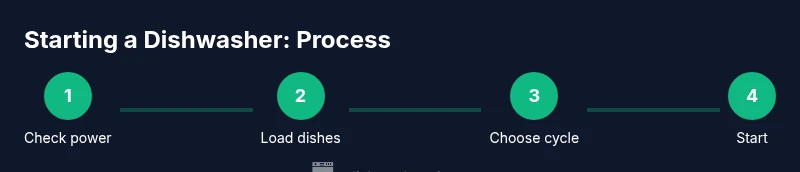
- Close the door, select a cycle, and press Start with a confident push.
- Monitor the first few minutes for leaks, noise, or error codes, and pause if something seems off.
- If you must pause, use the dedicated button and re-close the door before resuming.
- When the run finishes, unload from the bottom rack first to maintain cleanliness.
- Clean seals and filters after unloading to keep performance high.
- Schedule periodic maintenance to prevent issues and extend life.
Tools & Materials
- Dishwasher detergent (powder/tablet/liquid)(Choose detergent compatible with your cycle and water hardness)
- Rinse aid(Useful for hard water and better drying)
- Dishwasher-safe dishes and utensils(Only items labeled dishwasher-safe)
- Measuring scoop (for powder detergent)(Use per product label if not using pre-measured tablets)
- Soft cloth or sponge(For wiping seals and the door edge)
Steps
Estimated time: 75-120 minutes
- 1
Verify power and door latch
Ensure the dishwasher is plugged in, the circuit is on, and the door latch engages with a firm click. Confirm there are no visible frayed wires or tripped breakers before proceeding.
Tip: A loose plug or faulty latch is a common cause of a cycle not starting. - 2
Check water supply and inlet
Make sure the hot water supply valve is fully open and the inlet hose is free of kinks. A blocked or restricted supply can prevent the cycle from starting or cause poor cleaning.
Tip: If you hear a humming but no water flow, the valve or hose may be blocked. - 3
Load dishes properly
Arrange plates and bowls on the bottom and top racks so they face the spray arms and do not obstruct the jets. Place utensils in the basket with handles down and ensure tall items don’t protrude into the spray path.
Tip: Do not overlap items; leave space for water to reach every surface. - 4
Add detergent and rinse aid
Place detergent in the dispenser per product instructions. If using a tablet, ensure it fits and dissolves. Add rinse aid if your water is hard or you notice poor drying.
Tip: Avoid using more detergent than recommended; overuse can cause residue on dishes. - 5
Close the door and select cycle
Close the door firmly until it latches. Choose an appropriate cycle based on soil level and load type, such as Eco or Normal for typical loads.
Tip: If unsure, start with Eco for energy efficiency and test with a lighter load first. - 6
Start the wash
Press Start or hold Start if required by your model. Listen for the motor and spray arms and observe that water is circulating.
Tip: If nothing happens, double-check the door latch and try again after a brief reset. - 7
Monitor the cycle
During the first minutes, watch for leaks or unusual noises. If you hear grinding or see water pooling, pause and inspect the door seal and hose connections.
Tip: Don’t open the door during the first minutes; steam can cause burns and interrupts the cycle. - 8
End of cycle and unloading
Wait a moment after the cycle ends, then unload from the bottom rack first. Wipe seals and door edges to remove moisture and check the filter for debris.
Tip: Regular filter cleaning maintains drainage and improves cleaning performance. - 9
Post-run maintenance
Run a maintenance cycle or clean with the manufacturer’s recommended solution every 1-3 months to prevent odors and buildup.
Tip: Keep the door gasket clean to prevent leaks and maintain a tight seal.
People Also Ask
What should I do if my dishwasher won't start?
Check power supply, door latch, and circuit status. Ensure the plug is seated, the outlet is live, and the door seals properly. If there’s an error code, consult the manual or service provider.
If your dishwasher won't start, verify power and a secure door latch, then check for error codes in the manual.
How do I know which cycle to choose for a load?
Match soil level and load type to a cycle: Eco for light soils, Normal for everyday dishes, Heavy for stuck-on grime, and Quick for lightly soiled loads. Use specialty settings only as needed.
Choose Eco for light soils, Normal for typical loads, or Heavy for stubborn grime, and use Quick for small, lightly soiled loads.
Is it safe to run the dishwasher when it’s lightly loaded?
Yes, you can run a light load using Eco or Normal to save energy. Ensure there’s enough dishes to avoid wasting water with underloading.
Yes, run a light load with an energy-efficient cycle to save water and energy.
What should I do if there’s a bad smell after drying?
Check and clean the filter and door gasket, run a maintenance cycle with an approved cleaner, and ensure food residue isn’t clogging the drain.
Clean the filter and gasket, run a maintenance cycle, and check for food buildup.
How can I pause or cancel a cycle safely?
Use the pause function if available, then reclose the door and resume. If cancellation is needed, refer to your manual for the proper steps to avoid spills.
Use pause, reclose, and resume; or follow the manual to cancel safely.
Watch Video
What to Remember
- Verify power and latch exist before starting.
- Load correctly to maximize cleaning and minimize redeposits.
- Choose the right cycle to balance cleanliness and energy use.
- Monitor the first minutes for leaks or errors and reset if needed.