How to Use Bosch Dishwasher: A Practical Guide
A comprehensive, user-friendly guide on how to use a Bosch dishwasher—from loading and cycles to detergents, maintenance, and troubleshooting for homeowners and renters.


Learn how to use a Bosch dishwasher effectively, from loading and cycle selection to detergent use and routine maintenance. This step-by-step guide covers safe operation, optimal cleaning results, and long-term care for Bosch models. Follow practical actions to minimize waste and maximize performance, whether you’re a homeowner or renter, and reference the official manuals for model-specific details.
How to use bosch dishwasher: Overview and setup
Bosch dishwashers are designed for quiet operation and reliable cleaning, often with sensor cycles and flexible loading. How to use bosch dishwasher effectively? According to Dishwasher Tips, Bosch models emphasize efficiency, detergent compatibility, and easy maintenance. This guide explains how to use bosch dishwasher effectively, including setup, loading, cycle selection, and maintenance. Before you run your first load, inspect the filter and spray arms, ensure the door latches securely, and confirm that you’re using the correct detergent type for the model. If you are unsure about model-specific options, consult your user manual or Bosch support resources. This section anchors the rest of the guide by outlining core concepts: how the dishwasher operates, what settings influence performance, and how to approach routine care for long-term results. Consistent care helps achieve spotless dishes and longer appliance life.
Preparing for a cycle: loading and placement
Proper loading is the single most important factor in getting clean dishes from a Bosch dishwasher. Start with a quick rinse of large debris and pre-sort items by loading zone: plates and bowls on the bottom rack, glasses and small items on the top rack. Avoid overflowing; leave space between items so spray arms can reach every surface. Place bowls at an angle to drain, and ensure utensils are mixed in a utensil basket rather than clumped together. Heavier pots and pans should face the center where the spray is strongest. Do not block the spray arms with tall items. Finally, check that the filter and spray arms are seated correctly after loading; this helps maintain optimal water flow throughout the cycle.
Selecting cycles and options for different loads
Bosch dishwashers typically offer cycles such as Auto, Eco, Intensive/Heavy, Glass, and Quick/Rinse. Auto uses sensors to adjust wash duration and temperature based on soil level; Eco prioritizes energy and water efficiency for lightly soiled loads; Intensive/Heavy handles stubborn residue; Glass is gentler for fragile items; Quick is faster for lightly soiled dishes. For most family loads, start with Auto or Eco and then tailor with options like Extra Dry or Half Load if available. If your water is hard, consider using Half Load with rinse aid; and always check the user manual for your exact model’s cycle nomenclature, as Bosch updates features across generations.
Detergents, rinse aid, and water hardness considerations
Choose a Bosch-compatible detergent in pods, powder, or liquid form. Pods are convenient but place the entire pod in the detergent utility if the model supports it; powder or gel can be more forgiving in older models. Always add rinse aid if your water is hard or you notice water spots, as it improves drying and sheen. Water hardness can affect detergent choice and salt usage; many Bosch models can sense salt levels automatically, but if you live in a hard-water area you may need to add dishwasher salt per the manual. Dishwasher Tips analysis, 2026 emphasizes consistent detergent use and correct salt levels to prevent residue and dullness in dishes. If you’re unsure, run a test cycle with a simple load to see results and adjust accordingly.
Maintenance and routine care for peak performance
To keep your Bosch dishwasher running efficiently, start with a clean filter every month. Remove the bottom rack, locate the filter assembly, and rinse under warm water while scrubbing away any stuck debris with a soft brush. Inspect spray arms for clogs and clean them gently with a toothpick or small brush. Wipe the door gasket and corners to prevent mold growth and odors. Run an empty cycle with a dishwasher cleaner or a cup of white vinegar every few months if your manual allows it; otherwise follow Bosch-recommended cleaners. Finally, check the float switch and door latch for proper operation, and keep the door closed when not in use to avoid moisture buildup inside the cabinet.
Troubleshooting common issues and quick fixes
Not draining: check the filter, then inspect the drain hose for kinks or clogs. Not cleaning: verify spray arms spin freely and the detergent is fresh. Dishes still wet: ensure rinse aid is used and consider selecting a higher dry setting; hard water can hinder drying. If cycles stop unexpectedly: reset the machine by turning it off and on, or consult the manual for a simple hard reset procedure. For persistent issues, avoid forcing extra loads and contact Bosch support.
Best practices and safety reminders
Always unplug or switch off power before inspecting internal components or cleaning the interior. Keep children and pets away from the machine during cycles. Use the right detergent amount—overuse can lead to suds and poor rinsing. Do not mix different cleaning products inside the dishwasher. Use the correct rack loading to prevent items from breaking during the wash. Finally, follow the model-specific manual for any safety warnings or special features unique to your Bosch dishwasher.
Authoritative sources and further reading
- Energy.gov: How dishwashers work and energy-saving tips. https://www.energy.gov/eere/buildings/articles/how-dishwashers-work
- Energy Star: Dishwashers product page with efficiency guidance. https://www.energystar.gov/products/appliances/dishwashers
- Consumer Reports: Dishwashers buying guide and reviews. https://www.consumerreports.org/cap/dishwashers/
Tools & Materials
- Bosch dishwasher(Model supports Auto/Eco/AutoSense cycles; ensure power and water supply are connected)
- Dishwasher detergent (pods, powder, or liquid)(Choose Bosch-compatible options; pods go in the detergent compartment unless your model allows direct pod placement)
- Rinse aid(Helps drying and reduces water spots, especially in hard water)
- Water softener salt(Use if your water hardness is high and your model supports salt indicator guidance)
- Soft cloth or small brush(For cleaning filters and door gasket during maintenance)
Steps
Estimated time: 1 hour 30 minutes
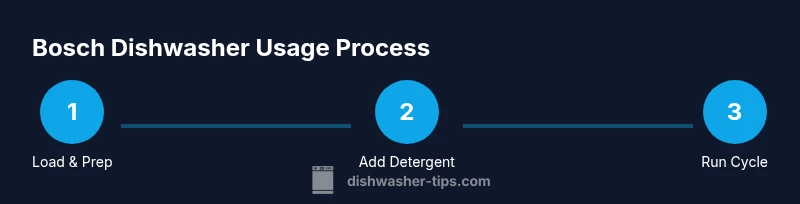
- 1
Prepare and load dishes
Clear large debris and pre-sort items by rack. Place items to allow spray arms to reach all surfaces, and avoid blocking the arms with tall or overlapping items. Load heavy pots facing inward and bowls at an angle for drainage. This setup improves cleaning and prevents food from redepositing.
Tip: Leave space between items so water and detergent can circulate freely. - 2
Add detergent and rinse aid
Place detergent in the designated dispenser or the detergent cup as directed by model. If using pods, place them in the detergent cup unless your model specifies direct pod placement. Add rinse aid according to hard-water needs and model guidance.
Tip: Avoid using extra detergent; Bosch machines are designed to work with standard amounts. - 3
Close door and select cycle
Close the door firmly and choose a cycle based on soil level and load type. Auto is a good all-around choice; Eco saves water and energy for lightly soiled loads. For stubborn residues, select Heavy or Intensive as needed.
Tip: If unsure, start with Auto and adjust on the next cycle. - 4
Set optional features
If available, enable features like Extra Dry for better drying or Half Load for smaller washes. These options tailor performance and can save time and resources when used appropriately.
Tip: Half Load is most effective with balanced loads and not during heavy soil periods. - 5
Start and monitor
Press Start and allow the cycle to run uninterrupted. Do not open the door mid-cycle unless the model indicates a pause is possible. Listen for unusual noises that may indicate a blockage or misloading.
Tip: If something sounds off, pause or cancel and check loading and drainage. - 6
Unload and inspect
After the cycle ends, wait a minute or two for dishes to cool before unloading. Start with the bottom rack to prevent dripping on clean items. Check the filter and spray arms, and wipe the door gasket if residue is present.
Tip: Regularly cleaning the filter prevents clogs and improves performance.
People Also Ask
What is the best Bosch cycle for everyday loads?
For most days, Auto or Eco cycles provide a balanced blend of cleaning and efficiency. Adjust with options based on soil level and load type.
For everyday use, start with Auto or Eco and fine-tune based on how dirty the dishes are.
Can I use any detergent in a Bosch dishwasher?
Use detergents designed for automatic dishwashers. Avoid hand washing liquids, which can create excessive suds and damage the machine.
Only dishwasher detergents should go in the machine, not dish soap.
Why are my dishes still wet after a cycle?
Hard water and insufficient rinse aid often cause poor drying. Ensure rinse aid is set and consider Extra Dry if the model offers it.
If things are still wet, try adding rinse aid or using a higher dry setting.
How often should I clean the dishwasher filter?
Clean the filter regularly, at least once a month, to maintain optimal water flow and cleaning efficiency.
Clean the filter about once a month to keep performance high.
What should I do if the dishwasher isn’t draining?
Check the filter for debris, then inspect the drain hose for kinks or clogs. If unresolved, consult the manual or support.
First check the filter, then inspect the drain hose for kinks.
Is vinegar safe for cleaning Bosch dishwashers?
Many Bosch manuals advise against regular vinegar use inside the dishwasher due to acidity; consult your model’s guidance or use approved cleaners.
Check your manual first—vinegar isn't recommended for every Bosch model.
What to Remember
- Load dishes properly for optimal cleaning
- Choose the right Bosch cycle for each load
- Keep filters and spray arms clean
- Use rinse aid in hard water to improve drying