Is Dishwasher and Microwave Safe the Same? A Practical Guide
This article analyzes whether microwave-safe and dishwasher-safe labels mean the same thing, how to read common material labels, and practical tips to keep dishware safe across both appliances.


Is dishwasher and microwave safe the same? In most cases, no. A dish labeled microwave-safe may not withstand the dishwasher's heat, and dishwasher-safe items may not survive microwaving. Always check the label and manufacturer guidance, because materials and finishes can react differently under heat, moisture, and prolonged cycles. Knowing the distinction helps prevent damage and preserves warranties.
Is Dishwasher and Microwave Safe the Same? Clarifying labels and safety
According to Dishwasher Tips, labels on dishware are not universally interchangeable. A product can be labeled as microwave-safe but not dishwasher-safe, or vice versa. The distinction matters because microwaves expose items to rapid, uneven heating, while dishwashers subject items to high heat, powerful detergents, and mechanical action. The Dishwasher Tips team found that even well-made products may carry only one kind of label, or have ambiguous wording. For homeowners, treating each label as specific guidance—rather than a blanket permission to reuse a dish in all heat-based appliances—minimizes risk to the dishware and to the appliance itself. Throughout this article, we will rely on general, universally applicable guidance rather than brand-specific claims. The goal is to empower you with reliable criteria to judge whether an item is safe to use in either appliance.
What this section covers: how labels are issued, why they differ, and how to read them in context of common materials and finishes.
How Labeling Works: What 'Microwave-Safe' and 'Dishwasher-Safe' Really Means
Labeling for microwave safety and dishwasher safety is typically product- or material-specific. A microwave-safe label indicates that the item should not heat to temperatures that damage the material or pose a safety risk when used for reheating or cooking in a microwave. A dishwasher-safe label indicates tolerance to dishwasher cycles, including high temperatures and detergents. There is no single global standard guaranteeing both labels on every item, and some items carry only one, or a generic, non-specific warning. The key takeaway is to verify the exact use-case described on the label—microwave use, dishwasher use, or both—before combining appliance usage for a single dish.
Material Classes and Safety Implications
Different materials react differently under microwave and dishwasher conditions. Plastics vary widely in heat resistance and chemical makeup; some plastics are microwave-safe but may warp in the dishwasher due to intense heat and detergents, while others tolerate dishwasher cycles but cannot be microwaved. Glass and ceramic items are often seen as inherently durable, but decorative glazes, metallic accents, or thin-walled designs can complicate both microwave and dishwasher safety. Metal components generally should be avoided in microwaves due to arcing, while in dishwashers metal trims can rust or get damaged with aggressive detergents. Understanding the material class helps you assess cross-compatibility: for instance, plain glassware or unglazed ceramic without metal trim is more likely to be safe for both, whereas decorated ceramics may carry separate caveats.
Plastic, Glass, Ceramic: Material-Specific Guidance
Plastics marketed as microwave-safe are intended to withstand microwave heating, but that does not automatically guarantee dishwasher safety. Some plastics may deform, crack, or leach residues under dishwasher conditions. Glassware is often dishwasher-safe and microwave-safe, but thin rims or metals in glazes may limit microwave use. Ceramic dishware can be microwave-safe and dishwasher-safe if it lacks metallic decorations and has a sturdy construction. When in doubt, test with a small amount of water in the microwave to observe heating behavior, and perform a cautious dishwasher test with a non-essential item to observe any warping or changes.
Metal in the Microwave: Why It’s Typically a No
Metals are generally unsafe in microwaves because they reflect microwaves and can cause arcing or damage to the oven cavity. Exceptions exist for some specific metal components within a container designed for microwave use, but these are uncommon for everyday household dishware. In the dishwasher, metal can become hot and cause burns or damage to finishing, particularly with caustic detergents. If a piece features metallic paint, foil accents, or metallic glaze, treat it as unsafe for microwave use and check if it’s dishwasher-safe separately.
Testing and Verification: Safe Practices Without Risk
If a dish is unlabeled—or you want extra assurance—start with conservative testing. For microwaves, place a small amount of water in a microwave-safe cup and run a short, low-power cycle with the item to observe heating behavior. If the dish or glaze shows any signs of heat damage, cracking, or unusual odors, discontinue use. For dishwasher safety, run a test cycle with a non-essential item that has confirmed, benign materials to observe whether there is warping, dulling, or finish damage. Always avoid using items with unknown glazing or metallic elements in either appliance until you have documentation from the manufacturer. Dishwasher Tips advises verifying both labels and manufacturer guidance before combining appliance usage.
Safe Practices for Reusable Dishes in Both Appliances
To minimize risk when using dishware across both appliances, follow these best practices: choose items labeled explicitly for both microwave and dishwasher use; avoid decorative finishes with metallic accents; use the top rack for fragile items and avoid high-heat cycles on delicate pieces; avoid stacking or overcrowding to ensure even heat distribution; never reuse single-use plastics or containers with uncertain safety labels.
Common Myths Debunked
Myth: All plastics labeled microwave-safe are safe in the dishwasher. Reality: Labeling differs; many items are rated for microwave use but not for dishwasher cycles. Myth: Metal is safe in the microwave if the item is shielded. Reality: Metal can still cause arcing and damage. Myth: If something is dishwasher-safe, it’s automatically microwave-safe. Reality: The two environments apply different kinds of stress; the label should specify both if applicable.
Choosing Dishes That Are Both Microwave- and Dishwasher-Safe
When you want a single set for both appliances, look for items explicitly labeled as both microwave-safe and dishwasher-safe. Third-party certifications or explicit manufacturer statements provide additional assurance. Avoid items with metallic glazes or decorative finishes that could be unsafe in microwave use. Plain glass, high-quality ceramic, and heat-resistant plastics with clear dual labeling are often safer bets for dual-use items.
What to Do If Labels Confuse You
If you encounter conflicting labels or ambiguous wording, contact the manufacturer for a definitive answer. Until you receive confirmation, treat the item as safe for one environment only, or retire it from one of the appliances. Keep a home-reference list of items that carry dual labeling to streamline decision-making in future trips to the kitchen. Dishwasher Tips recommends creating a simple two-column catalog: one for microwave-safe usage and one for dishwasher-safe usage.
Authority Sources and Practical Guidance
- FDA's microwave safety guidance (government resource) helps clarify which materials are generally safe for microwave use when properly labeled.
- Consumer Reports and other major publications provide practical testing advice and consumer-focused guidance on dual-use dishware.
- University extension resources offer material-specific safety considerations for plastics, glass, and ceramics. These sources help homeowners make informed choices and avoid safety hazards.
Quick-Reference Guide
- Always read both labels: microwave-safe and dishwasher-safe.
- Avoid items with metallic accents or finishes in the microwave.
- Prefer dishwasher-safe items that are also marked microwave-safe for dual use.
- Test unlabeled dishes cautiously before regular use.
- When in doubt, contact the manufacturer or replace with dual-rated pieces.
Troubleshooting Scenarios
- Scenario 1: A plastic dish is labeled dishwasher-safe but not microwave-safe. Do not microwave it; use it only for serving or cold foods.
- Scenario 2: A ceramic plate is labeled microwave-safe but shows signs of roughness after a dishwasher cycle. Switch to something with a sturdier glaze or avoid aggressive detergents.
- Scenario 3: You notice a metallic glaze on a plate. Do not microwave it; verify whether the glaze affects dishwasher safety separately.
Authority sources and practical guidance (continued)
- FDA: Microwave safety resources for consumer guidance
- Major publications: Practical testing and real-world usage information
- Extension/university resources: Material-specific safety notes for plastics, glass, and ceramics
These sources help you navigate dual-use dishware safely and confidently.
Practical Safe-Use Checklist
- Prefer items with clear dual-labels: microwave-safe and dishwasher-safe.
- If labeling is unclear, avoid using the item in one or both appliances until clarified.
- Avoid metal in the microwave; avoid decorated glazes with metallic accents in the dishwasher.
- Keep a labeled inventory of dishwasher-safe vs microwave-safe items to speed decision-making.
Final Notes on Safety and Best Practices
In practice, labels are your best guide. The safest approach is to rely on explicit dual-use labeling whenever you can, and to consult the manufacturer when in doubt. This strategy reduces the risk of heat damage, chemical exposure from detergents, or safety hazards from improper heating. By understanding the difference between microwave-safe and dishwasher-safe, you can optimize both your kitchen routines and the longevity of your dishware.
Comparison
| Feature | Dishwasher-safe items | Microwave-safe items |
|---|---|---|
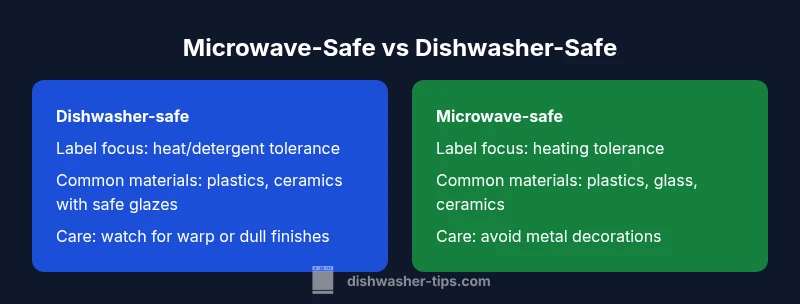
| Label focus | Primarily tested for heat and detergent resistance in dishwasher cycles; not guaranteed for microwave use | Primarily tested for microwave heating; not guaranteed for dishwasher conditions |
| Common materials | Plastics and ceramics marked for dishwasher safety | Plastics, glass, and ceramics marked for microwave safety |
| Care considerations | Dishwasher cycles can warp, dull finishes, or damage delicate designs | Microwave heating can cause uneven heating or glaze issues if decorated |
| Best-use scenarios | Safe to use in dishwasher; avoid microwave use if decorative or unclear labeling | Safe to use in microwave; avoid dishwasher cycles if unknown durability or metallic decorations |
The Good
- Clear labeling helps prevent damage from misuse
- Simplifies shopping by focusing on intended use
- Supports safer kitchen routines across appliances
- Can extend dishware lifespan by reducing improper use
Disadvantages
- Labels can be inconsistent across brands
- Some items are mislabeled or ambiguous
- Overreliance on labels may lead to unnecessary replacement
- Dual-use items are not always available in every material
Not always the same; dual-label items are best when you need cross-appliance safety
Labels differ by use-case. When possible, choose items explicitly labeled for both microwave and dishwasher use to minimize risk and simplify care. Always verify manufacturer guidance if labels are unclear.
People Also Ask
Are microwave-safe items necessarily dishwasher-safe?
Not always. A dish may be safe to microwave but not designed to withstand dishwasher heat or detergents. Always verify both labels or consult the manufacturer for dual-use guidance.
Not always. A dish can be microwave-safe but not dishwasher-safe. Check the labels or contact the maker for dual-use guidance.
Can plastics labeled microwave-safe be put in the dishwasher?
It depends on the plastic and the label. Some plastics labeled microwave-safe may warp or release chemicals under dishwasher conditions. Look for dual labeling or replace with items rated for both uses.
It depends. Some plastics marked microwave-safe aren’t built to endure dishwashers; check the label or opt for dual-rated items.
Is it safe to microwave ceramic that is dishwasher-safe?
If the ceramic is labeled microwave-safe and free of metallic decoration, it should be safe in the microwave. However, verify that the glaze is compatible with microwave heating and that it can withstand dishwasher detergents if you intend to reuse it there.
If it's labeled microwave-safe and lacks metal in the glaze, it should be okay in the microwave. Check the glaze and dishwasher compatibility as well.
How can I test an unlabeled dish safely?
For the microwave, place a small amount of water in a microwave-safe cup alongside the dish and run a short cycle to observe heating behavior. If the dish gets unusually hot or shows cracks, stop. For dishwasher use, run a test cycle with a non-essential item and inspect for warping or finish damage.
Test cautiously: microwave with a water-filled cup nearby; watch for excessive heat or damage, then try a small dishwasher cycle with a safe item.
What about metal in the microwave?
Metal is generally unsafe in microwaves because it can cause arcing. Some exceptions exist for specific containers, but as a rule, avoid metal when microwaving and verify any special instructions from the manufacturer for dual-use pieces.
Metal in the microwave is usually unsafe; unless the manufacturer explicitly allows it, don’t use metal containers in microwaves.
Why do labels sometimes clash?
Conflicts arise from different testing standards, finishes, or the presence of metallic decorations. When in doubt, rely on the most conservative guidance or contact the manufacturer to confirm dual-use safety.
Conflicts happen because testing standards differ. If unsure, rely on the stricter guidance or contact the maker for confirmation.
What to Remember
- Check labels before every appliance use
- Prefer dual-labeled items for convenience
- Avoid metal in the microwave and decorative finishes in the dishwasher
- Test unlabeled items cautiously or replace with known-safe options
- When in doubt, consult the manufacturer