W10861000 Dishwasher Error: Urgent Troubleshooting Guide
Urgent guide to diagnose and fix W10861000 dishwasher error code. Learn immediate steps, likely causes, safe DIY fixes, cost ranges, and when to call a pro—with practical maintenance tips from Dishwasher Tips.


W10861000 signals a drainage or sensor fault that halts a dishwasher cycle. The fastest fixes are a reset and quick checks: clean the drain filter and hose, verify the drain path is clear, and ensure the sink/disposal drain isn’t blocked. If the code persists, review the user manual and consider professional service.
What w10861000 Means in Plain Language
The Dishwasher Tips team notes that w10861000 is a dishwasher error code that appears on the control panel when the machine detects a fault that prevents a cycle from finishing. In most homes, this code points to a drainage issue or a sensor/feedback fault in the wash or pump system. If you see w10861000, act quickly: unplug the unit to prevent shorts, then start with simple checks before moving to complex repairs. According to Dishwasher Tips, the code is a signal that the machine wants you to inspect the path water takes out of the tub and the sensors that monitor flow and pressure. A quick reset sometimes clears transient glitches, but persistent w10861000 indicates a blockage, a failing part, or an alignment problem that needs attention. The goal is to restore proper drainage and reliable sensing so the dishwasher can complete a normal cycle. Homeowners and renters rely on a safe, fast fix to avoid costly service calls; the w10861000 flow is repeatable when the drain system or sensors are affected.
Immediate Actions to Take (Quick Checks)
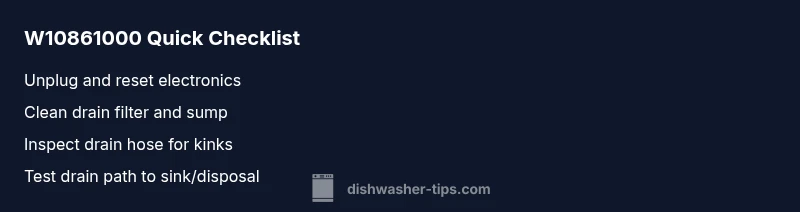
When w10861000 lights up, your first moves should focus on safety and fast triage. Start by unplugging the dishwasher and waiting 60 seconds, then plug back in to reset the electronics. This quick reset can clear temporary faults that trigger the code. Next, inspect the drain filter at the bottom of the tub: remove debris, rinse under running water, and reassemble securely. A clogged filter is a common cause of drainage warnings and can cause the code to reappear. Also examine the drain hose for kinks or obstructions; if the hose is pinched or clogged, water cannot escape and the code may recur. If your sink or disposal is connected to the dishwasher, make sure the disposal is clear and the air gap (if present) is free of blockages. Finally, run a short, empty cycle to test drainage. In many cases, these quick checks resolve the issue without a service call, saving time and money.
Common Causes Behind W10861000
High likelihood: Drainage issues (blocked filter, pump blockage, clogged hose) that prevent water from leaving the tub. Medium likelihood: Kinks or misrouted hoses, air-gap obstruction, or a partially clogged feedback line. Low likelihood: Control board fault or faulty level/sensor components. Dishwasher Tips analysis shows drainage and flow-sensor related triggers are the most frequent drivers of W10861000 in households. Regular wear, mineral buildup, and improper detergents can compound drainage problems, especially in hard-water areas. Understanding these gradients helps you triage quickly and decide when to escalate care.
Diagnostic Steps to Narrow Down the Cause
A structured approach helps you identify the root cause without unnecessary disassembly. Start with a drainage test: run an empty cycle and listen for drainage behavior. If the tub drains normally, the problem may be sensor or hose-related rather than a pump blockage. Inspect the bottom sump area and filter housing for visible debris; remove & rinse any gunk you find. Examine the drain hose for kinks, twist, or crushing, especially if the hose routes under cabinet corners. Check the air gap (if your model uses one) for buildup. If you notice water backing up or slow drainage despite a clear hose, you likely have a drainage path obstruction or a failing pump. Finally, reset the control panel again after any cleaning; a second reset can clear residual fault codes that linger after a drainage fix.
Quick DIY Fixes You Can Try Before Calling a Pro
Start with non-invasive fixes that address the most common causes. Clean the drain filter and sump thoroughly; debris here is the leading cause of W10861000. Straighten and re-seat the drain hose, ensuring there are no kinks and that it’s properly routed to avoid pressure against the filter. If you have an air gap, remove any blockages and reassemble. Reassemble all panels securely after cleaning, then run a short empty cycle to test drainage. If the code reappears, proceed to the more involved checks below and prepare for potential professional service. These steps are cheap and quick but can save a full diagnosis if they resolve the fault.
Other Causes and Their Fixes
If quick fixes fail, consider alternate causes and remedies. A faulty drain pump often requires replacement; this is more likely if you hear unusual grinding or the pump fails to run. A damaged or miswired harness can cause intermittent sensor readings and trigger the code; re-seat connectors and look for damaged insulation. A damaged control board is less common but can manifest as unreliable fault codes; in this case, replacement is usually required. Ensure you have access to model-specific service manuals or online guides to verify wiring diagrams and safe testing procedures. Always unplug the unit before inspecting wiring and avoid forcing components into place.
Safety, Warnings, and When to Call a Professional
Safety first: disconnect power before any inspection or disassembly. Do not touch exposed wiring or metal edges if a leak is present. If you smell burning insulation, hear buzzing, or see visible arcing, stop and call a pro immediately. If you are unsure about diagnosing electrical components or if water remains in the base after a drain test, professional service is the safest option. Costs vary by region and repair scope, but you can expect service calls and parts to range broadly depending on the root cause; plan for a high-quality replacement if a critical component is irreparably damaged. Dishwasher Tips recommends seeking professional help for any suspect control board, power harness, or pump failures.
Prevention and Maintenance to Avoid W10861000 Occurrences
Regular maintenance reduces the likelihood of W10861000 reoccurring. Clean the filter and sump monthly, inspect hoses for kinks or wear, and verify the drain path to the sink or disposal is clear. Use the recommended detergent and avoid overloading the dishwasher, which can force water through the drainage path and push debris into the filter. Keep the area under the unit dry to prevent corrosion of connectors and seals. If you live in a hard-water area, consider mineral buildup prevention steps and occasional descaling as advised by the manufacturer. By building a quick routine, you reduce the odds of recurring drainage faults and preserve performance.
Quick Summary for Action Plan
Remember: reset, inspect, and test drainage first. If the issue persists after quick checks, you likely face a more stubborn drainage problem or a sensor/board fault that requires a professional diagnosis. Keep a log of when W10861000 appears, what you did to fix it, and whether the issue recurs after maintenance. This history helps technicians diagnose faster and can prevent repeated trips.
Final Thoughts: When in Doubt, Don’t Delay Professional Help
If your appliance shows W10861000 and basic resets or cleaning do not resolve it, call a service technician. The cost of a professional diagnosis is often offset by avoiding water damage or incorrect repairs. The Dishwasher Tips team believes a cautious, informed approach—starting with quick checks and escalating to skilled service when necessary—delivers the safest, fastest path back to reliable operation.
Steps
Estimated time: 45-60 minutes
- 1
Power down and Safety Check
Unplug the dishwasher and switch off the circuit breaker for at least 60 seconds to reset the electronics. This basic step can clear transient faults and reset sensor logic that may trigger W10861000.
Tip: Always start with safety; never work on live circuits. - 2
Access and Clean the Drain Filter
Remove the lower access panel or filter assembly; take out the filter and clean it under warm running water. Use a soft brush to dislodge stubborn debris, then rinse and reinstall firmly.
Tip: Inspect the sump for trapped debris that may re-block the filter. - 3
Inspect the Drain Hose and Path
Trace the drain hose from the tub to the sink/disposal. Look for kinks, crushing, or blockages; straighten the hose and clear any material in the line. Reinstall securely.
Tip: If you have aGarbage disposal, run it briefly to ensure outlet is clear. - 4
Test Run After Reassembly
Plug the unit back in and run a short, empty cycle to test drainage. Listen for proper cycling and confirm there is no standing water after the drain phase.
Tip: If the code reappears, stop the test and prepare for professional service. - 5
Escalation if Needed
If drainage still fails or you notice abnormal noises, consider pump inspection or wiring checks as a next step, and schedule a professional diagnosis.
Tip: Keep a record of any changes and the cycle results to share with the technician.
Diagnosis: Dishwasher displays error code W10861000 and stops mid-cycle
Possible Causes
- highClogged/drained filter or pump blockage
- mediumKinked or blocked drain hose
- lowIncorrect hose routing or air-gap blockage
Fixes
- easyClean the drain filter and sump; remove debris
- easyCheck drain hose for kinks and obstructions; straighten or replace
- easyInspect air-gap and hose routing; clear any blockages
- hardReplace the drain pump or repair control wiring if faults persist
People Also Ask
What does W10861000 mean on my dishwasher control panel?
W10861000 indicates a drainage or sensor fault preventing the cycle from finishing. Start with a reset, inspect the drain path, and clean the filter to see if the code clears.
W10861000 points to a drainage or sensor fault. Begin with a reset, then check the drain path and clean the filter to see if the code clears.
What is the first thing I should do when I see W10861000?
Power down, unplug the unit, reset the electronics, and perform quick checks on the filter and drain hose before attempting more invasive repairs.
First, unplug and reset, then check the filter and drain hose before any deeper fixes.
Can I fix W10861000 myself or do I need a pro?
Many W10861000 issues resolve with DIY steps like cleaning the filter and hose. If the code persists after quick fixes, or you suspect electrical or pump faults, a professional diagnosis is advised.
Many fixes can be done at home, but if the code stays after quick checks, call a professional.
Is W10861000 related to water not draining?
Yes, drainage problems are a common cause. Inspect the filter, hose, and pump for blockages and ensure the drain path is clear.
Often, W10861000 is tied to drainage problems like clogs or blocked hoses.
How much does a W10861000 repair typically cost?
Costs vary by fix: a quick DIY clean costs little, while professional service plus parts can range from roughly a few hundred dollars depending on the root cause.
Professional drainage fixes can cost a few hundred dollars depending on what’s needed.
What safety steps should I follow?
Always unplug the unit before any inspection. Do not touch exposed wires or operate with wet hands; wear gloves if handling components.
Unplug first and avoid touching live parts; wear gloves if you handle components.
Watch Video
What to Remember
- Reset and test drainage first.
- Clean the filter and inspect hoses regularly.
- Escalate to pro care for electrical or pump faults.
- Maintain a repair log to aid future diagnostics.