What to Do If Dishwasher Not Cleaning Dishes: A Step-by-Step Guide
If your dishwasher isn’t cleaning dishes, follow this practical troubleshooting guide for quick checks, common causes, and safe fixes to restore cleaning power and prevent future clogs.


Most likely, your dishwasher isn’t cleaning due to clogged spray arms, a dirty filter, or debris in the sump. Quick fixes: remove and rinse the spray arms, clean the filter and sump area, and run a hot-water cycle with a dishwasher cleaner. If performance doesn’t improve, check the water inlet and consider professional inspection.
What to do if dishwasher is not cleaning dishes
According to Dishwasher Tips, the most common culprits behind poor cleaning are restricted spray action, a clogged filter, and mineral buildup in the sump. Start with the simplest fixes to avoid unnecessary disassembly. By addressing these three areas first, you often restore cleaning power without professional help. This section will walk you through practical checks you can perform today, and how to interpret the results to decide if you should escalate.
Quick checks you can perform right now
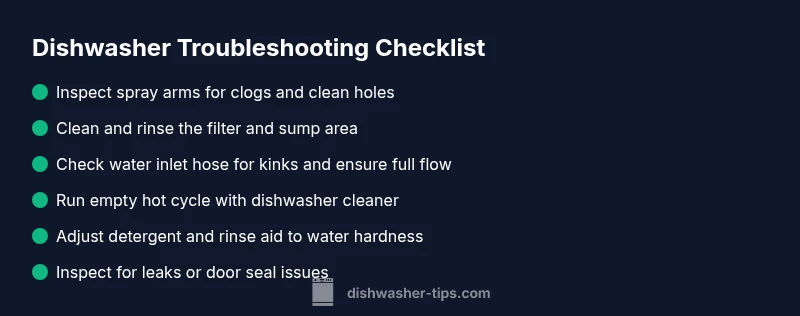
- Inspect the spray arms: remove and spin them to ensure no sudden blockages. Look for hair, food particles, or mineral deposits that reduce spray pressure.
- Clean the filter and sump area: rinse off debris, wipe the interior walls, and ensure water can flow to the pump.
- Check loading and detergent: avoid overcrowding and use the recommended detergent amount. Ensure items are not blocking spray paths.
- Verify water temperature and supply: run hot water at the faucet before starting a cycle to ensure hot water is delivered promptly, and inspect the inlet hose for kinks.
- Test a cleaner cycle: run an empty hot cycle with a dishwasher cleaner or white vinegar to clear residues. If the problem persists, proceed to the next checks.
How detergents and rinse aid impact cleaning
Detergent performance depends on water temperature, nozzle exposure, and proper dosing. Powder detergents can clog filters if not fully dissolved, especially in cold cycles. Rinse aid helps prevent spots and improves sheeting action, which enhances overall cleaning. If you consistently use tablets, ensure they fit your water hardness and dishwasher model. Using the wrong detergent can leave film and reduce cleaning efficiency.
Brand-new soft water or hard water interactions may require a different rinse aid level or a mineral-softening additive. If you’re unsure of water hardness, consider testing strips and adjusting the rinse aid accordingly. Small changes here can translate to a noticeable improvement in how dishes come out clean.
Symptom-based causes and how to identify them
- Dishes come out dirty after a full cycle: start with spray arms and filter; check load arrangement; verify detergent dosing.
- White film or cloudy residue on glassware: increase rinse aid and check for mineral buildup in the dispenser.
- Food particles on utensils: clean the filter and run a maintenance cycle to clear trapped debris near the pump.
- Uneven cleaning between top and bottom racks: spray arms or filters may be blocked, or water pressure isn’t reaching all zones. Inspect both spray arms and filter chamber.
- Standing water at the bottom after a cycle: drain blockage or a clogged filter can impede proper drainage.
If you observe any of these patterns, there is a high chance the issue is mechanical or related to maintenance rather than user error, and you may need to take targeted corrective steps or call a pro.
Maintenance routines to prevent future issues
- Schedule monthly cleanings of spray arms and filters to avoid buildup.
- Run a maintenance cycle with a dishwasher cleaner every 1–3 months to remove mineral deposits and grease.
- Check water hardness and adjust detergent and rinse aid accordingly.
- Inspect door seal and latch for leaks or misalignment, since a poor seal can indirectly affect cleaning efficiency by altering cycle pressure.
- Use the dishwasher’s own cleaning cycle or a vinegar-based cleaner—never mix cleaners unless the manufacturer approves it—to avoid chemical reactions.
When to call a professional
If you’ve performed the above steps and still experience poor cleaning, or if you notice electrical smells, flickering lights, or unusual noises during cycles, contact a licensed technician. Persistent cleaning issues can indicate a faulty pump, motor, or control board that requires specialized diagnostic tools. Also seek professional help if you notice water leaking around the door or base, which could indicate seal or hose problems.
mainTopicQuery":"dishwasher troubleshooting"],
diagnosticFlow
diagnosticFlow: { symptom: "Dishwasher won't clean dishes", causes: [{ cause: "Clogged spray arms", likelihood: "high" }, { cause: "Blocked or dirty filter", likelihood: "high" }, { cause: "Restricted water supply or inlet", likelihood: "medium" }], fixes: [{ fix: "Clean spray arms and filters; remove debris from sump", difficulty: "easy" }, { fix: "Run maintenance cycle with cleaner; check for clogs in sump/pump area", difficulty: "easy" }, { fix: "Inspect water inlet hose and valve; ensure adequate water flow", difficulty: "easy" }] }
Steps
Estimated time: 60-90 minutes
- 1
Prepare for the repair
Shut off power to the unit and turn off the water supply. Unplug the dishwasher if accessible and disassemble only the parts you’ll clean. Gather a bucket, a soft brush, and a damp cloth to collect debris and wipe surfaces.
Tip: Always unplug and turn off the water before inspecting components to prevent shocks or leaks. - 2
Inspect and clean spray arms
Remove spray arms and rinse under warm water. Use a toothpick or small brush to dislodge stubborn clogs in the spray holes. Reinstall securely and spin to ensure full rotation.
Tip: Check for cracks or missing holes; replace if damaged to restore spray pressure. - 3
Clean the filter and sump area
Access the filter and sump area; remove debris, rinse thoroughly, and wipe the chamber. Reassemble and run a short cycle with an empty load to confirm proper drainage.
Tip: A clean sump improves water flow and overall washing performance. - 4
Check the water inlet and supply
Inspect the inlet hose for kinks or blockages. Ensure the water valve opens fully when the dishwasher starts. If you have low water pressure, test with a separate tap to gauge supply.
Tip: Low water pressure is a common cause of weak cleaning performance. - 5
Test with a maintenance cycle
Run a dishwasher cleaner through an empty hot cycle to remove mineral buildup and grease that dulls cleaning power. Follow product directions for best results.
Tip: Avoid mixing products; use a dedicated cleaner designed for dishwashers. - 6
Evaluate load and detergent
Ensure proper loading so water can reach all items. Use the manufacturer-recommended detergent dosage and appropriate rinse aid for your water hardness.
Tip: Overloading or under-dosing can dramatically reduce cleaning outcomes.
Diagnosis: Dishwasher won't clean dishes
Possible Causes
- highClogged spray arms
- highBlocked or dirty filter
- mediumRestricted water supply or inlet
Fixes
- easyClean spray arms and filters; remove debris from sump
- easyRun maintenance cycle with cleaner; check for clogs in sump/pump area
- easyInspect water inlet hose and valve; ensure adequate water flow
People Also Ask
Why are my dishes still dirty after a cycle?
Common causes include a clogged spray arm, a dirty filter, or insufficient water pressure. Start by cleaning the spray arms and filter, then run a maintenance cycle to clear mineral buildup.
If your dishes stay dirty after a cycle, start by cleaning the spray arms and filter, then run a maintenance cycle to clear buildup.
Does detergent type affect cleaning performance?
Yes. Using the wrong detergent or incorrect dosage can leave residue or fail to dissolve properly. Match detergent type to your water hardness and dishwasher model.
Detergent type and the right dosage can change cleaning results; pick a detergent suited to your water and model.
How often should I clean the dishwasher filter?
Clean the filter every 1-2 weeks if you run your dishwasher frequently. A clogged filter reduces water flow and cleaning efficiency.
Clean the filter every couple of weeks if you use the dishwasher often.
Why is water not spraying from the spray arms?
Blocked spray arms or a restricted water inlet can stop sprays. Clean arms, check holes, and verify water supply to restore spray action.
If water isn’t spraying, check the arms and the water inlet to restore spray power.
Can hard water cause poor cleaning?
Hard water can reduce detergent effectiveness and cause mineral buildup. Use a rinse aid and consider a water softener or mineral cleaner if needed.
Hard water can make cleaning harder; add rinse aid and consider mineral helpers if needed.
When should I call a professional?
If basic maintenance doesn’t fix the issue or you hear unusual noises or see leaks, a licensed technician should diagnose electrical or motor problems.
Call a professional if basic steps don’t fix it or you notice noises or leaks.
Watch Video
What to Remember
- Start with easy checks to quickly improve cleaning
- Clean filters and spray arms regularly to prevent buildup
- Verify water inlet and detergent usage for best results
- Call a professional for electrical or major mechanical issues