When to Open a Dishwasher After Cycle: Safe Timing Guide
Learn when it's safe to open your dishwasher after a cycle, why steam matters, and a clear unloading routine for safer, drier dishes.


Wait until the cycle ends and steam subsides before opening the dishwasher. For safety, wear heat-resistant gloves, stand back, and open the door gradually to vent heat. This quick answer helps homeowners and renters unload safely, protect hands, and avoid splashing hot water onto nearby surfaces. If you notice unusual noise or leaks, pause and consult your manual.
Why Timing Matters for Safety and Performance
Knowing when to open dishwasher after cycle is more than a habit; it's a safety and performance choice. The moment you reach for the door, you are interacting with hot steam, residual heat, and a stream of water that may still oscillate inside the tub. Getting the timing right protects you from burns and prevents soggy or water-logged dishes. Beyond personal safety, the unloading timing also influences how well dishes dry when you finish the cycle and whether you reduce condensation on nearby countertops. According to Dishwasher Tips, a disciplined unloading routine helps homeowners and renters keep their kitchens safer and cleaner. This is especially important in households with children or elderly relatives who may be more sensitive to heat exposure. By understanding the factors that determine the correct moment to act, you minimize the risk of accidents and improve overall kitchen efficiency. In addition, a consistent approach reduces the likelihood of water spots on glassware and helps you assess whether the chosen cycle settings are meeting your expectations. The goal is a safe, calm, and predictable unloading experience after every cycle.
Steam and Temperature: What Happens When You Open Early
Dishwashers generate a lot of steam during and after a cycle. Opening the door while the interior is still hot can cause scalding and steam burns, particularly if you lean over the tub. Steam carries heat that can scorch skin and melt adhesives on cabinet faces if it condenses on them. The interior temperature can remain high for several minutes depending on the model and cycle type. In addition to safety, early opening may disrupt the drying process, causing dishes to cool unevenly and create water droplets on plastics and glassware. The interaction between heat, steam, and moisture also affects the door seal and the tub's plastic components over time. The Dishwasher Tips team notes that letting steam dissipate before unloading helps protect you and preserve the dishwasher's components. If your kitchen layout places the dishwasher under a countertop, plan a small clearance to allow air to circulate and prevent heat buildup behind cabinet panels.
Signs It's Safe to Open: Visual and Tactual Cues
To judge when to open, rely on both visual cues and touch. When you see that steam is thinning to a few wisps and there is no visible surge of vapor at the door edge, you are safer. The inner walls may feel warm to the back of your hand but should not burn your skin. Listen for the absence of loud hiss or gurgling sounds that indicate active steam pressure. A small pause of a minute or two after the cycle ends is often enough for many models, but high-heat cycles or heavy loads may require longer cooling. If your dishwasher shows a cooling indicator light or a silent end signal, use that as a cue to approach with caution. Remember to keep pets and children away from the doorway during this time. The more patience you exercise, the more consistent your unloading experience will become.
How Cycle Type Changes Opening Timing
Different cycle types influence how soon you can open safely. Quick wash or eco cycles generate less residual heat than heavy-duty or sanitize cycles, so you may be able to open sooner on a light load. However, heavy cycles leave more moisture and heat inside the tub, sometimes requiring a longer waiting period. High-temperature washes can keep interior surfaces hot for several minutes after the cycle ends, which increases the risk of burns if opened too soon. In addition, models with steam sensors can vary in their reporting of end time and cooling requirements. When in doubt, treat the end signal as a cue that the dishwasher is done but not necessarily cool. If you frequently run large pots or cookware, consider a longer cooldown window or use a lower-heat setting to reduce residual heat.
Quick Safety Checklist Before Opening
Before you reach for the door, perform a quick safety check: ensure you have a clear, dry path to place hot dishes, wear heat-resistant gloves, and stand to the side to avoid direct steam. Position towels or a drying rack within reach. If you notice any pooling water in the bottom of the tub or unusual smells, avoid opening and consult the manual or service support. Align the kitchen timer to track a short cooldown window after the end signal and use it to decide when to start unloading. Assess whether you are alone or near children or pets and ensure they are kept away from the area. Finally, count to five after the end signal before turning your attention to the door; a brief pause helps you and others stay safe.
Tips for Drying and Avoiding Water Spills
Drying quality often depends on how soon you unload after steam dissipates. To minimize water spots, you can run a quick wipe-down with a microfiber cloth after unloading. If plastics are still damp, you may shake them gently or place them on the rack with air circulation to finish drying. For glassware, avoid stacking too closely as trapped moisture can lead to water spots. Use a heated-drying option if your model supports it, or let dishes air-dry with the door ajar for a few minutes. A slightly cracked, worn door seal can cause excess moisture to escape; if you notice persistent dampness, inspect the gasket and replace if necessary. A consistent approach helps you keep surfaces dry and minimizes the chance of accidental slips from wet floors.
How to Unload Safely: Step-by-Step Mindset
The unloading moment is a continuation of the safety process. Start by opening only after the steam has faded and the interior is comfortably warm, not hot. Remove the upper rack first to minimize contact with hot water dripping from the top row. Place hot items on a stable, heat-resistant surface away from the edge of the counter. Then proceed to the lower rack, paying attention to sharp utensils stored in the cutlery basket. If you keep plastic containers upside down to dry, ensure they are properly oriented to prevent water pooling. This section reframes unloading as a safe, calm routine rather than a rushed task.
Maintenance Tips to Improve Drying and Safety
Regular maintenance improves the reliability of the cooldown period and drying. Clean the door seal monthly to prevent moisture buildup that can extend cooling times. Check spray arms for clogs and ensure the filters are clean, as a clogged filter increases cycle time and heat retention. Replace worn seals to prevent moisture from escaping and reduce the risk of steam infiltration into cabinets. Use the recommended detergent and rinse aid in the correct amounts to optimize drying performance and minimize residue on dishes. Keep the dishwasher's exterior clean and dry to reduce the chance of slipping hazards when approaching the unit. By integrating routine maintenance into your kitchen schedule, you can trust that the end of cycle is nearing and unloading is safer.
Common Pitfalls and How to Avoid Them
Common mistakes include opening too early, peeking under the door during steaming, or ignoring the end signal. Another pitfall is rushing to unload while the interior is still hot, which risks burns and scalds. A third pitfall is overloading or misplacing dishes, which can trap moisture and prevent thorough drying. Finally, neglecting to consult the manual for model-specific safety guidance can cause confusion and unsafe assumptions. The best approach is to adopt a plan: wait for the steam to quiet, test the door with a gloved hand, and unload sequentially from the top rack downward. By avoiding these pitfalls, you reduce accidents and improve overall unloading efficiency.
Quick Recap: Your Safe Unloading Routine
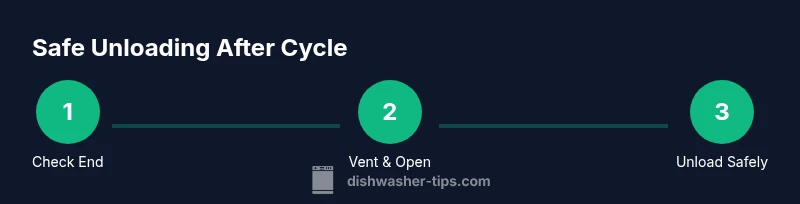
The final block serves as a recap of the essential points. Begin by confirming that the cycle is complete and that steam has decreased. Use heat-resistant gloves and slowly vent the door to release remaining heat before you begin unloading. Start with the upper rack, then lower, and place items on a drying rack or towel. Wipe any moisture from the interior after unloading and re-close the door. With a consistent routine, you minimize risk, protect hands, and maximize drying efficiency for your dishes and kitchen surfaces. Remember to consult your model's manual for any model-specific guidance.
Tools & Materials
- Heat-resistant oven mitts(At least 300°C/572°F resistance if possible)
- Drying surface or dish rack(Clear area near dishwasher to place hot items)
- Microfiber towel or cloth(For drying and wiping moisture after unloading)
- Kitchen timer or smart device(Helps track wait times and unloading schedule)
Steps
Estimated time: 12-20 minutes
- 1
Check cycle status and prepare unloading area
After a cycle ends, verify that the machine has fully completed its final rinse and that the door latch has engaged. Clear a safe unloading zone and arrange towels or a rack nearby. This reduces fumbles when handling hot dishes.
Tip: Have your mitts ready and keep your forearm parallel to the door to avoid steam streams. - 2
Assess steam and heat levels before opening
Observe the door edge for visible steam; if you still see heavy vapor, pause. Touch the exterior of the door cautiously with the back of your hand from a safe distance to gauge heat without risking a burn. If it feels very hot, wait a bit longer and recheck.
Tip: Never lean directly over the door; approach from the side to avoid direct steam exposure. - 3
Position yourself and prepare to vent
Stand to the side of the door rather than directly in front of it. Keep hands away from the door seam and have a clear space to place hot items. Begin to tilt the door slightly to start venting before fully opening.
Tip: Use a towel or mitts to shield your forearms as you begin to vent. - 4
Open the door gradually to vent heat
Open the door a few inches to allow steam to escape safely, then widen the gap gradually. Stop if you hear a loud hiss or feel intense heat. Once the steam has largely subsided, you can proceed with unloading.
Tip: Keep the door angled away from your body to direct steam outward. - 5
Inspect the interior for water and safety hazards
Look for pools of water in the bottom to avoid splashing. Check the door seal for moisture buildup and inspect for any obvious leaks. Ensure there are no foreign objects near the spray arms that could hamper drainage.
Tip: If you notice unusual smells or leaks, pause unloading and consult the manual. - 6
Unload the upper rack first
Begin with the top rack to minimize the chance of hot water dripping onto your hands or lower items. Place hot dishes on the drying rack or a heat-resistant surface away from the edge. Keep heavier items on a stable spot to prevent tipping.
Tip: Gloves help protect against drips from tall glasses or lids. - 7
Proceed to the lower rack and finish unloading
Move to the lower rack after the upper rack is cleared. Arrange items to maximize air circulation and allow remaining moisture to evaporate. Reserve sharp utensils for a secure, separate area to prevent cuts.
Tip: Don't stack items too tightly; space allows for quicker drying. - 8
Close the door and wipe surfaces
Once unloading is complete, gently close the door and wipe any residual moisture from the tub, door, and countertops. This minimizes water spots and keeps the kitchen safe from slipping hazards. Store the drying towels in a dry area for next use.
Tip: A quick wipe reduces streaks on glassware and helps keep your counters dry.
People Also Ask
Is it safe to open the dishwasher while it is still running a rinse cycle?
No. Opening during a cycle can expose you to hot steam and water spray. Wait for the cycle to finish and steam to subside before opening.
It's not safe to open during a rinse; wait until the cycle ends and the steam dies down.
How long should I wait after a cycle ends before unloading?
Many dishwashers drop in temperature and steam levels within a few minutes after the cycle ends. Waiting 1-3 minutes improves safety, but follow your model's guidance.
Usually wait a minute or two for steam to ease, then unload.
Can opening early affect drying results?
Opening too early can release steam that condenses on dishes, reducing drying efficiency. If you want dry dishes, wait slightly longer or use a heated dry option if available.
Yes, opening too soon can hinder drying performance.
What should I do if I still feel heat when opening the door?
If you still feel significant heat, pause, let more steam escape, and reposition yourself before continuing unloading.
Pause and allow more cooling time before proceeding.
Are there model-specific tips I should follow?
Always check your dishwasher’s manual for model-specific safety guidance on opening after cycle. Some models have steam sensors or indicators.
Check your manual for specifics on your model.
Does unloading order matter for safety?
Unload from the top rack first to minimize drips and reduce the chance of handling hot items.
Unload top rack first to control heat and drips.
Watch Video
What to Remember
- Wait for steam to subside before opening.
- Open the door slowly to vent heat safely.
- Unload top rack first to control drips.
- Wear heat-resistant gloves for protection.
- Consult your model's manual for specific guidance.