Why Cups Come Out Dirty from the Dishwasher: Troubleshooting Guide
Urgent guide to fix cups coming out dirty. Diagnose detergent residue, hard water, spray-arm clogs, and more with a proven troubleshooting flow for spotless glassware.


Most cups come out dirty because of detergent residue, hard water minerals, or clogged spray arms. Start by inspecting the spray arms and filter, then run a hot cleaning cycle with a dishwasher-safe cleaner and use rinse aid. If the issue persists, verify water temperature and consider a descaler or professional service.
Why cups come out dirty: the quick reality check
If you’re wondering why do cups come out of dishwasher dirty, the answer is almost always avoidable residue, mineral deposits, or misfires in the cleaning system. According to Dishwasher Tips, most cups end up dirty because the dishwasher isn’t effectively removing soils from glassware on the wash stage. In practice, the root causes usually fall into three buckets: detergent residue or film, hard water minerals that cling to the surfaces, and mechanical issues in the spray system that fail to rinse away grime. Identifying which cause is at fault requires a quick interior audit of the machine’s cleanliness, the cleaning products used, and the quality of water feeding the appliance. This section guides a fast diagnostic so you can restore spotless cups on the next cycle.
Common culprits: detergent residue, hard water, and spray-arm clogs
Detergent residue can leave a film on cups that makes them look dirty even after a cycle. Hard water leaves mineral spots and cloudy films on glassware, especially with frequent use of standard detergents. Clogged or misaligned spray arms can fail to spray water effectively, leaving surfaces inadequately rinsed. A dirty filter or blocked sump compounds the problem by recirculating soils during the wash. Start by a quick check of these components: spray arms, filter, and interior walls. If you notice powdery residue or mineral crust, address it before trying more advanced fixes. Regular maintenance and proper product selection are key to preventing repeat issues.
Start with the basics: clean filters, inspect arms, test cycles
Begin by removing and cleaning the filter and sump screen, then inspect each spray arm for loose connections or blocked holes. If you see obstructions, clear them with a soft brush or pin, and reassemble carefully. Run a short test cycle with no dishes to verify water is reaching all areas. Pay attention to patterns: if cups are dirty only on the bottom rack, the lower spray arm may be blocked; if the top shelves show residue, the upper arm or rinse may be at fault. This baseline check often resolves most everyday cup dirt problems.
Detergent usage and rinse aid: right product, right amount
The wrong detergent or an overly foamy cycle can leave films on cups. Ensure you’re using a detergent compatible with your water hardness and washing conditions. Consider integrating rinse aid into every cycle; it helps sheet water off surfaces and reduces streaks. Also review loading: overcrowding prevents proper spray action and rinsing. Keep cups angled to allow water to drain and avoid blocking spray arms. Small adjustments in product type, dosage, and rack loading can dramatically improve results.
Hard water and mineral buildup: address with descaling and proper detergent
If your tap water is hard, mineral buildup is a frequent culprit behind dirty cups. Over time, calcium and magnesium can form crusts on glassware and on the dishwasher’s interior if not managed. Use a descaler recommended for household dishwashers and follow the product directions. You can also explore a water softening solution if mineral content remains high. Regular descaling reduces the need for frequent manual cleaning and helps maintain the dishwasher’s performance.
Advanced checks: drain issues, spray-arm replacement, water temperature
Beyond the basics, inspect the drain hose for kinks or clogs that can cause poor rinsing and soil recirculation. If spray arms are damaged or worn, replace them to restore proper water distribution. Verify the dishwasher is reaching a hot wash temperature by running a diagnostic test or using a thermometer in a separate test rinse. Inconsistent temperatures can leave soils attached to cups, particularly with tougher residues like dried-on detergent or dairy films. If you’re unsure about parts or temperatures, consult a professional.
Create a simple maintenance routine: weekly checks
Commit to a short routine that keeps cups clean over time. Weekly, remove and clean the filter and spray arms, wipe down the door seal, and run a cleaning cycle with a dishwasher-safe cleaner. Monthly, inspect hard-to-see interior corners for mineral buildup and descale if needed. Regularly replace worn seals and ensure the drain hose is clear. A proactive approach reduces the odds of dirty cups and extends the life of the appliance.
Quick reference fixes for common scenarios
If cups are dirty after every cycle: clean spray arms and filter, then run a hot cleaner cycle and add rinse aid. If you see mineral films or spots: descale and consider water softening after confirming hard water. If only the top rack is dirty: check the upper spray arm and loading pattern. If the issue persists across cycles: test water temperature, use a quality detergent suited to your water, and consider a pro inspection if the problem recurs after routine maintenance.
Steps
Estimated time: 30-60 minutes
- 1
Inspect spray arms for blockages
Remove spray arms and check for debris in the holes. Clear any obstructions gently and reattach securely.
Tip: Use a thin tool to reach inside and rotate arms to ensure smooth movement. - 2
Clean the filter and sump
Take out the filter, rinse thoroughly, and wipe the sump area to remove gunk that can recirculate soils.
Tip: Do this before other checks to avoid recontaminating cleaned dishes. - 3
Check for loading and rack clearance
Ensure cups are not blocking spray arms and that dishes are placed to allow water flow.
Tip: Leave space between items and point cups downward. - 4
Run a hot cleaner cycle
Select a dishwasher-safe cleaner and run a full cleaning cycle with an empty dishwasher.
Tip: Do not mix cleaners with other cycles or add dishes during this step. - 5
Add rinse aid and test a short cycle
Fill rinse aid dispenser and run a shorter cycle to observe improved sheeting and rinsing.
Tip: Adjust rinse aid dosage if you notice streaking or film. - 6
Assess water hardness and descaling needs
If mineral buildup recurs, test for water hardness and apply a descaler as recommended for your model.
Tip: Consider a water softener if hardness is consistently high. - 7
Evaluate temperature and cycle selection
Ensure the wash water heats sufficiently for a proper rinse; use appropriate cycle for loads.
Tip: Avoid heavy-soil cycles for lightly soiled glassware. - 8
Consult a professional if needed
If dirty cups persist after all checks, a service technician can inspect hoses, seals, or the electronic controls.
Tip: Document recent cycles and maintenance to help the tech diagnose faster.
Diagnosis: Cups come out dirty after a cycle
Possible Causes
- highDetergent residue or film left on glassware
- mediumHard water minerals forming deposits on cups
- highClogged or misaligned spray arms / blocked filter
- lowInadequate water temperature or improper cycle selection
Fixes
- easyClean the filter and inspect the spray arms for clogs
- easyRun a hot cleaning cycle with a dishwasher-safe cleaner and add rinse aid
- mediumDescribe and descale hard water buildup if present
- easyVerify water temperature and cycle settings, and avoid overloading
- mediumReplace spray arms or seals if worn or damaged
People Also Ask
Why are my cups still dirty after a cycle?
Common culprits include detergent residue, hard water minerals, and clogged spray arms. Start with a filter clean, spray-arm check, and a hot cleaner cycle.
Cups still dirty after a cycle? Check for detergent film, mineral buildup, and clogged spray arms, then clean and re-run a hot cycle.
What should I check first when cups come out dirty?
Begin with the filter and spray arms. Make sure dishes aren’t blocking water flow and run a cleaner cycle to reset the system.
First check the filter and spray arms, then run a cleaner cycle.
Can hard water be the culprit?
Yes. Hard water leaves mineral films on glassware. Descaling and/or a water softening solution can help reduce recurrent buildup.
Hard water can cause mineral film on cups; descaling or softening can help.
Is rinse aid essential for clean cups?
Rinse aid improves sheeting and drying, reducing spots and film. Use it consistently, especially in hard water areas.
Rinse aid helps prevent spots and film; use it regularly.
When should I call a professional?
If cycles run but interior remains dirty or you suspect a mechanical issue, a repair technician should inspect hoses, seals, and electronics.
If the issue persists after checks, a professional can diagnose mechanical problems.
Is vinegar safe for dishwasher maintenance?
Vinegar can be helpful occasionally, but frequent use may damage seals. Use only recommended cleaners and follow manufacturer guidelines.
Vinegar can help sometimes, but avoid frequent use and follow manufacturer directions.
How often should I descale my dishwasher?
Descale based on mineral buildup and water hardness. Regular checks reduce dirty cups and extend dishwasher life.
Descale as buildup appears; regular checks prevent issues.
Watch Video
What to Remember
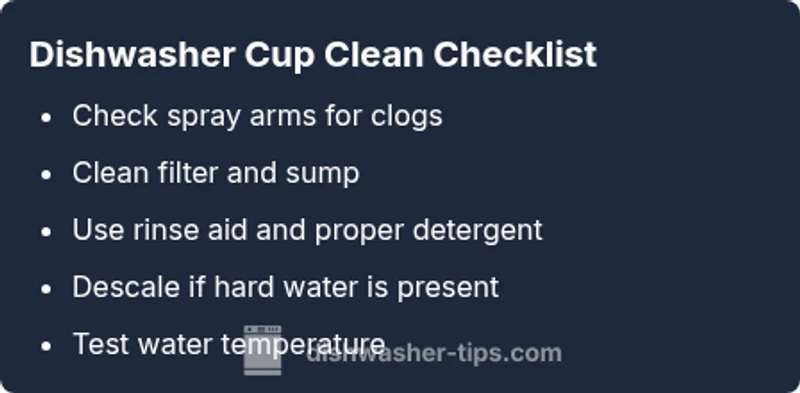
- Inspect filters and spray arms first
- Use rinse aid to improve rinse performance
- Descale when mineral buildup is present
- Verify water temperature and loading patterns