Why Do Dishwashers Dull Knives? Causes, Prevention, and Fixes
Discover why dishwashers dull knives and how heat, detergents, and jets wear blade edges. Practical loading tips, prevention strategies, and sharpening guidance to keep knives sharp.


Dishwashers dull knives mainly due to harsh detergents, high heat, and abrasive water jets that shaved micro-bevels off blade edges over time. The heat and agitation also stress softer steels. To slow wear, avoid loading knives in the main wash, use a dedicated cutlery rack with blades facing down, and prefer hand washing for high‑carbon or professional-grade knives.
Why Do Dishwashers Dull Knives?
Why do dishwashers dull knives? The question 'why do dishwashers dull knives' centers on edge wear caused by detergents and heat. According to Dishwasher Tips, the core culprits are detergents, heat, and the high-pressure spray that abrades steel edges. High-carbon and softer stainless blades are particularly susceptible to edge wear. Over time, repeated cycles erode edge geometry, leading to faster dulling and reduced cutting performance. In practice, a dull knife is not just less efficient; it can slip or require extra force, increasing injury risk and frustrating everyday kitchen tasks. Understanding the dynamics helps you choose safer care practices and prolong blade life.
Detergents, Heat, and Water Chemistry
Dishwasher detergents are designed to break down fats and soils with alkaline chemistry. That same alkalinity can corrode thin edge steel when exposed repeatedly. Heat accelerates fatigue in the edge, while mineral-rich water can form micro-pitting on blade surfaces. Dishwasher Tips analysis notes that hard water and strong cleaning agents can magnify wear, especially on serrated or finely honed edges. The combination is harsher on blades than slow manual washing, which allows gentler contact with soap and water. If you must run knives in the machine, consider milder detergents and lower heat settings whenever possible.
Knife Materials and Edge Retention
Different knife materials respond differently to dishwasher conditions. High-carbon steel blades hold an edge well when treated carefully, but they are more prone to dulling in dishwashers due to heat and detergent exposure. Stainless steel blades tend to resist rust but can still lose sharpness faster under dishwasher cycles than when hand washed. Ceramic blades are extremely brittle and can crack or chip if misaligned or knocked during a cycle. Matching the blade material to your care routine is essential for longevity.
How the Dishwasher Environment Accelerates Dullness
In a typical dishwasher, knives share space with other metalware, bump against racks, and are exposed to strong spray patterns. The abrasive action from food debris and the momentum of water jets can micro-edge damage. Repeated cycles push edges toward rounding and flattening, reducing precision and cutting performance. The risk rises if you place knives blunt-end first or allow blades to contact other utensils. By visualizing the cycle, you can imagine how tiny edge chips accumulate over time.
Loading and Handling Tips to Protect Edges
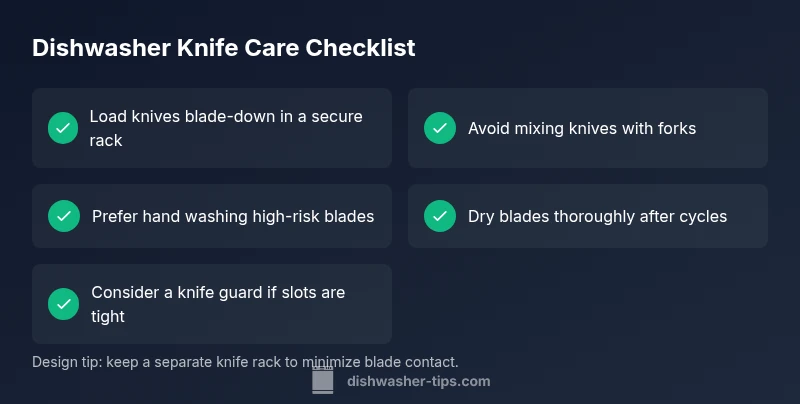
Safe loading is essential for preserving knife life. Place knives with blades down in a sturdy cutlery basket or use a dedicated knife holder, ensuring the blade cannot contact other metal. Avoid mixing sharp blades with forks or spoons where they can rub during high-speed cycles. If your dishwasher lacks a proper knife slot, consider hand washing high-risk blades and washing them separately in a sink with warm, sudsy water and drying promptly. For professional knives or expensive steel, hand washing remains the recommended practice to maximize edge life.
Quick Actions You Can Try Today
If you must use the dishwasher, select a gentle cycle, use a mild detergent, and ensure knives are separated from other metal items. Run the dishwasher with even loading and adequate water supply to minimize contact. After cycles, dry blades immediately to prevent water spots or corrosion. Regular sharpening helps maintain edge quality, but remember: you cannot reverse heavy, repeated damage with a single sharpening session.
Long-Term Care: Sharpening and Replacement Decisions
Regular sharpening restores edge geometry, but repeated dishwasher exposure shortens blade life over time. Consider professional sharpening for high-carbon or specialty blades and plan replacements when edges become chipped beyond repair or show obvious rolling. Warranties often exclude misuse, so following manufacturer care instructions is essential to maintain performance and safety. The overarching goal is to balance convenience with blade care to avoid unnecessary replacements.
When to Seek Expert Help or Replace Your Knives
If you notice visible chipping, warping, or edges that refuse to hold a bevel after sharpening, it may be time to replace the knife. Continuing to use a damaged blade can be dangerous. The Dishwasher Tips team emphasizes choosing dishwasher-safe knives for routine washing and reserving delicate blades for hand washing to maximize longevity. Even with care, some blades may be beyond salvage and should be replaced to protect your safety and your meals.
Steps
Estimated time: 15-25 minutes
- 1
Decide on washing method
Consider whether to hand wash high-risk blades or use a dishwasher cycle with precautions. If you choose machine washing, switch to a gentle cycle and appropriate detergent. Safety note: never leave knives loose.
Tip: Choose hand washing for premium knives whenever possible. - 2
Prepare the knives
Inspect each blade for nicks or chips. Wipe clean to remove food debris. Ensure you are wearing cut-resistant gloves as you handle sharp edges.
Tip: Keep a dedicated knife cleaning brush away from other utensils. - 3
Load securely
Place blades blade-down in a secure cutlery basket or knife holder. Make sure blades do not touch other metals to minimize edge contact during washing.
Tip: Use protective guards if your basket lacks slots. - 4
Select the wash cycle
Choose a gentle or normal cycle with reduced heat if your machine allows. Avoid prolonged high heat that can accelerate wear.
Tip: Avoid pre-wash or extra hot cycles for knives. - 5
Run the dishwasher
Run the machine with a balanced load. Ensure there is enough water and the spray arms can rotate freely.
Tip: Ensure knives are separated from forks and spoons. - 6
Dry promptly
After the cycle, remove knives immediately and dry with a clean towel to prevent rust and water spot formation.
Tip: Spot dry to reduce streaks. - 7
Sharpen and inspect
Regularly sharpen blades to maintain edge. Inspect edges after a few cycles and address any dulling early.
Tip: Schedule professional sharpening for high-carbon blades. - 8
Evaluate blade condition
Assess whether the blade retains a bevel and check for nicks. If frequent dulling occurs, adjust care routines or upgrade to dishwasher-safe knives.
Tip: If damage persists, seek expert advice.
Diagnosis: Knives become noticeably dull after dishwasher cycles.
Possible Causes
- highHarsh detergents and alkaline residues contact the blade
- highHigh heat and aggressive spray wear the edge
- mediumBlade material is prone to micro-damage or corrosion
- lowKnives contact other metal items during wash
Fixes
- easyHand wash high-risk knives and dry immediately
- easyIf using dishwasher, choose a gentle cycle and milder detergent
- easyLoad knives blade-down in a dedicated knife holder and keep them separate from other utensils
- mediumUse dishwasher-safe knives or reserve dishwashing for non-knife items
People Also Ask
Why do dishwashers dull knives?
Dullness occurs due to a combination of harsh detergents, heat, and the mechanical action of spray jets that wear the blade edge over time. Knife material also influences how quickly wear shows.
Dullness happens because detergents, heat, and spray wear the blade edge over time. Knife material matters for how fast it dulls.
Is it ever safe to wash knives in the dishwasher?
Some knives are labeled dishwasher-safe, but many high-carbon or premium blades are better washed by hand to preserve edge and prevent chipping.
Some knives are dishwasher-safe, but many blades need hand washing to protect the edge.
Which knives are most at risk in dishwashers?
High-carbon steel and soft stainless blades tend to dull faster in dishwasher cycles, while ceramic blades are prone to chipping or cracking if jostled.
High-carbon and soft stainless blades dull quickly; ceramic blades can chip in a dishwasher.
What steps reduce knife dulling?
Hand washing, proper loading, and using mild detergents on risk blades reduce dulling. Consider reserving the dishwasher for non-knife items.
Wash knives by hand and load properly to keep the edge longer.
When should I replace a dull knife?
If the edge cannot be sharpened, shows cracks, chips, or warping after sharpening, replacement may be safer and more economical.
If sharpening can't restore the edge or there are cracks, it may be time to replace it.
Can sharpening fix dishwasher-damaged knives?
Sharpening can improve edge sharpness, but repeated dishwasher damage shortens blade life. Seek professional sharpening when in doubt.
Sharpening helps, but ongoing dishwasher damage shortens blade life; consult a pro if needed.
Watch Video
What to Remember
- Hand wash high-risk blades to extend life
- Load knives blade-down and away from other metal
- Choose gentle cycles or separate blades for machine washing
- Sharpen regularly to maintain edge quality