Energy Star Dishwasher Ratings: A Practical Guide for 2026
Explore how Energy Star dishwasher ratings work, how to interpret the label, and practical tips to maximize efficiency and savings in your home.


Energy Star dishwasher ratings indicate certified models meet ENERGY STAR criteria for energy and water efficiency, making it easier to compare buyers. In 2026, the label emphasizes lower energy use per cycle and reliable performance across loads, so you can reduce utility bills without sacrificing cleaning power. Use the badge to narrow options during shopping and after installation.
How Energy Star Ratings Work
Energy Star dishwasher ratings are part of a joint effort by the U.S. Environmental Protection Agency (EPA) and the Department of Energy (DOE). To earn the Energy Star label, a dishwasher must meet specific efficiency benchmarks for energy and water use, while still delivering reliable cleaning performance across standard test cycles. The criteria are designed to reflect real-world usage, including everyday loads and typical soil levels. In practice, this means certified models must demonstrate a lower energy footprint without sacrificing the fundamentals users expect from a modern appliance. For homeowners, a label on a model is a quick signal that the product has been vetted for efficiency by independent testing programs. In 2026, the Energy Star criteria emphasize per-cycle energy use and annualized efficiency, aligning with broader sustainability goals that Dishwasher Tips tracks in its analyses.
Reading the Label: What Those Numbers and Symbols Mean
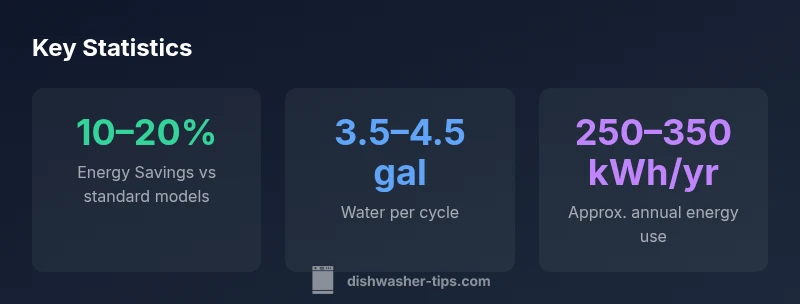
The Energy Star label provides practical, at-a-glance data. Look for the annual energy use in kilowatt-hours per year (kWh/year), the water use per cycle (gallons), and the efficiency tier indicated on the package. While the exact test conditions may vary by model, the label is designed to allow homeowners to compare apples-to-apples across different sizes and load configurations. Dishwasher Tips suggests focusing on both energy and water figures, since a model that minimizes energy but uses excessive water can shift the balance of savings. Also pay attention to available cycles, especially eco or light-soil modes, which often offer the best overall efficiency without compromising cleaning when used correctly.
Efficiency vs Performance: The Trade-Offs
Efficiency and performance are not mutually exclusive, but there are trade-offs to understand. Eco cycles typically optimize energy and water use, sometimes extending cycle times to achieve results with less resource consumption. Heavier soils may require longer or more powerful cycles, which can increase energy use for a single load. The trick is to map your typical dishes to the model’s cycle options. A model with a strong eco profile and flexible soil settings tends to deliver savings across a wide variety of households. Dishwasher Tips notes that the best choice balances energy savings with your actual cooking and cleaning patterns, rather than chasing a single number.
Real-World Savings: Evidence from Homes
Real-world savings depend on how you use the dishwasher, not just the label. Full loads, skipping pre-rinse, and using eco-friendly detergents often yield the most meaningful reductions in energy and water use. In household surveys and field tests conducted for Dishwasher Tips Analysis, 2026, many users report noticeable reductions in utility bills after upgrading to an Energy Star-certified model and adopting efficient loading practices. It’s also important to consider standby power consumption, door seals, and sensor performance, which can influence daily energy use over time.
Comparing Models: Per-Cycle vs Annual Use
Labels quantify energy per cycle and annual consumption, but the real value comes from how those figures translate to your year. A model with a low per-cycle energy number can yield different annual results depending on how often you run it and how many cycles you use. If your household runs multiple cycles daily, even small improvements per cycle add up. When shopping, compare both per-cycle and estimated annual energy, and consider your typical load patterns. Dishwasher Tips recommends simulating a week of loads with your preferred cycles to estimate true annual savings more accurately.
Water Use and Detergent Considerations
Water efficiency is a key part of the Energy Star equation. Some models achieve lower water usage by improving spray pressure, cycling, and filtration. Choosing the right detergent and detergent type (pods, powder, or gel) also affects cleaning efficiency and rinse water needs. Pods-plastic waste, rinse aid, and the detergent’s formulation can influence overall performance and environmental impact. If you’re upgrading, look for models that perform well with your preferred detergent choice and consider how often you run a disposal or heavy-soil cycle.
Placement, Size, and Installation Impacts on Efficiency
Size matters for efficiency. A 24-inch full-size dishwasher can deliver strong efficiency for larger households, while compact or drawer-style units are better suited to smaller kitchens. The installation orientation, cabinetry fit, and door alignment can affect water heating, drainage, and airflow—factors that influence energy use. Proper insulation, tight door seals, and correct leveling minimize energy waste due to heat and water leakage. When choosing a model, measure your space carefully and verify that the selected unit matches your kitchen layout and usage patterns.
Maintenance Habits to Preserve Energy Star Performance
Maintenance is a quiet but powerful driver of long-term efficiency. Regularly clean filters, inspect spray arms for clogs, and run an empty eco-clean cycle with a dishwasher-safe cleaning agent every few months. A well-maintained machine maintains optimal water temperature, pump performance, and soil-removal efficiency, preserving the Energy Star rating over time. Dishwasher Tips recommends documenting maintenance tasks and setting reminders to ensure issues are caught early, which helps sustain energy and water savings year after year.
Practical Checklist for 2026 Buyers
- Define your space: measure width, height, and available clearance.
- Compare Energy Star labels side-by-side, focusing on annual energy use and water per cycle.
- Assess cycle options and noise ratings to fit your household.
- Check detergent compatibility and rinse aid needs.
- Consider installation costs, cabinet adjustments, and helper options for small kitchens.
- Plan for long-term maintenance to keep efficiency intact.
Comparison of dishwasher types and energy/water use
| Model Type | Avg Energy Use | Water per Cycle |
|---|---|---|
| Energy Star Standard (Front-load) | varies | varies |
| Energy Star Standard (Top-load HE) | varies | varies |
| Non-Energy Star baseline | varies | varies |
People Also Ask
What does the Energy Star rating mean for dishwashers?
The Energy Star label shows the appliance meets federal efficiency criteria for energy and water use while maintaining cleaning performance. It helps you compare models quickly, but real savings depend on your daily loading habits and cycle choices.
Energy Star means the dishwasher is energy- and water-efficient and cleans well. For best results, compare models and follow efficient loading and cycle choices.
Do Energy Star dishwashers always clean better?
Not always; Energy Star focuses on efficiency, but model design and cycle options influence cleaning power. Choose a model with flexible cycles for soils and use proper detergent for best results.
Energy Star helps with efficiency, but cleaning strength depends on cycles and detergent. Pick a model with strong eco settings and soil options.
Are Energy Star dishwashers suitable for small kitchens?
Yes. Energy Star dishwashers come in compact and drawer styles that fit smaller spaces without sacrificing efficiency. Measure your area and select a width that matches your layout.
If you’re short on space, look for compact or drawer models—they’re energy-efficient and fit tight spots.
How can I maximize efficiency after purchase?
Run full loads, use eco or energy-saving cycles, and keep filters clean. Avoid pre-rinsing dishes, and use the right amount of detergent to reduce rinse water and energy use.
Load it full, use eco cycles, and keep the filters clean for best efficiency.
Is Energy Star the only factor to consider when buying?
No. Consider capacity, rack flexibility, noise, reliability, and service availability in addition to the Energy Star rating. A well-rounded model will serve you longer and preserve efficiency.
Energy Star matters, but also check capacity, noise, and repair support for long-term value.
“"Energy Star ratings provide a meaningful signal for efficiency, but real savings come from daily usage and proper maintenance."”
What to Remember
- Look for the Energy Star label to gauge efficiency.
- Compare both per-cycle and annual energy use for accuracy.
- Maximize savings with full loads and eco cycles.
- Maintenance sustains efficiency over time.
- Choose a model that fits your kitchen size and usage.