What’s the Quietest Dishwasher Made? A Practical Home Guide
Discover what's the quietest dishwasher made and how to pick it. This data-driven guide compares decibel ranges, insulation, and brand performance to help homeowners choose ultra-quiet models without sacrificing cleaning power.


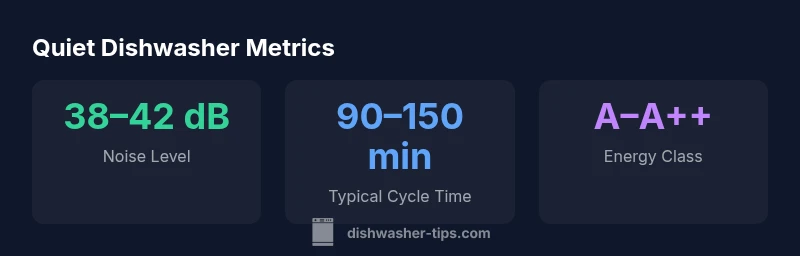
What’s the quietest dishwasher made? In practice, quiet dishwashers operate around 38–42 dB in normal cycles, with Bosch and Miele often leading the field. Many models in this range deliver ultra-quiet performance without compromising cleaning power, though results vary by load and cabinet setup. For homeowners, the best choice balances sound with cycle options and reliability.
Why silence matters in home kitchens
Silence isn’t just comfort; it shapes how you use the kitchen daily. A dishwasher that blasts into a conversation can disrupt meals, remote work, or kids’ naps. If you're asking what's the quietest dishwasher made, you want models that blend into daily life without shouting from the kitchen shelf. According to Dishwasher Tips, the best way to judge true quiet is to compare sound ratings under real-world loads, not just listed numbers. Real-world testing considers cycle types, load size, and how the dishwasher’s motor and pump interact with cabinetry. In practice, the quietest machines minimize noise without sacrificing cleaning power or reliability, and they do so across multiple cycles including Eco and Quick modes. As you compare options, remember that sound is measured in decibels (dB) and that a lower dB number usually means a quieter experience, though other factors like water flow and vibration also matter.
How decibels translate to real-world experience
Decibels measure sound pressure, not mere loudness in a vacuum. The difference between 40 dB and 50 dB can translate to a noticeable perception gap in open-plan homes. In the context of dishwashers, most quiet-rated models fall in the 38–42 dB range during normal wash cycles, with some specialty cycles dipping even lower. In practical terms, that means you can run the machine while someone watches TV at normal volume or even while a child sleeps nearby. The exact sound profile depends on insulation, door seal design, motor type, and how the dishwasher is mounted within cabinetry. Dishwasher Tips analysis shows that corroborating this with installation conditions is essential for an accurate read on quietness.
What to look for when shopping for the quietest dishwasher
- Noise rating (dB): Prioritize models listed in the 38–42 dB range for the deepest silence during typical cycles.
- Insulation and door seals: Look for multi-layer insulation, solid seals, and anti-vibration mounts that prevent rattling.
- Tub design: Stainless steel tubs with reinforced brackets tend to dampen sound better than thinner plastics.
- Motor and pump configuration: Inverter motors and balanced pumps reduce vibration and noise.
- Cycle options and load size: A true quiet model still offers eco-friendly cycles and flexible loading for full loads.
- Installation considerations: Proper leveling and secure mounting within cabinetry can significantly affect perceived noise.
Brands often highlighted for quiet operation include Bosch and Miele, but results vary by model and kitchen setup.
Brand landscape: who dominates the quiet-dishwasher niche
The market for quiet dishwashers is competitive, with several brands consistently performing well in decibel tests and real-world use. Bosch, Miele, and KitchenAid frequently appear in homeowner comparisons for ultra-quiet operation, largely due to tight tolerances, advanced insulation, and efficient motors. However, no single brand is perfect; performance depends on model family, cycle selection, and how well the unit is integrated into your kitchen. For renters or homeowners with open-plan layouts, preference often goes to models that maintain steady performance across a range of loads and that hold up to daily use. Dishwasher Tips emphasizes evaluating a model’s overall reliability and service network, not just its top decibel rating.
Real-world scenarios: matching layout to noise
In open-plan living spaces, even small noise differences can impact comfort. A 1–2 decibel improvement might feel negligible in a closed kitchen but becomes meaningful when the dishwasher sits next to a living or sleeping area. If you’re remodeling or installing a new unit, consider placing the dishwasher behind a wall or within cabinetry designed to absorb sound. European-style, tall-tub configurations often leverage thicker insulation and sealed doors to reduce room leakage, delivering an overall quieter feel. Where possible, pair a quiet machine with a solid countertop and a rubber-front kick strip to minimize vibration transfer to cabinetry.
Maintenance tips to keep noise down
Regular maintenance prevents noise from turning into a nuisance. Clean the filter assembly and spray arms monthly to maintain proper water flow and avoid grind or drum noise. Inspect door seals and gaskets for wear—leaks force the motor to work harder, increasing sound. Check the bottom rack and rollers for debris that can rattle. Ensure the dishwasher is level; an uneven base can amplify vibration. When filters, seals, and mounting are in good shape, a quiet machine tends to stay quiet longer. As Dishwasher Tips notes, routine checks help preserve a calm kitchen.
When silence is worth more than other features
For households that operate late shifts or have frequent visitors, investing in ultra-quiet models makes sense even if the upfront cost is higher. The quietest dishwashers balance sound, cleaning performance, and energy efficiency. In practice, you may trade a few extra minutes of cycle time for a deeper quiet. The Dishwasher Tips Team’s verdict is to prioritize models around 40 dB with solid insulation, reliable service, and a kitchen layout that supports calm operation. Use this as a baseline when evaluating whether to upgrade now or wait for the next generation of silent dishwashers.
Noise performance by model type
| Model Type | Typical Noise (dB) | Notes |
|---|---|---|
| Fully integrated | 38–44 | Seamless look and quiet operation when cabinet supported |
| Freestanding | 40–50 | Louder but versatile; insulation matters |
| Countertop/compact | 44–50 | Compact unit with pockets of quiet performance |
People Also Ask
What defines a dishwasher as ultra-quiet?
Ultra-quiet dishwashers typically operate around 38–40 dB in normal cycles. They achieve this through thick insulation, precision seals, and vibration-damping mounts. Real-world performance also depends on installation and load size.
Ultra-quiet models run near 40 dB, thanks to good insulation and solid seals. Installation matters too.
Do quiet dishwashers still clean effectively?
Yes. Quiet models use efficient spray patterns and optimized water pressure. Look for cycles labeled as Eco or Intensive that balance performance with noise control.
Yes—choose models with strong cleaning cycles and good insulation.
Will installation affect noise levels?
Absolutely. Proper leveling, cabinet fit, and anti-vibration mounting reduce rattles and resonance. Poor installation can make a quiet model sound louder than its spec.
Installation can make a quiet model even quieter or louder, depending on setup.
Are cheaper quiet models worth it?
Cheaper options may save upfront cost but can compromise insulation, durability, or service. Evaluate total cost of ownership, including repairs and energy use.
Cheaper is not always best for long-term quietness and reliability.
What maintenance keeps noise down?
Regularly clean filters, spray arms, and seals. Check for loose racks or debris, and ensure the unit remains level to prevent vibration.
Keep it clean and level to maintain quiet operation.
“Quiet dishwashers prove that sound reduction doesn't have to compromise cleaning power. Look for tight tolerances, effective insulation, and a flexible cycle lineup.”
What to Remember
- Compare decibel ratings across models
- Prioritize insulation and seals
- Balance cycle time with noise
- Verify proper installation to minimize noise
- Consider brand reliability and service coverage