Which Dishwasher to Choose: A Data-Driven Comparison for 2026
This data-driven guide helps homeowners and renters decide which dishwasher to choose by weighing capacity, energy efficiency, noise, price, and reliability for real-world results.


Choosing the right dishwasher hinges on your priorities: capacity, efficiency, and quiet operation. In most homes, a full-size ENERGY STAR model with flexible racks delivers the best balance of cleaning performance and long-term savings. If upfront cost is the main constraint, a mid-range unit often offers solid reliability and reasonable running costs.
Context: Which Dishwasher to Choose in 2026
Choosing a dishwasher is more than picking a color or bell-and-whistle feature; it’s a decision about daily routine, water use, and long-term maintenance. The question which dishwasher to choose is shaped by your kitchen constraints, family size, and cooking habits. The Dishwasher Tips team emphasizes that there is no one-size-fits-all answer, but there is a clear decision framework you can apply. In 2026, the most practical approach is to compare models across three axes: capacity and fit, efficiency and cost of ownership, and performance versus reliability. This article uses a data-informed perspective to break down options and present a clear path to a durable, dependable appliance. According to Dishwasher Tips, and based on Dishwasher Tips analysis, energy efficiency and flexible loading configurations consistently predict better long-term value. The goal is to help homeowners and renters avoid buyer's remorse and choose a model that suits real-world usage.
Key decision factors for buyers
When you decide which dishwasher to choose, you should assess several core factors that influence long-term satisfaction:
- Capacity and rack configuration: Look for adjustable tines, a fold-down shelf, and ideally a third rack for cutlery or utensils. Larger families benefit from 12+ place-setting capacity; smaller households can prioritize compact footprints with flexible loading.
- Energy efficiency: ENERGY STAR certification is a strong signal of efficiency. Over a typical ownership period, efficient models reduce water and electricity use and often come with better wash programs and sensors.
- Reliability and serviceability: A solid warranty, easy access to parts, and a broad service network reduce downtime and repair costs. Consider brand reputation and the availability of replacement parts in your region.
Size and fit: Standard vs compact vs slimline
The size of your space drives the decision as much as performance:
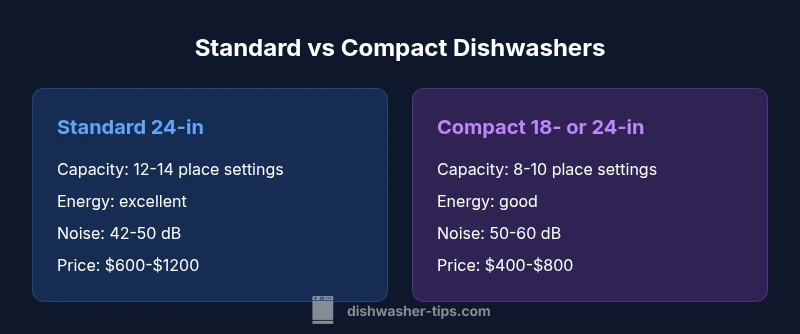
- Standard 24-inch full-size dishwashers fit most kitchens and offer the best balance of capacity and features. They typically accommodate a full load and a variety of rack configurations, which makes daily dish cleanup faster.
- Compact 18- or 24-inch models are ideal for apartments or rooms with narrow gaps. They save space but have reduced capacity, so you’ll run smaller loads more often.
- Slimline dishwashers, often 24-inch with space-saving features, sit in between and can be a good compromise when space is tight but capacity remains a priority. When selecting, measure door clearance, counter depth, and plumbing clearances to avoid installation surprises.
Energy efficiency and running costs
Energy efficiency is more than a badge; it translates into real savings. Modern dishwashers with high efficiency use less water and electricity per cycle and often include sensor-driven wash programs that adjust water use to soil load. Consider long-term costs, not just sticker price:
- Compare annual operating costs based on typical usage in your home.
- Look for cycle options that allow you to run smaller loads without compromising cleaning quality.
- Factor in potential rebates or incentives for ENERGY STAR models in your region. A higher upfront cost can be offset by lower monthly utility bills over several years, especially if you run the dishwasher daily.
Cleaning performance and features to look for
Performance is the core reason to upgrade. Zonal spray technology, soil sensors, and robust filtration contribute to cleaner dishes with less pre-rinsing. Features worth prioritizing include:
- Third rack: ideal for utensils, lids, and small utensils, increasing usable capacity without expanding the footprint.
- Adjustable spray arms and rack heights: accommodate odd-shaped cookware and tall glasses.
- Soil sensors and auto wash programs: optimize water temperature and duration for different loads.
- Self-cleaning filter and accessible maintenance points: reduce maintenance effort and improve longevity.
Reliability, warranty, and serviceability
Reliability matters as much as initial performance. Look for a reputable brand with a solid warranty and broad service coverage. Keys to consider:
- Length and scope of warranty (units, parts, and labor).
- Availability of replacement parts and local service centers.
- Consumer feedback on common failure points and repair turnaround times.
- Documentation and ease of user-supported maintenance, such as filter cleaning and rinse-aid use.
Choosing a model with predictable maintenance and accessible service is often the difference between years of trouble-free operation and recurring visits to the repair shop.
Noise, installation, and maintenance considerations
Noise level affects daily comfort, especially in open-plan homes. Many models advertise decibel (dB) ranges; lower is quieter, but value depends on your tolerance and usage pattern. Installation considerations:
- Check cabinet dimensions, door clearance, and plumbing routing.
- Ensure your floor can support the dishwasher’s weight when loaded.
- Confirm proper venting or drainage and ensure water supply lines are secure to prevent leaks.
Maintenance matters too: clean the filter monthly, run a dishwasher cleaning tablet every few months, and use a rinse aid if your water is hard. Regular care pays dividends in performance and longevity.
Price ranges and total cost of ownership
Price bands vary by size, features, and brand. For a useful rule of thumb:
- Compact or small-footprint models: typically fall in the $400–$800 range, offering essential features for small households.
- Standard full-size models: typically fall in the $600–$1200 range, with upgrades in efficiency and rack versatility.
- Premium or smart-capable models: typically fall in the $1200–$2200 range, with enhanced sensors, quiet operation, and specialty wash programs.
Total cost of ownership includes water and energy use, maintenance, and potential repairs. Energy-efficient models often save more over time, especially in households with frequent dishwashing.
The purchase checklist: 30-point quick guide
To avoid second-guessing your choice, use a ready-made checklist before you buy. Start with space and fit checks, then compare energy labels, cycle options, and warranties. Confirm installation requirements, including electrical supply, water line connections, and drainage compatibility. Finally, review the perceived reliability from consumer feedback and consider the availability of service in your area.
This checklist helps you objectively assess each candidate against your living situation and expected usage patterns.
Installation tips and long-term care
Proper installation is essential to maximize performance and minimize leaks. Prepare by measuring the cabinet opening, checking plumbing compatibility, and ensuring a level floor. After installation, run a test cycle with an empty load to observe for leaks and noise. For long-term care:
- Clean the filter monthly and inspect spray arms for clogs.
- Use recommended detergents and rinse aid according to water hardness.
- Schedule regular maintenance checks if your model has a self-cleaning filter or advanced sensors.
Routine care minimizes energy use and preserves cleaning performance over time.
Special cases: renters, small kitchens, and remodelers
Renters and small-kitchen dwellers often need portable or slimline options that can be moved or temporarily installed. For remodelers, consider built-in options with customizable panels to match cabinetry. In all cases, verify:
- The availability of service in your area and the ease of acquiring replacement parts.
- The compatibility with existing plumbing and electrical connections.
- The ability to upgrade features later (like adding a third rack or RFID-enabled efficiency improvements).
Selecting models designed for easy installation and serviceability reduces friction in the long run.
Comparison
| Feature | Standard 24-inch Full-Size | Compact 18- or 24-inch Compact |
|---|---|---|
| Capacity | 12-14 place settings | 8-10 place settings |
| Energy Efficiency | excellent | good |
| Noise Level | ~42-50 dB (quiet) | ~50-60 dB (typical) |
| Price Range | $600-1200 | $400-800 |
| Best For | Families needing more capacity | Small households with space constraints |
The Good
- Higher capacity and versatile loading for families
- Energy-efficient designs lower running costs
- Broad range of features in mid-to-high tiers
- Strong service networks and parts availability
Disadvantages
- Higher upfront cost for premium models
- Compact models have limited capacity
- Some advanced features may have steeper learning curves
- Long-term maintenance depends on selected brand and model
For most households, choose a standard-size ENERGY STAR dishwasher with flexible loading; renters or tight spaces should prefer a reliable compact option.
A full-size, efficient model offers the best balance of capacity and operating costs for most families. If space is your primary constraint, a well-chosen compact unit remains a solid alternative with manageable trade-offs.
People Also Ask
What is the difference between standard-size and compact dishwashers?
Standard-size dishwashers offer higher capacity and more loading configurations, ideal for families. Compact models save space and are better for small kitchens or apartments but handle smaller loads and fewer dishes per cycle. Your choice depends on space, household size, and how often you run full loads.
Standard-size dishwashers have more capacity, while compact models save space but hold fewer dishes per cycle.
Is ENERGY STAR certification worth it?
Yes. ENERGY STAR indicates higher efficiency, which typically lowers water and electricity use and reduces operating costs over time. Even if the upfront price is higher, savings can add up over several years.
ENERGY STAR models save water and energy over time, often justifying higher upfront costs.
Do higher-end dishwashers clean better?
Higher-end models usually offer more wash programs, better sensors, and improved soil handling. However, many mid-range models deliver excellent cleaning for the majority of loads, especially when paired with proper loading and pre-rinsing habits.
Higher-end dishwashers often have more programs, but mid-range models can still clean very well.
What should I look for in a dishwasher rack?
Look for adjustable tines, a fold-down shelf, and optional third rack for utensils. These features increase capacity and flexibility, helping you load different dish sizes without compromising performance.
Choose adjustable racks and a third rack when possible for best loading flexibility.
Are smart dishwashers worth the extra cost?
Smart features are convenient and can improve scheduling and diagnostics, but they add cost. If you value remote monitoring or voice control, they can be worth it; otherwise, a reliable traditional model often suffices.
Smart features are nice-to-have; you’ll pay more, but you gain convenience and diagnostics.
How long do dishwashers typically last?
Most dishwashers last about 9–12 years with proper maintenance. Some higher-end models may endure longer, especially with regular descaling and filter cleaning.
Typical lifespans are around 9 to 12 years with good upkeep.
What to Remember
- Prioritize energy efficiency and load flexibility
- Measure space before shopping and compare rack configurations
- Balance upfront cost with long-term operating expenses
- Check warranty and service availability in your area
- Test fit and listen for quiet operation during demonstrations