Are Built-In Dishwashers the Same Size? A Practical Guide
Discover whether built-in dishwashers share the same size. Learn about standard widths, heights, and depths, plus measurement tips to ensure a perfect cabinet fit.


Are built-in dishwashers the same size? Not at all. Sizes vary by width, height, and depth. Most homes use a 24-inch wide unit, but compact 18-inch models exist for tighter kitchens, and some installations use 23.5-inch depths to fit cabinetry. Always verify your cabinet opening and clearance, and compare specs across brands. This is a common planning issue in 2026, and the Dishwasher Tips team recommends starting with official measurements rather than eyeballing space.
Are Built-In Dishwashers the Same Size?
Are all built in dishwashers the same size? In practice, no—size variation is the norm in modern kitchens. The broad category includes several widths (the most common is 24 inches), heights, and depths that respond to different cabinet footprints and plumbing layouts. While a standard 24-inch unit fits most pre-fab cabinetry, there are 18-inch compact models for narrow spaces and some specialty units with 23.5-inch or slightly deeper fits to align with custom panels. In practice, the interplay between cabinet depth, toe-kick clearance, door swing, and front-panel thickness dictates whether a given model can be installed without modifications. The Dishwasher Tips team emphasizes measuring the actual opening and reviewing the cutout diagram from the manufacturer before you buy. This upfront check can save you time, money, and installation headaches later in 2026.
For homeowners and renters alike, size decisions affect not only fit but also capacity and loading flexibility. A 24-inch unit typically offers more interior capacity than an 18-inch model, but if your kitchen layout has a shallow cabinet depth or a tight doorway, a compact unit may be the only viable option. In all cases, always compare the manufacturer’s published cutout dimensions with your cabinet drawings. Small variances in door hinge placement or insulation can tip a model from a perfect fit to a cramped install.
Standard vs. Compact: Width Matters
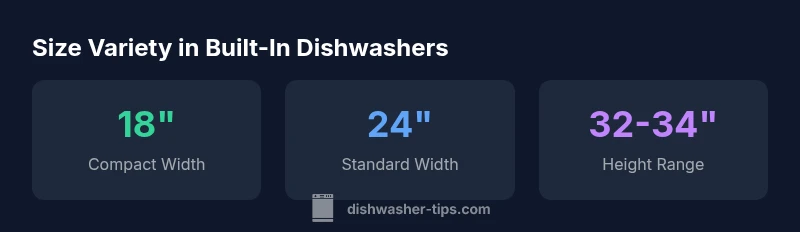
Width is the first and most obvious dimension buyers confront. The standard width across most built-in dishwashers is 24 inches, designed to slide into a conventional 24-inch cabinet cavity. However, many kitchens use 18-inch compact models to accommodate narrow spaces, second dishwashers, or an extra bank of cabinetry where a full-width unit would crowd the aisle. Some brands offer slightly narrower or wider options (such as 23.5 inches) to align with nonstandard cabinet openings. When evaluating models, map your opening width with a tape measure, then check the exact cutout width in the product specs. Remember to factor in any door panel thickness if you’re panel-ready, as that can effectively widen the required space.
Heights and Depths: Getting Under the Counter
Beyond width, height and depth determine whether a dishwasher clears the cabinet framing and toe-kick. Built-in units typically target standard under-counter height, around 32-34 inches, to align with most kitchen counters and sink basins. Depths commonly range from 24 to 25 inches, but some installations require deeper or shallower footprints to fit bespoke cabinetry. These variations influence panel alignment, ventilation space, and plumbing routes. If a unit sits too high or too recessed, you may notice mismatched drawer fronts or truncated toe-kick space. In short, height and depth should be verified alongside width before committing to a purchase.
How to Measure Your Opening Like a Pro
Measuring for a built-in dishwasher is straightforward but must be precise. Start with the width: measure across the neatest cabinet opening, from inside edge to inside edge, at the top and bottom, and note the smallest measurement. Then measure the height: from the finished floor to the underside of the countertop, and account for any toe-kick clearance. Finally, measure the depth: from the front face of the cabinet to the back wall, including any kick space. Don’t forget to check clearance for door swing, plumbing hoses, and electrical connections. Always compare these measurements with the appliance’s official cutout dimensions and add a small tolerance (typically 1/4 inch on each side) to ensure easy installation.
Specialty Sizes and Panel-Ready Options
For kitchens with custom panels or tight layouts, non-standard sizes and panel-ready designs can be tempting. Some builders install 23.5-inch-deep or 18-inch-wide units to maximize cabinet versatility, while drawer-style or integrated models may require special mounting kits and wider clearance. Panel-ready doors add thickness, which can push you into slightly non-standard widths or depths. If you’re replacing an existing unit, confirm whether your current panels will adapt to a new model and whether you’ll need a deeper or shallower cavity. In many cases, a panel-ready option provides a seamless, high-end look but adds measurement nuance.
Practical Scenarios by Kitchen Type
In small apartments or galley kitchens, space constraints often necessitate non-standard sizes. In homes with walkways between counters, a compact 18-inch model might preserve cabinet access and dishloading comfort, while a 24-inch unit remains the best balance of capacity and footprint for mid-sized kitchens. Island layouts or peninsula setups may benefit from drawer- or panel-ready configurations that align with adjacent cabinetry. The key takeaway is to plan for both the appliance and the cabinet modifications, if any, before purchasing. The goal is a clean, flush installation that doesn’t compromise usability or aesthetics.
Resources and Brand Guidance
Consult official product pages and your cabinetry builder's specifications when sizing a built-in dishwasher. Look for published cutout dimensions, door clearance, and panel thickness guidelines. In addition to model specs, seek installation kits that support non-standard widths or depths. Based on Dishwasher Tips Analysis, 2026, meticulous measurement and validation of spec sheets reduce post-purchase surprises and additional labor costs. For reference, the industry standardization around 24-inch widths remains common, but real-world kitchens increasingly require flexibility and careful planning.
Data and Measurements You Can Use Today
To help you plan, use a simple sizing checklist: measure width in multiple places, confirm the smallest opening; check the countertop overhang for potential clearance issues; verify the cabinet depth and toe-kick allowances; and compare to the exact cutout dimensions in the product’s installation guide. Always leave a small tolerance for installation adjustments and consider professional help if you encounter non-standard dimensions or unusual plumbing layouts. Remember, even a small mismatch can derail an otherwise perfect installation.
Typical built-in dishwasher size ranges
| Dimension | Typical Range (inches) | Notes |
|---|---|---|
| Width | 18-24 | Compact to standard |
| Height | 32-34 | Under-counter fit |
| Depth | 24-25 | Cabinet depth alignment |
People Also Ask
Do all built-in dishwashers come in the same width?
No. The most common width is 24 inches, but 18-inch compact models exist; some brands offer 23.5-inch variants to fit nonstandard openings. Always verify actual cutouts.
Widths vary. Look for 18 and 24 inch options and verify exact cutouts.
Can a standard 24-inch dishwasher fit a 23.5-inch opening?
Often not without modifications. A 23.5-inch opening is typically slightly smaller than a 24-inch unit, so you may need cabinet tweaks or a model with a shallower depth.
A 23.5-inch opening is tight; exact specs matter.
Are there built‑in dishwashers taller or shorter than standard height?
Yes. While standard under-counter height is usually around 32-34 inches, some models offer adjustable feet or different panel heights to align with specific countertops.
Yes, height varies; check model specs.
What should I measure to ensure a good fit?
Measure width across the cabinet opening, height from floor to countertop, and depth from the cabinet front to the back. Compare with the model’s cutout dimensions and add a small clearance tolerance.
Measure width, height, depth, and clearance.
What about non-standard sizes like 18-inch or drawer-style built-ins?
Non-standard sizes exist to fit tight kitchens or integrated designs. They require exact cabinet compatibility and may limit capacity or features.
There are smaller and drawer styles, but check fit.
How can I verify the size before buying?
Review official specs, measure your space, and ask sellers for exact cutout dimensions. Prefer models with flexible install kits and confirm panel thickness compatibility.
Always confirm specs and cutouts before buying.
“Size compatibility drives installation success; always check width, height, and depth specs before buying.”
What to Remember
- Measure your opening before shopping.
- Expect multiple size options beyond 24 inches.
- Panel-front and cabinetry can affect fit.
- Always verify height and depth allowances.