Dishwasher Price Guide 2026: Costs, Deals & Trends
Dishwasher price in 2026 explained: price ranges by model, features, installation costs, and ownership savings. Learn how to compare quotes and spot deals with Dishwasher Tips.


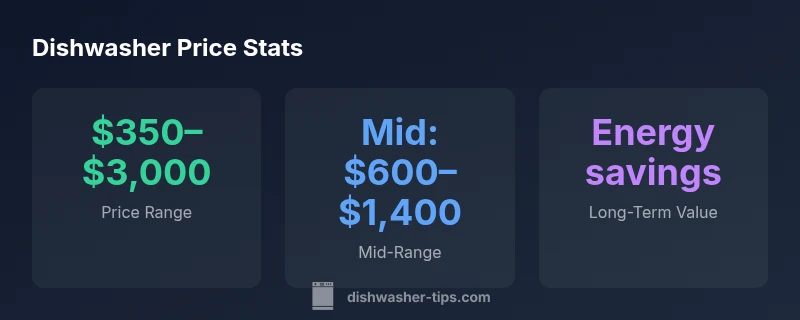
Dishwasher prices vary widely, typically ranging from about $350 to $3,000, influenced by model type, capacity, energy efficiency, and installation needs. Budget models offer basic cleaning with fewer features, while mid-range units add versatility and quieter operation. Premium dishwashers include advanced sensors, extensive wash cycles, and integrated controls, which push costs higher but can save long-term energy and water use.
Understanding the dishwasher price landscape
Dishwasher price is more than the sticker at checkout. In 2026, buyers face a spectrum that reflects size, features, efficiency, and the complexity of installation. According to Dishwasher Tips, the price bracket you encounter when shopping is heavily influenced by model type (compact, standard, or drawer-style), capacity, and whether the unit includes premium finishes or smart features. This introduction emphasizes that the initial price is only part of the story; total ownership costs, including installation, energy use, and maintenance, determine the real value. By naming key drivers upfront, homeowners can prioritize what matters most—quiet operation, durability, or energy savings—without overpaying for bells and whistles they won’t use.
Price ranges by model type
Budget/Entry-level dishwashers typically sit in the lower end of the price spectrum. Mid-range models offer better noise performance, more flexible racks, and additional wash programs. Premium units push toward higher price points with features like stainless steel tubs, advanced sensors, Wi‑Fi connectivity, and ultra-quiet operation. The exact price depends on brand, size, and whether installation is included. If you’re balancing upfront cost against long-term operating costs, you’ll find that mid-range models often deliver the best value for many households. Remember that price alone doesn’t determine value; efficiency and reliability matter for years of service.
Features and options that drive price
The main price levers are capacity, tub material, energy efficiency, and control sophistication. Stainless steel tubs and heavy-duty motor systems typically cost more but tend to last longer and resist staining. ENERGY STAR certified models often command a premium, yet offer meaningful energy and water savings over the appliance’s life. Wash programs (heavy, quick, half-load), advanced soil sensors, and adjustable racks contribute to price as well. Smart features—remote start, app diagnostics, and maintenance alerts—can add a noticeable premium but may reduce costs by preventing delays and appliance wear.
Installation and delivery costs
Delivery and installation can significantly affect the overall price, especially if you’re replacing an older unit and require venting, new supply lines, or electrical work. In some cases, old appliance removal is included, while in others it’s a separate fee. Local labor rates and accessibility of your kitchen can push installation costs higher. Some retailers offer bundled packages that include haul-away, basic hookup, and basic removal of the old dishwasher, which can reduce surprises on the final bill. Always request an itemized estimate that separates product price, delivery, and installation.
Hidden costs and ownership considerations
Beyond the sticker price, consider disposal fees, upgrade costs for plumbing or electrical work, and the price of compatible detergents and rinse aids. Water usage and energy consumption vary by model and usage patterns; high-efficiency units can save money over time but may have higher upfront prices. Maintenance items—such as filters, spray arms, and gaskets—require periodic replacement. A model with a stainless tub and robust seals tends to incur fewer maintenance costs, but be prepared for slightly higher upfront investment.
How to estimate your total cost of ownership
A practical way to think about cost is to estimate total ownership over a typical 10-year window. Start with the purchase price, add professional installation if needed, and include estimated annual energy and water costs based on your usage. Then factor in maintenance costs and the potential resale value. By comparing two or three models side by side, you can gauge which option yields the lowest total cost of ownership over its lifetime. This approach helps you avoid over-investing in features you won’t use and ensures you select the best value.
How to compare prices and quotes effectively
When comparing quotes, ensure you’re comparing apples to apples: same model, same installation scope, and same warranty terms. Ask for an itemized quote with line items for the unit, delivery, installation, haul-away, and any required plumbing or electrical upgrades. Prioritize models with energy efficiency ratings and adequate warranty coverage. Don’t forget to ask about promotions and bundled accessories. Keeping a simple checklist helps you avoid being steered by low sticker prices that exclude essential costs.
Timing your purchase for the best price
Prices and promotions on dishwashers tend to fluctuate with seasons and retailer sales events. Look for end-of-quarter promotions, holiday sales, and retailer anniversary events. Coordinating installation windows with sales can also yield savings; some retailers offer free installation, discounted upgrades, or bundled detergents and accessories during big promotions. If you can wait, early-year models often clear out to make room for new stock, creating opportunities for deeper discounts.
Financing, warranties, and protection plans
Financing options can ease upfront costs for higher-end models. Compare APRs, terms, and any deferred payment promotions. Warranties and protection plans vary widely, covering mechanical failures, wear items, and in-home service. Some plans require routine maintenance records, while others are straightforward repairs. If you expect heavy usage or plan to keep the unit for many years, a longer warranty can provide peace of mind and predictable expenses.
Practical buying scenarios and quick-start checklist
To start quickly, define your priorities: capacity, noise level, and energy use. Gather three price quotes with installation details, check for ENERGY STAR certification, and confirm warranty terms. Use the quick-start checklist below: (1) confirm model, size, and features; (2) verify delivery and haul-away inclusions; (3) compare energy usage and water efficiency; (4) get itemized quotes; (5) choose a retailer with a clear return policy. This approach keeps you focused on value, not just price.
Dishwasher price ranges by model type
| Category | Typical Price Range | Typical Installation Cost | Notes |
|---|---|---|---|
| Budget/Entry-level | 350-600 | 50-200 | Basic features, few cycles |
| Mid-range | 600-1400 | 100-500 | Quiet operation, flexible racks |
| Premium | 1400-3000 | 200-1000 | Premium materials, sensors, smart controls |
People Also Ask
What factors drive dishwasher price?
Dishwasher price is driven by model size, features, materials, energy efficiency, and whether installation is included. Higher-end finishes and smart capabilities add to the upfront cost but can lower operating expenses over time.
Price is driven by size, features, materials, energy efficiency, and installation—higher-end options cost more upfront but may save on energy and maintenance.
Budget vs premium—is one clearly better?
Budget models are cheaper upfront but often lack advanced sensors and quiet operation. Premium models deliver top-tier performance and durability but require a larger upfront investment. Mid-range models frequently strike the best balance between upfront cost and long-term value.
Budget is cheaper upfront; premium offers more features and durability. Mid-range usually provides the best balance of price and value.
Does installation cost vary by home?
Yes. installation costs depend on existing hookups, distance from the panel, and whether any plumbing or electrical upgrades are needed. A straightforward replacement is cheaper than a full retrofit.
Installation costs vary based on hookup distance and whether upgrades are needed. Simple replacements are cheaper.
Is energy efficiency worth the upfront cost?
Energy-efficient models typically cost more initially but save on energy and water usage over time. If you run several loads weekly, the savings can offset the higher price within a few years.
Energy-efficient models cost more upfront but save on energy use over time; they’re usually worth it for frequent users.
When is the best time to buy a dishwasher?
Look for major sales around national holidays and end-of-quarter events. Bundled deals with installation or detergents can add additional value.
Shop during major sales and end-of-quarter events for the best price.
Do compact dishwashers cost less in reality?
Compact models usually cost less upfront but offer smaller capacity. They’re ideal for small kitchens but may require more frequent running if you have many dishes.
Compact models are cheaper upfront but hold less, so you may run them more often.
“Price is only part of the story. The Dishwasher Tips Team emphasizes evaluating total ownership costs—energy use, maintenance, and potential installation fees—to determine the true value of a dishwasher.”
What to Remember
- Compare total cost, not just sticker price
- Energy efficiency saves money over time
- Include installation when budgeting
- Ask for itemized quotes
- Watch for seasonal promotions