How Big Is a Dishwasher Door? A Practical Size Guide
Learn the typical dimensions of dishwasher doors, regional variations, how to measure yours, and practical tips for buyers and installers. Practical guidance from Dishwasher Tips to help homeowners and renters plan for space and fit.


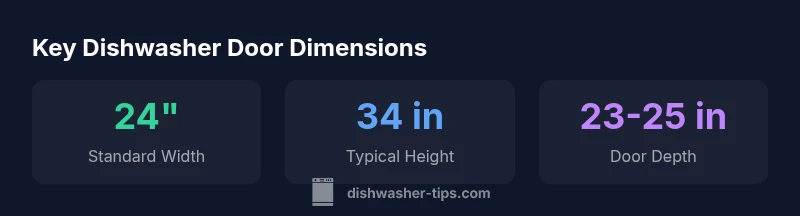
Most standard dishwashers use a 24-inch wide door (door opening), with exterior height typically around 33.9 to 35 inches and depth about 23 to 25 inches. Regional variants include 60 cm wide European models and compact versions that vary more. Always check the exact specification sheet for your model because hinges, panels, and installation clearance can shift final door dimensions.
What the size really means for installation
Understanding how big is a dishwasher door is essential for both new installations and replacements. If you're wondering how big is a dishwasher door, the short reality is that most doors are designed around a standard 24-inch width in North America, with exterior heights commonly around 34 inches. The door height influences cabinet clearance, while the depth affects plumbing, toe-kick space, and the ease of opening the door under counter edges. The Dishwasher Tips team notes that even small variations—such as panel thickness or hinge design—can shift the actual door dimensions by a fraction of an inch. Start with the opening measurements in your kitchen and compare them to the model specifications. This upfront step reduces the chance of awkward fit, remodel costs, or doors that scrape on countertops or toe-kicks.
Brand context: Dishwasher Tips has observed that many projects go off track when door dimensions aren’t aligned with cabinet openings. Always verify both width and height in your space and read the model sheet for any deviations due to panel options or hinge styles.
Regional differences: North America vs Europe
Door size conventions vary by region. In North America, the standard exterior width of a built-in or freestanding dishwasher door is about 24 inches (roughly 60 cm). Heights typically range from about 33.9 to 35 inches, depending on the chassis and feet, while the depth usually sits around 23 to 25 inches. In Europe, many dishwashers use a 60 cm (approximately 23.6 inches) width, with heights often around 82 to 85 cm and depths varying from 55 to 60 cm. These regional differences affect cabinetry planning, installation depth, and panel compatibility. If you are renovating or buying cross-border, verify the specific model’s doorway and panel requirements to avoid surprises at installation time.
Measuring your current dishwasher door
To determine the exact size for a replacement or new unit, you should measure: (1) width across the door opening (not the cabinet), (2) exterior height from the floor to the top edge of the door, and (3) depth from the front of the door to the rear of the cabinet. Use a tape measure and note decimals for precision. Record hinge location (top, bottom, center) and whether there is a panel attached to the door. Compare these measurements with the manufacturer’s specifications for your chosen model. If you are unsure, measure the current door twice and bring photos to the retailer or installer. The goal is to ensure the new door aligns with cabinet trim, toe-kick clearance, and adjacent countertops.
How door size interacts with cabinet and clearance
Door dimensions affect how the dishwasher sits in the cabinet opening. If the door is too wide, it may rub against cabinetry or hardware. If it is too tall, it could conflict with overhead cabinets or lighting fixtures. Depth matters for plumbing connections and the toe-kick area. When planning, include a small clearance margin (about 1/8 to 1/4 inch per side) to accommodate hinges and door motion. If you are installing a panel-ready door, the panel thickness can alter the visible door measurement, so confirm the final panel size before purchase. Inaccurate measurements lead to mounting issues, poor seal against the door, or compromised drainage paths.
Variations by model type: built-in, drawer, compact
Full-size built-in dishwashers generally adhere closely to the standard 24-inch width with a door height around 34 inches. Drawer-style dishwashers may have slightly different tolerances to accommodate drawer rails, which can shift the overall door height. Compact (or apartment-size) models often use narrower openings and may have shorter doors or compact panel configurations. If you are upgrading from a compact unit, you should anticipate potential changes in opening width or cabinet face alignment. Always check the installation manual for your exact model to understand how door dimensions interact with rails, hinges, and panel mounting.
Practical buying tips: reading specs and asking for margins
When shopping, don’t rely on visual estimates alone. Read the technical specs for width, height, and depth, and look for any notes about panel thickness, hinge type, or door curvature. If possible, request exact door dimensions from the retailer or manufacturer and compare with your cabinet opening. Some brands offer adjustable doors or trim kits that can modify effective width without changing the core unit. Ask for clearance diagrams and installation illustrations, especially if you plan to place a dishwasher under a sink run or near a corner. This reduces the risk of misfit and costly adjustments later.
Common myths and practical realities
A common myth is that all 24-inch dishwashers are universally compatible with all 24-inch openings. In reality, door dimensions can vary due to front panels, panel-ready kits, and hinge geometry. Another misconception is that European 60 cm models necessarily require different plumbing; many installations reuse existing connections with minor adapter parts. The practical reality is that once you know the exact door width, height, and depth, you can confirm compatibility with your cabinet layout, panel options, and water/drain fittings before purchase.
Customization options: panel-ready doors and adapters
Panel-ready doors are popular for achieving a seamless kitchen aesthetic. However, panel thickness and mounting hardware can alter the effective door size. If you opt for a custom panel, verify the final thickness and confirm whether you need a separate trim kit or hinge cover. Some adapters exist to accommodate panel variations, but they may add cost and installation steps. For best results, work with a retailer who can provide precise product dimensions and a compatibility chart for your cabinet configuration.
Step-by-step measurement checklist
- Measure door opening width at the cabinet face (not the interior) in inches or cm. 2) Measure the exterior door height from floor to top edge. 3) Measure the door depth from the front of the door to the back of the cabinet. 4) Note hinge type and panel options. 5) Check for any obstructions—overhead cabinets, toe-kick clearance, and plumbing routes. 6) Compare with the model’s official specifications. 7) If possible, request a dimensional schematic from the retailer. 8) Confirm that there is at least 1/8 inch clearance on each side for smooth operation.
Planning for future replacements and upgrades
When planning for future replacements, consider keeping the same door width and height as your current unit to minimize cabinet adjustments. If you anticipate panel upgrades, confirm compatibility with trim kits and hinge adjustments. Maintain a small ongoing record of door dimensions for each major appliance upgrade. This practice streamlines future renovations and helps you maintain a cohesive kitchen design.
Door dimensions by region and model type
| Region | Typical Width (door) | Typical Height | Notes |
|---|---|---|---|
| North America | 23.5-24.0 in | 3 3.9-5.0 in | Standard built-in 24-inch units |
| Europe | 59-60 cm | 82-85 cm | Common 60 cm width |
| Compact/Apartments | 18-22 in | 32-34 in | Smaller form factors vary |
| Panel-ready options | 23.5-24.5 in | 34-36 in | Panel thickness impacts size |
People Also Ask
What is the standard width of a dishwasher door?
In North America, most dishwasher doors are around 24 inches wide. European models commonly use about 60 cm. Exact figures vary by model due to panel options and hinge design.
Most doors are about 24 inches wide in the US and around 60 cm in Europe. Always check the model specs.
How do I measure door size for a new dishwasher?
Measure door opening width, exterior height, and depth with a tape measure. Note hinge location and whether a panel is attached. Compare measurements to the manufacturer’s specifications.
Measure width, height, and depth, then compare with the model specs.
Will a door size difference affect installation?
Yes. A mismatch can cause clearance issues with cabinets, countertops, or plumbing. Ensure you have the correct width, height, and depth before purchase.
Yes—dimension mismatches can create clearance and installation problems.
Are there compact dishwashers with smaller doors?
Yes, compact models exist with narrower openings. Door dimensions may vary more in compact units, so check specs carefully.
Yes, compact models exist; always read the exact specs.
Do door sizes affect panel-ready installations?
Panel thickness and mounting hardware can shift visible door size. Verify final dimensions when using panel-ready doors and request a dimensional schematic.
Panel thickness can change the final door size—get the exact dims.
“Door dimensions drive installation fit and future panel choices. Knowing typical ranges helps homeowners plan cabinets and avoid costly remodels.”
What to Remember
- Measure opening width and door height before buying
- Expect 24-inch width in North America and ~60 cm in Europe
- Panel thickness and hinges can shift final size
- Check installation clearance for cabinets and countertops