How Big Is a Dishwasher? A 2026 Sizing Guide
Explore standard dishwasher dimensions, how to measure for fit, and size options—from standard 24-inch models to compact 18-inch units and portable drawers.


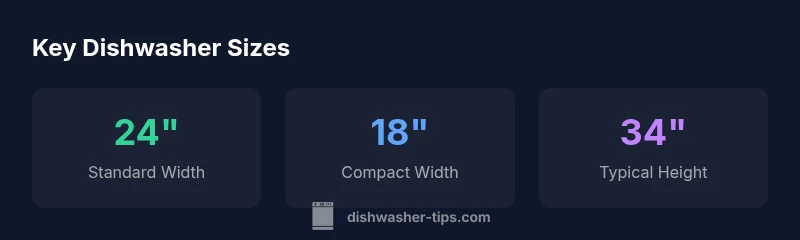
The typical full-size dishwasher is about 24 inches wide, 24 inches deep, and roughly 33-34 inches tall. Compact models are 18 inches wide and about 32-34 inches high. Drawer and countertop units vary more, with widths around 24 inches or less and heights that fit standard cabinetry. When planning, verify cabinet openings and door clearance. This quick-sizing snapshot helps you start with the right footprint.
What 'size' means for a dishwasher
When someone asks how big is a dishwasher, they are really asking about three dimensions: width, height, and depth. The width determines whether the appliance will fit in a pre-cut cabinet opening; the height and depth influence clearance under countertops, above the plumbing, and the ability to open the door fully. In practice, most homeowners start with width first, then verify height and door swing. According to Dishwasher Tips, standard built-in models typically conform to a 24-inch width, with heights around 33-34 inches and depths near 24 inches. While variations exist, understanding these three measurements helps you plan a kitchen that remains functional and accessible. The goal is to balance fit, capacity, and energy efficiency without compromising usability.
Standard vs Compact: Size ranges you’ll encounter
Dishwashers come in several size families, with width being the primary differentiator. The most common full-size (built-in) units are about 24 inches wide, offering standard capacity for a family of four or more. Compact models squeeze into narrow kitchens with an 18-inch width, trading some capacity for fit. Drawer-style dishwashers and some modern brands provide alternate form factors, but width often remains the reference point. In many markets, standard 23-24 inch depth remains typical, while height ranges slightly by model and installation. When shopping, measure your cabinet opening and compare it to the manufacturer’s specifications. This helps you avoid ordering a unit that looks right but won’t fit in practice.
Common dimensions by category
- Standard built-in: Width about 24 inches; Height approximately 33-34 inches; Depth around 23-24 inches. Notes: widely used in new homes and major renovations.
- Compact (18-inch): Width about 18 inches; Height typically 32-34 inches; Depth around 23-24 inches. Notes: good for apartments and small kitchens.
- Drawer dishwasher: Width about 24 inches; Height 33-34 inches; Depth 24 inches; Notes: two-drawer configurations, flexible loading.
- Countertop dishwasher: Width around 18-19 inches; Height around 17-19 inches; Depth around 18-22 inches; Notes: portable, sits on countertop or cart.
How to measure for fit in your kitchen
To ensure a proper fit, start with a precise measurement plan:
- Measure the width of the cabinet opening and confirm the appliance will slide in without obstruction.
- Check vertical clearance: note the countertop overhang and any baseboard or toe-kick siting that could interfere with door opening.
- Measure depth from the cabinet face to the back wall, allowing space for plumbing hoses and electrical connections.
- Consider door swing and clearance for pantry doors or adjacent cabinets when the door opens to full height.
- Add a small buffer (1/4 to 1/2 inch) per side for tolerances.
Behind the scenes: depth, height, width explained
Width is the most visible attribute, but height and depth influence fit and installation. The standard depth (approx. 24 inches) accommodates typical kitchen plumbing, while height accommodates cabinetry routes and toe-kick space. If your kitchen has unusually tall upper cabinets or a shallow toe-kick, you may need a shorter or shallower model. A tight fit can affect door motion, loading efficiency, and loading height for tall dishes.
Special case: drawer and compact dishwashers
Drawer-style dishwashers offer flexible loading and can fit in places where a traditional single-door unit won’t. They’re commonly available in 24-inch widths, with a height comparable to standard units, but some models may vary. Compact models (18-inch) remain the best option for extremely small kitchens or individual households. Drawer variants, however, may involve different installation requirements and cabinet modifications, so always check installation notes.
Installation considerations: clearance, door swing, and plumbing
Beyond raw measurements, plan for clearance around the unit. Leave space for the door to swing without contact with adjacent cabinetry. Confirm vertical clearance for the hinge and top venting, and ensure plumbing and electrical hookups won’t be obstructed by wall studs or cabinet frames. If you’re re-cabineting, you might need a flush-mount kit or panel-ready door to achieve a seamless look.
Aftermarket options: portable and countertop dishwashers
When space is extremely tight, portable or countertop units offer viable alternatives. Portable units usually require floor space and a nearby water supply, while countertop models sit on the counter and connect to a faucet. These options typically have smaller widths (often 18 inches or less) and vary in height, so verify your countertop depth and clearance before buying. They are especially practical for renters or seasonal use.
How size affects capacity and performance
Size influences not only capacity but also cycle energy use and drying performance. A full-size 24-inch unit tends to handle daily family loads more efficiently than compact options; however, compact models can be more energy-efficient for small households. When evaluating models, compare interior rack configurations and loading patterns to gauge real-world capacity. Remember that interior features can compensate for width differences to some extent, so consider your typical load shapes and utensil variety when choosing size.
Comparison of typical dishwasher size categories
| Category | Width | Height | Depth | Notes |
|---|---|---|---|---|
| Standard built-in | 24 inches | 33-34 inches | 23-24 inches | Most common size; versatile for families |
| Compact (18-inch) | 18 inches | 32-34 inches | 23-24 inches | Fits narrow spaces; smaller capacity |
| Drawer dishwasher | 24 inches | 33-34 inches | 24 inches | Two drawers; flexible loading |
| Countertop | 18-19 inches | 17-19 inches | 18-22 inches | Portable; sits on counter |
People Also Ask
What is standard width?
Most built-in dishwashers are 24 inches wide. This width fits most standard cabinet openings and provides ample loading space. Always verify the exact opening and allow for door clearance.
Most built-in dishwashers are 24 inches wide; check your cabinet opening to ensure a proper fit.
Do compact dishwashers fit small kitchens?
Yes, compact dishwashers are typically 18 inches wide and are designed for smaller kitchens. They offer less capacity but can fit where a full-size unit won't.
Yes. Compact dishwashers fit small spaces but hold fewer dishes.
Can I install a dishwasher in a cabinet or drawer setup?
Dishwashers are designed for built-in or freestanding installation. Drawer models exist but are less common and may require special cabinetry or kits.
Built-ins go into dedicated cabinetry; drawer models need special setup.
What about countertop dishwashers?
Countertop models are small and portable; they connect to a faucet and sit on the counter. They’re ideal for renters or small households that don’t need full-size capacity.
Countertop units are small, portable, and faucet-connected.
How much space should the door have to open?
Allow several inches of clearance for the door to open fully without hitting nearby cabinets or appliances. Most installations benefit from at least 2-3 inches of space above the unit.
Give a few inches of space above and on the sides for the door to swing.
Do size standards differ by region?
Yes, some regions favor slightly different dimensions. Check the exact model specs for width and height and compare with your space, especially if you’re buying from overseas brands.
Regional differences exist; always verify exact measurements.
“Size selection is foundational to a dishwasher’s fit and future usability; get the dimensions right, and capacity and efficiency naturally follow.”
What to Remember
- Measure width first to ensure cabinet fit
- Standard size is 24 inches wide in most markets
- Compact models are 18 inches wide for tight spaces
- Check door clearance and plumbing during planning
- Explore drawer or countertop options for special cases