Difference Between Dishwasher and Detergent: A Practical Guide
Explore the key differences between a dishwasher and detergent, how they work together, and how to choose the right detergent for your dishwasher. Practical tips for homeowners and renters.


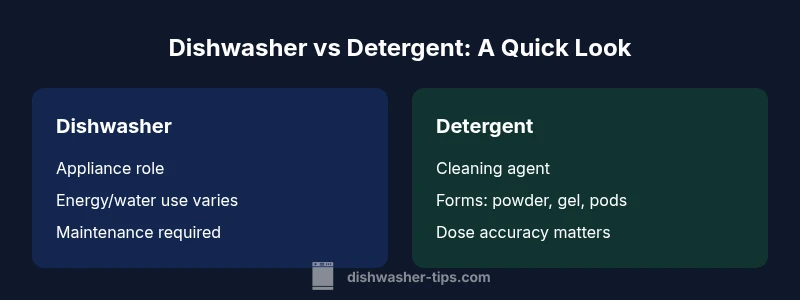
A dishwasher is a powered appliance that cleans dishes by circulating hot water and detergent, while detergent is the cleaning agent added inside the dishwasher to break down soils and sanitize surfaces. The difference between dishwasher and detergent is foundational: one is equipment, the other is a consumable that powers cleaning. They work together, but their roles are distinct and proper pairing improves results, energy efficiency, and machine health.
What is a dishwasher vs. what is detergent
A dishwasher is a powered appliance designed to clean dishes automatically. Most models combine a wash chamber, rotating spray arms, heat for drying, and a user interface to select cycles. Detergent is the cleaning agent added to the dishwasher to break down fats, lift soils, and sanitize surfaces. The difference between dishwasher and detergent is fundamental: one is equipment and the other is a consumable that powers the cleaning process. Understanding their separate roles helps homeowners model their purchases, maintenance, and daily routines more effectively. According to Dishwasher Tips, the distinction matters for selecting cycles, sizing households, and budgeting for consumables. While myths persist—such as using household soap in a dishwasher—it’s important to distinguish between these two concepts to prevent over-sudsing, residue, or corrosion. In practice, you’ll typically buy a dishwasher and a detergent together, but the detergent’s formulation and the dishwasher’s capabilities must align for optimal performance. This alignment matters not only for clean dishes but also for energy efficiency and long-term machine health. Detergents come in powders, liquids, and pods, each with trade-offs.
How detergents are formulated
Detergents used in dishwashers are formulated to work under high water temperature and specific spray patterns. They include surfactants that reduce surface tension, enzymes to tackle protein, starches, and fats, and sometimes bleaching agents for stubborn soils. Powder, gel, and pod/tablet forms differ in dosing, dissolution speed, and packaging. Powder offers flexibility for adjusting amounts, but can clump in humid environments. Gel dissolves quickly in low-water entries, but may leave streaks if not used with proper cycles. Pods or tablets provide pre-measured doses, which reduces user error but can increase per-load cost and create plastic packaging waste. Enzymes can be more effective on protein-rich residues like eggs or dairy; phosphates have been restricted in many regions due to environmental concerns, prompting reformulations to involve alternative chelants. Detergent purity and scent vary by brand, but most modern formulations emphasize phosphate-free, low-suds performance and compatibility with rinse aids. Consistency across product lines is essential; always consult the dishwasher’s manual to verify recommended detergent type and maximum tablet size for your model. In short, detergent design is a balance between cleaning power, residue control, and machine safety.
How to choose the right detergent for your dishwasher
Choosing the right detergent involves matching your dishwasher model, water hardness, and typical soil levels. Start with the manufacturer’s recommendation; many machines specify tablet, powder, or gel preferences. Consider water hardness in your region, which can influence scaling and residue; hard water often benefits from a water-softening rinse aid and a more robust detergent. Pods are convenient and pre-measured, reducing the possibility of under- or over-dosing, but may be less flexible for very small loads or heavy soils. Powder detergents let you fine-tune the amount used per cycle, but require careful storage to prevent caking. Gel detergents tend to dissolve quickly and are useful in quick washes, though they can leave streaks if the cycle isn’t long enough. In high-efficiency (HE) machines, choose “HE” labeled detergents to prevent excessive suds that could interfere with drainage. Look for recommended product certifications, such as Energy Star alignment, and avoid products with high fragrance or dye if you have sensitive skin or allergies. The goal is a detergent that dissolves reliably, cleans thoroughly, and minimizes residue.
The role of water temperature and cycle selection
Water temperature and cycle choices significantly impact how detergent performs. Most dishwashers optimize cleaning at high wash temperatures, which help break down greasy soils and sanitize dishes. However, energy-conscious households use eco or energy-saving cycles that still rely on detergent but operate at lower temperatures or extended run times. The detergent you choose should dissolve at the cycle temperatures your machine uses; powder detergents may require more time to dissolve, while pods are designed to work across a range of temperatures. Pre-rinsing matters less if you use a robust detergent and a full cycle, but pre-wash cycles or heavy-load programs can help with stubborn meals. High-temperature cycles also improve drying performance, especially when paired with rinse aid. If your water is very hard, consider a dedicated rinse aid and a mineral-softening product to protect glassware and extend the life of seals and gaskets. Understanding how temperature, cycling, and detergent chemistry interact can prevent poor cleaning results and reduce re-wash frequency.
Types of dishwasher detergents and when to use them
Detergents come in several forms, each with distinct advantages. Tablets or pods provide convenience and consistent dosing, ideal for busy households and standard loads. Powder detergents are versatile and economical, good for large families with variable load sizes. Gel detergents dissolve quickly and are useful for quick washes with light soils. For hard water areas, select products formulated to combat mineral deposits; these often pair with a rinse aid to help drying and clarity. Some brands integrate rinsing agents directly into the detergent tablet, while others require a separate rinse aid to achieve spot-free dishes. When detergent performance declines, don’t immediately switch brands; verify that the dishwasher filter and spray arms are clean, and that you’re using the recommended cycle. Always store detergent in a cool, dry place away from children and avoid mixing with other cleaners. The right detergent reduces residue, improves stain removal, and supports consistent drying.
Common mistakes and pitfalls
A few common mistakes undermine dishwasher performance and can waste detergent. Using household dish soap in a dishwasher causes excessive suds and leaks; never pour regular soap into the dispenser. Overloading the machine or stacking items incorrectly blocks spray arms, resulting in poor cleaning. Using the wrong detergent type for your machine—such as a non-HE formula in an HE model—can hamper cleaning and lead to residue on dishes. Not following dosing guidelines for pods or powders leads to either under-dosing (poor cleaning) or over-dosing (excessive suds and a sticky residue). Leaving detergent packaging open exposes the contents to humidity and clumping, reducing effectiveness. Finally, neglecting to clean filters, spray arms, and door seals can degrade performance over time, irrespective of the detergent. Regularly rotate products to avoid using old stock beyond shelf life, and keep a reserve of your most reliable detergent type to avoid last-minute substitutions that could affect results.
Maintenance and safety considerations
Maintenance and safety are essential to keep your dishwasher performing well with the right detergent. Store detergents in a cool, dry place away from children and pets; caps should be closed to prevent moisture exposure. Read the label for recommended dosing, and never mix detergents with other cleaners. Regularly inspect and clean the filter and spray arms; these components impact how well the detergent is distributed and whether soils are removed. Use a rinse aid if your dishes come out with spots or a cloudy film, especially in hard water areas. Some detergents contain enzymes that can degrade if exposed to moisture or heat during storage—check packaging for storage guidance. If you notice unusual odors, check for mildew in the door seal and ensure proper drainage. Safety also includes proper disposal of old detergent containers and recycling packaging whenever possible.
Environmental impact and waste considerations
Detergent packaging and formulation influence environmental impact. Many modern detergents are formulated to be phosphate-free and low-suds, reducing runoff and energy use. Recyclable packaging and concentrated formulas help minimize waste per load, while pod packaging often adds plastic waste that some households offset by choosing recycling-friendly bags or film. Consumers can minimize eco-footprint by selecting detergents with third-party certifications, using the smallest effective dose, and coordinating with a rinse aid to maximize water efficiency. If you’re in a region with strict wastewater guidelines, look for products that meet local environmental standards. The choice of detergent can affect water quality and sediment transport in municipal systems, so consider the broader impact beyond your kitchen.
Practical scenarios: apartments vs families
In apartment living, space and convenience often drive detergent choices. Pods or tablets are popular because they minimize storage space, reduce mess, and provide consistent dosing for small loads. For larger families with frequent meals, powder detergents can be economical, and you may prefer a longer cycle with extra wash time to handle heavy soils. Renters may rely on compact or slimline dishwashers, which often pair best with compact tablet detergents and rinse aids that ensure sparkling results in smaller machines. In homes with hard water, a rinse aid combined with a suitable detergent is essential to prevent mineral spotting and improve drying. Across all situations, the goal is reliability, safety, and minimal re-wash frequency, achieved by proper dosing, cycle selection, and routine cleaning of filters.
Authoritative guidance and resources
For trusted guidance on dishwashing efficiency and product safety, refer to official sources and industry leaders. Energy Star provides standards for energy-efficient dishwashers and associated detergents, helping homeowners select models and cleaning agents that optimize performance. Consumer-focused reviews from major publications offer practical testing results and long-term reliability insights. Always verify product labeling for detergent compatibility with your dishwasher model and cycle instructions, and consult the manufacturer’s manual for model-specific recommendations. The Dishwasher Tips team emphasizes using manufacturer-approved detergents and following dosing guidelines to protect both your dishes and your appliance. Important notes about safety and environmental impact come from recognized sources such as energy.gov and trusted consumer research outlets. Link examples: Energy Star, Energy.gov; Consumer Reports; Manufacturer manuals.
Comparison
| Feature | Dishwasher (appliance) | Detergent (pods/powder/tablets) |
|---|---|---|
| Primary purpose | Automates dish cleaning with water circulation and heat | Provides cleaning agents that enable soil removal |
| Typical cost per use | Depends on machine and energy use; upfront cost higher | Depends on form; per-load cost can vary by brand and dosage |
| Maintenance needs | Requires regular loading/unloading, filter cleaning, and occasional service | Requires proper storage and dosing; packaging disposal |
| Environmental impact | Energy and water use vary by model and cycle | Packaging, ingredients, and dosing affect waste and runoff |
| Best for | Homes seeking automation and efficiency for frequent loads | Homes seeking convenience and consistent dosing |
The Good
- Automates cleaning for busy households
- Controls and standardizes performance with cycles
- Detergent choices offer flexibility for soils and water conditions
- Can improve sanitation with proper dosing and rinse aids
Disadvantages
- Higher upfront cost for new machines
- Detergent pricing varies by form and brand
- Wrong detergent type can cause residue or suds
- Requires regular maintenance and proper storage
Dishwasher and detergent are distinct but complementary; pairing the right detergent with a compatible dishwasher yields the best results.
Choose an energy-efficient dishwasher and a detergent formulation aligned with your water hardness and soil levels. Ensure compatibility to maximize cleaning, drying, and longevity.
People Also Ask
What is the fundamental difference between a dishwasher and detergent?
A dishwasher is an appliance that cleans dishes automatically, while detergent is the cleaning agent used inside the machine. The key distinction is function: equipment versus consumable. Understanding this helps optimize cycles, dosing, and maintenance.
A dishwasher is the machine that cleans; detergent is the soap you put in. They work together, but they serve different roles, which matters for choosing cycles and dosing.
Can I use regular dish soap in a dishwasher?
No. Regular dish soaps create excessive suds that can leak and damage the appliance. Always use detergents specifically designed for dishwashers. If soap bubbles appear, stop the cycle and wait for the suds to dissipate.
Never use regular dish soap in a dishwasher. It creates dangerous suds and can damage the machine.
Which product form is best for a busy household?
Pods or tablets offer consistent dosing and minimal mess, making them popular for busy households. Powders are economical but require measuring, and gels work well for quick cycles with lighter soils.
Pods are great if you want simple, mess-free dosing every time.
How does water hardness affect detergent choice?
Hard water can leave mineral spots and reduce cleaning efficiency. In hard water, choose detergents formulated for hardness and use a rinse aid. Regular maintenance helps prevent mineral buildup in the dishwasher.
Hard water can cause spots; use hardness-appropriate detergents and rinse aid.
What maintenance steps improve detergent performance?
Keep filters clean, check spray arms for clogs, and ensure doors seal properly. Use the recommended cycle and avoid overloading the rack. Regularly replace old detergent and store it in a cool, dry place.
Clean filters, avoid overloading, and store detergent properly to keep performance steady.
Are there environmental considerations when choosing detergent?
Yes. Look for phosphate-free and low-suds formulas, recyclable packaging, and third-party certifications. Proper dosing reduces chemical runoff and packaging waste.
Choose eco-friendly detergents with minimal packaging and safe ingredients.
What to Remember
- Know the roles: appliance vs. cleaning product
- Match detergent to dishwasher model and water conditions
- Avoid household soap in dishwashers to prevent suds
- Use rinse aid in hard water regions for best drying
- Maintain filters and spray arms for consistent results